Villa La Rosa
Filicudi - 24 Via Rosa ( Strada Comunale Guardia - Rosa )
Book now
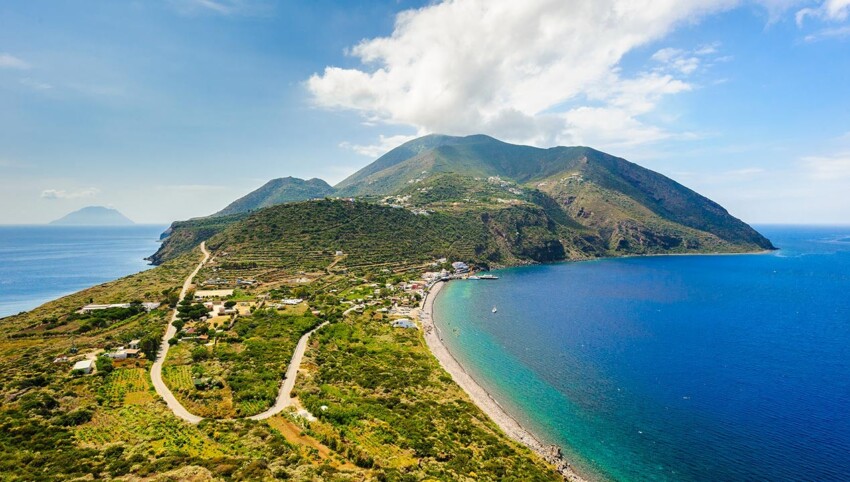
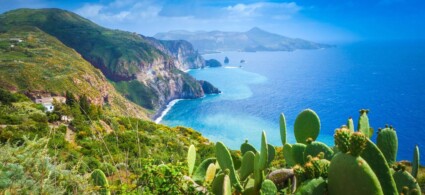
Filicudi, together with Alicudi, forms part of the western arc of the archipelago and geologically is the oldest of the 7 islands. Steep and craggy, the island is nothing more than the emerged cone of an extinct volcano covered with gorse, ferns, heather and prickly pears. The highest point on the island is Fossa Felci at 774 metres above sea level.
The coastline of Filicudi is extraordinarily beautiful and is studded with deep caves, embellished by magnificent rock stacks and characterised by sheer cliff faces plunging into the sea. La Canna is the island’s most famous rock formation, an essential stop on any boat trip, whilst among the caves the Grotta del Bue Marino is the most beloved, followed by Maccatore.
The beaches of Filicudi, all of volcanic origin, are primarily composed of large dark pebbles, with the exception of Pecorini Beach, which has some sandy stretches. The bays are lapped by crystal-clear waters ideal for diving.
The small inhabited settlements are Filicudi Porto, Val di Chiesa, Pecorini Mare, Serro, Zucco, Fossa Felci, Ficarrisi, Siccagni and Rocca di Ciauli.
At Piana del Porto and Capo Graziano, along the southern coast, there are some archaeological sites dating back to the Bronze Age.
Although quieter than Lipari and Panarea, Filicudi offers a lively nightlife thanks to several bars and a nightclub.
Ferries and hydrofoils reach Filicudi daily from Milazzo port. During the summer season there are more departure ports available.
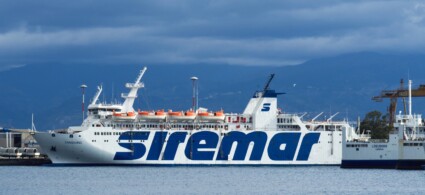
The island has 2 ports: Pecorini Mare is the main landing place for both the Siremar and Ustica Lines shipping companies. Ngi offers a Saturday connection and is ideal for bringing a car.
Mostly rocky, Filicudi’s beaches are characterised by smooth pebbles of various sizes and lava formations. The coastline, mostly high and rugged, boasts several spots famous for diving such as Grotta del Bue Marino and Punta Perciato.
Capo Graziano beach, a long strip of grey pebbles scorched by the sun, is the most famous on the island and is located along the south-eastern coast not far from other tiny unspoilt coves. Also beautiful are Porto beach, Punta Zotta bay and the Pecorini a Mare Beach1, all characterised by pebbles and cliffs with an underlying layer of black volcanic sand.
The distinctive Le Punte Beach2 is located at the southern tip of Filicudi, is easily accessible on foot from the pier, and is composed of large round pebbles of volcanic origin.
To fully appreciate Filicudi’s beauty we recommend exploring by boat, renting one or taking part in one of the guided excursions along the coast.
The distinctive Capo Graziano beach at Filicudi is a strip of smooth volcanic pebbles with a characteristic grey colour, 500 metres long, to the south-east of the port.
At the eastern end of the beach are enormous rocks that create tiny secluded rocky coves accessible only by boat.
The beach is famous not only for the archipelago’s stunning sea but also for the Bronze Age village that stands on the small hill behind it; the archaeological site boasts around twenty oval-shaped huts, and the Capo Graziano seabed, a mecca for diving enthusiasts, is the most beautiful underwater archaeological area of the Aeolian Islands.
The seabed in front of the beach conceals a rock formation surfacing near the entrance to the ancient harbour, which over millennia has been the scene of numerous shipwrecks. As many as 9 Greek and Roman ships have sunk along with their precious cargoes, crockery and amphorae, and 2 from the first half of the twentieth century.
The wrecks A and G, dating respectively from the 3rd and 5th centuries BC, are the most visible, though only experienced divers can appreciate them.
Although a small island, Filicudi boasts unique natural beauty. The best way to appreciate its rugged and wild nature is to take a boat trip around the island to admire the beautiful inlets, evocative rock stacks and, why not, dolphins.
Its coastline is rich with cavities, among which stands out the fascinating Grotta del Bue Marino, near Punta Perciato, the largest of the Aeolian Islands. Not far away are the La Canna rock stack, a volcanic formation that rises 74 metres above sea level, and the Montenassari rock, only 14 metres high, the Mitra rock and the Notaio. The Scoglio della Fortuna4 is also the destination of numerous boat excursions.
If you love diving, Filicudi is the place for you. Its crystal-clear sea is teeming with life and caves. The most evocative dive is the Grotta dei Gamberi at a depth of 32 metres, though the Secca dei Sei Metri is just as impressive. Divers with at least a second certification can admire the Roman wreck, dating from the 2nd century BC, in the waters surrounding Capo Graziano.
Filicudi also offers numerous options for land-based excursions. In addition to visiting the Capo Graziano archaeological site, where you can see the remains of a Bronze Age village, you can reach the summit of Fossa delle Felci mountain from Val di Chiesa, where you can enjoy a breathtaking panorama of the archipelago. The various trails that cross the island also lead to the so-called Macine area, Ficarrisi, perched on the Scoglio del Gigante, Seccagni, an ancient settlement, and Zucco Grande, which overlooks the islands of Salina, Lipari and Vulcano.
Traces of Roman buildings can be found at Piano del Porto and on the Montagnola di Pecorini. A branch of the Aeolian Archaeological Museum is located on the Porto waterfront and displays artefacts recovered from Filicudi.
Moreover, it is possible every day to leave Filicudi and head to the other islands of the archipelago: Alicudi, Salina, Lipari and Vulcano are easily reached by hydrofoil. There are no direct connections to the islands of Panarea and Stromboli.
Off the north-western coast of Filicudi you can admire the wonderful and imposing La Canna rock stack, a rocky tower made up of various layers of lava 71 metres high, spectacular at sunset when the sun’s rays flood the sea with fiery red colours.
The views of the rock stack, sculpted by fire and sea, and the coastline are magical and romantic. Not far away you can also admire the Scoglio della Fortuna, with its internal basin of seawater, the spectacular Punta Pericato arch, the Giafante rock and Zucco Grande.
Don’t miss the famous Grotta del Bue Marino south of the La Canna rock stack.
Boats that allow you to sail around the island and explore the rock formations offshore depart from Filicudi Porto.
Near Punta Perciato opens the large and wonderful Grotta del Bue Marino, the largest of the Aeolian Islands and certainly the most beautiful on Filicudi.
This magical corner of the island’s coast is famous for the evocative play of light and the sound of the sea that pervade it and give it its name, as the sound of water on the rocks resembles the bellowing of an ox.
20 metres high, 30 metres wide and about twenty metres deep, the cave is accessible by small boats and swimming. At the back of the cave is a small shingle beach.
In the following map you can see the location of the main places of interest mentioned in this article.
Filicudi’s accommodation is concentrated entirely in the south of the island, around Filicudi Porto; there are few facilities, obviously besieged during the summer season.
Filicudi, along with Alicudi, forms part of the western arc of the Aeolian Islands: Lipari lies approximately 30 km away.

 Hotel
Hotel  Budget accommodations
  Apartments
  Family Hotel
  Luxury Hotel
  Resorts