Eunymos Panarea
Panarea - Via san pietro
Book now
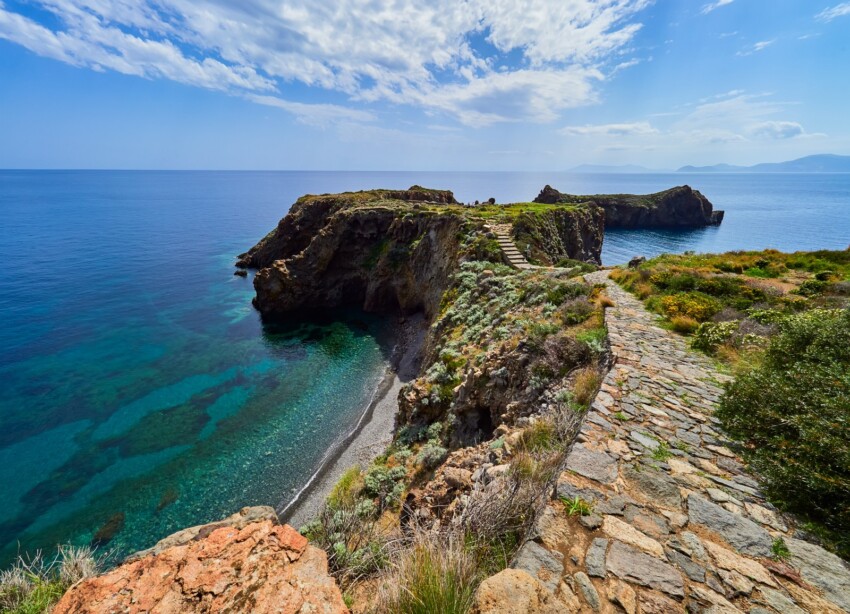
Panarea is the smallest and lowest of the Aeolian Islands. Together with the islets of Basiluzzo, Spinazzola, Lisca Bianca, Dattilo, Bottaro, Lisca Nera and the rocky outcrops of Panarelli and Formiche, it forms a tiny archipelago between the islands of Lipari and Stromboli.
Just 3 kilometres long and 2 kilometres wide, Panarea is a picturesque and fashionable island. Frequented by wealthy tourists and international jet-set figures, who often moor their yachts along the coast, Panarea is renowned for its thermal mud, black sand beaches and wonderful sea. Moreover, its whitewashed houses with blue doors and windows, narrow alleyways and colourful bougainvilleas give it all the charm of the Greek islands of the Aegean Sea.
The small and picturesque port of San Pietro, Ditella and Drautto are the only settlements on the island.
High jagged cliffs characterise the northern and western coastlines whilst the beaches of Panarea lie along the eastern shore, facing Stromboli. Every visit to Panarea should begin with a boat tour around the island to capture its unique beauty and spectacular views.
The island has few beaches accessible on foot but boasts stunning stretches of sand including Cala Junco, one of the most beautiful beaches in the entire Aeolian archipelago, and Calcara Beach, famous for its fumaroles and sulphurous hues with temperatures reaching 100°C. The hot spring that flows near the San Pietro quay is used for therapeutic purposes.
A mecca for nightlife lovers, the ultra-chic open-air nightclub in San Pietro is the pulsating heart of Panarea’s sleepless nights.
There are no cars on the island, but you can hire scooters, motorcycles, bikes, quad bikes and golf carts.
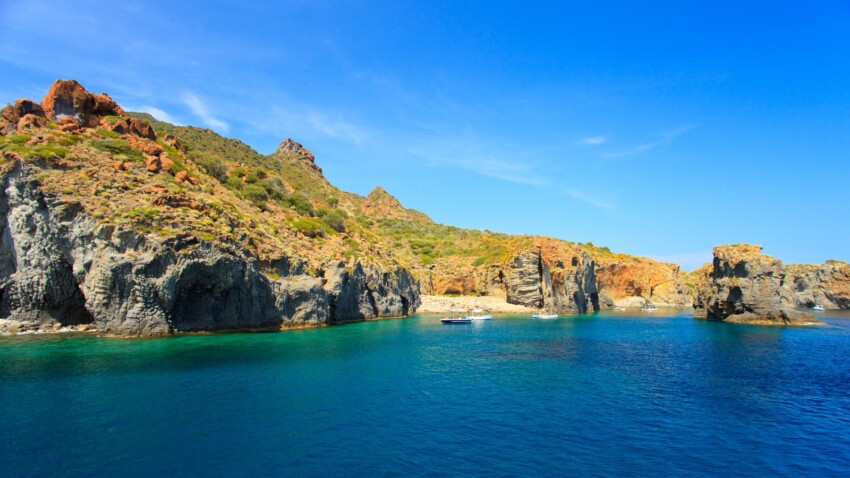
Panarea, the smallest of the Aeolian Archipelago, boasts beaches of exceptional beauty, accessible almost exclusively by boat, and surprising seabeds.
To make the most of your holiday and discover the beaches of Panarea from a scenic perspective, take part in one of the many excursions around the island.
Among the most beautiful beaches on the island, both accessible by foot, Cala Junco1, a stunning natural pool with crystal-clear waters and emerald hues, Cala degli Zimmari2, beautifully framed by a cliff face, and Calcara Beach3, near Ditella on the northeastern side, famous for its fumaroles, remnants of the island’s volcanic nature.
The marvellous beaches of the islets of Lisca Bianca and Basiluzzo, on the northeastern side, accessible only by sea, are equally impressive.
Diving enthusiasts will appreciate the wreck of the English ship at Lisca Bianca and the teeming seabeds of Le Formiche.
Cala Junco is one of Panarea’s most beautiful beaches, located along the southern coast of the island, and is one of the 2 stretches of sand on the island accessible on foot.
The cove is a splendid natural pool with crystal-clear waters and turquoise hues, enclosed like an amphitheatre by tall rock faces.
Easily reached by following the same path that leads to Cala degli Zimmari, Cala Junco is also famous for the prehistoric village dating back to the 16th century BC at Punta Milazzese, discovered in 1948, which lies behind it. The site comprises 23 oval huts where numerous artefacts were found, now housed in the Aeolian Archaeological Museum in Lipari.
All excursions and boat tours around Panarea stop at Cala Junco. Boats depart from San Pietro port.
Framed by cliffs behind it and lush vegetation, Cala degli Zimmari is situated within a tranquil bay along Panarea’s southern coast.
The red sand beach, the island’s only sandy beach, is washed by crystal-clear cobalt-blue waters. Narrow and often crowded, especially during the summer months as it’s one of the island’s two bays accessible on foot, the beach is an excellent vantage point for the picturesque headland of Capo Milazzese.
Cala degli Zimmari is easily accessible on foot from the island’s port in 20 minutes, following the path that leads to Drautto and continues to the prehistoric village and Cala Junco beach.
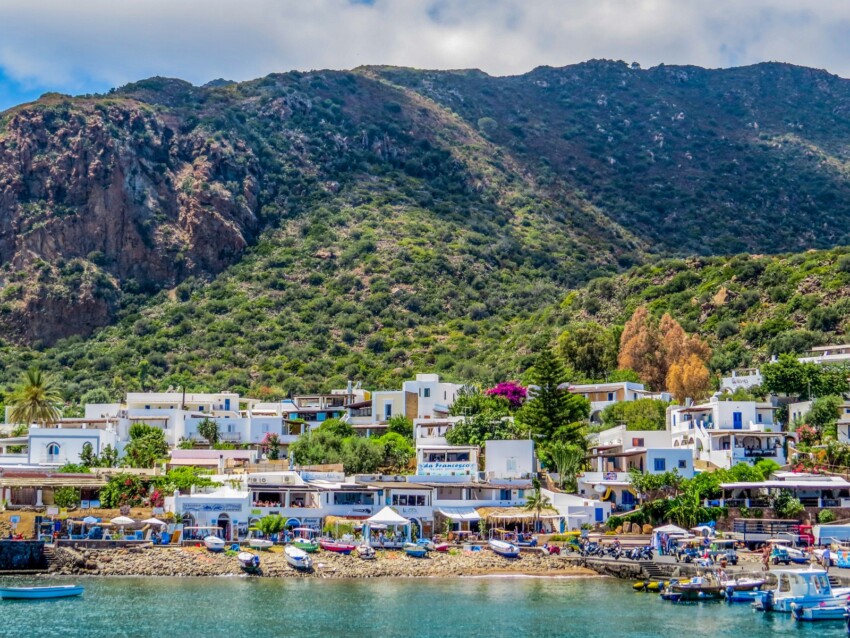
The small and exclusive Panarea is disarmingly beautiful and best viewed from Punta del Corvo4, the island’s highest point at 421 metres above sea level.
The island boasts spectacular beaches and important historical remains such as the Bronze Age prehistoric village5 at Punta Milazzese, in the southern part of the island, and the Roman buildings of Basiluzzo, a dome-shaped islet offering stunning views of both Panarea and Stromboli.
Among Panarea’s beaches, Cala Junco and Cala degli Zimmari are absolutely worth visiting. Also highly picturesque are the 3 settlements on the island: the village of San Pietro6, the centre of the island’s vibrant nightlife, Drautto7 and Ditella8, known for its thermal springs.
The famous submarine fumaroles of Panarea can be seen near the rocky outcrop of Bottaro, off the eastern coast of the island, and along Calcara Beach.
To discover the most characteristic places on the island, including the Lovers’ Grotto on Lisca Bianca, take part in one of the numerous boat trips organised by the islanders.
In the following map you can see the location of the main places of interest mentioned in this article.
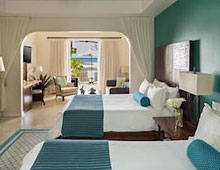
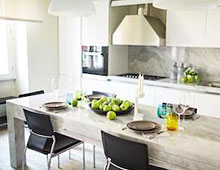
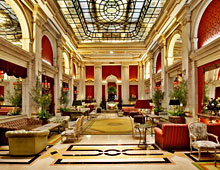
Hotels and accommodation in Panarea are all located in the eastern part of the island, in the three settlements: San Pietro, Drautto and Ditella. Being a very small island, there’s no better location than another for accommodation, as you’ll be able to reach every corner in no time.
What's the weather at Panarea? Below are the temperatures and the weather forecast at Panarea for the next few days.
The island of Panarea lies within the Aeolian Islands, around 15 km as the crow flies from Lipari. Together with the islets of Basiluzzo, Spinazzola, Lisca Bianca, Dattilo, Bottaro, Lisca Nera, Panarelli and Le Formiche, it forms a micro-archipelago within the wider Aeolian Islands.
 Hotel
Hotel 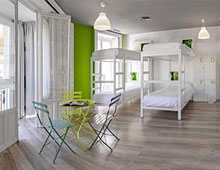 Budget accommodations
  Apartments
  Family Hotel
  Luxury Hotel
  Resorts