Albergo Ristorante Pizzeria Del Viale
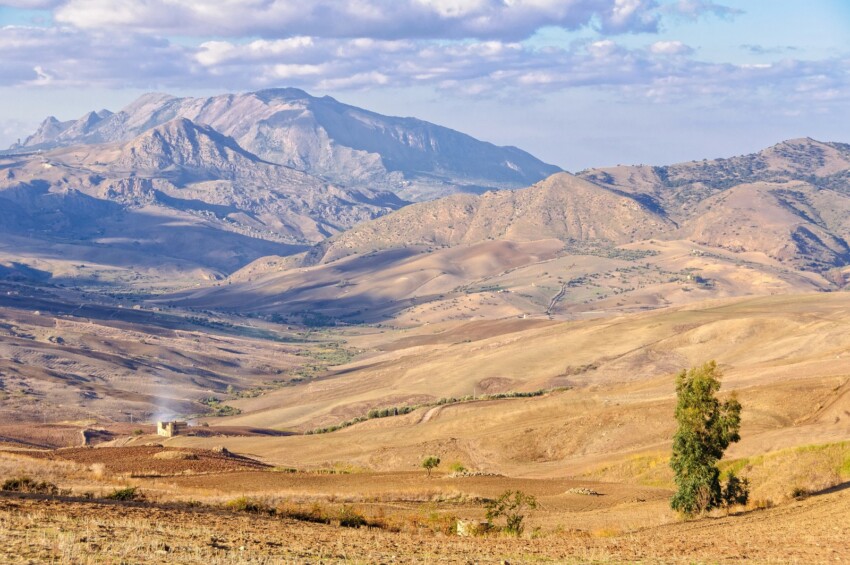
In the heart of western Sicily, straddling the provinces of Agrigento and Palermo, the Monti Sicani form one of the island’s most authentic and least explored corners. They take their name from the Sicani, one of the prehistoric peoples who inhabited Sicily before the arrival of the Greeks — among the oldest populations of the western Mediterranean, remembered by Thucydides as being settled on the island from remote times. This millennia-old heritage can still be felt today walking among the oak and beech forests that cover the slopes of Monte Cammarata, the highest peak in the range at 1,578 metres.
The Sicani landscape is that of an inland, slow-paced Sicily, far removed from seaside tourism: limestone hamlets perched on cliff faces, valleys planted with cereals and vineyards, forests of downy oak crisscrossed by little-frequented paths. The Monti Sicani Oriented Nature Reserve, established in 2000, protects some 4,000 hectares of territory home to exceptional fauna for Sicily: golden eagles, peregrine falcons, roe deer successfully reintroduced after decades of absence.
The reserve extends across the municipalities of Bivona, Santo Stefano Quisquina, Cammarata and San Giovanni Gemini, in Agrigento province. The heart of the system comprises the Monte Cammarata massif and the foothills of Monte Rose, where forests of holm oak and downy oak give way, at higher elevations, to open windswept grasslands.
The trails marked by the Azienda Foreste Demaniali allow for hikes of varying difficulty. The route leading up to Piano della Cerasa, at roughly 1,200 metres, is one of the most popular with local hikers and offers views across the Sicilian interior to the shores of the Strait of Sicily on clear days. Those wishing to reach the Cammarata summit must tackle a climb of about 400 metres over terrain that isn’t always precisely marked: a local guide is recommended outside the summer season.
Fauna is a primary reason why naturalists and birdwatchers frequent the Sicani. The golden eagle breeds steadily in the reserve — one of the few confirmed breeding sites in Sicily — and can be spotted during the middle hours of the day when it rides thermals above the ridgelines. The Sicilian roe deer, reintroduced from the 1990s onwards, has reached a stable population and dawn sightings on the internal plateaus are relatively frequent.
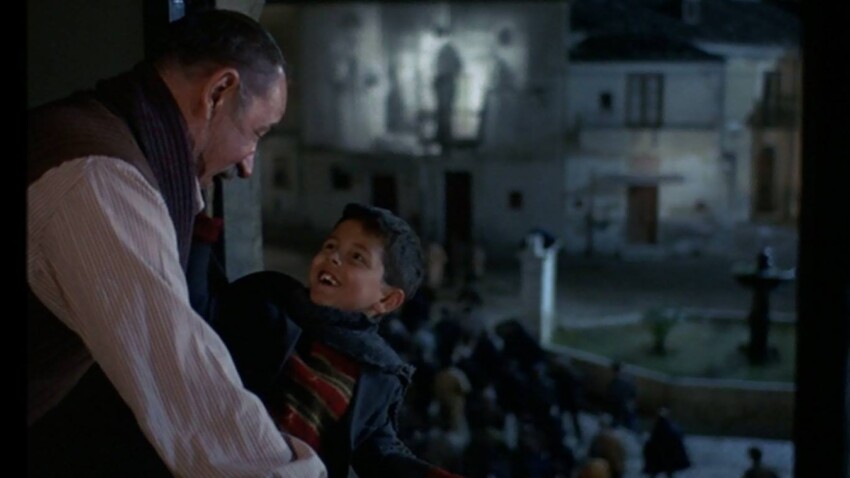
Palazzo Adriano is the Sicani village most widely known internationally, thanks to its indissoluble connection with Giuseppe Tornatore’s Cinema Paradiso. Piazza Umberto I, with its octagonal fountain at the centre and two facing churches — the Latin Maria SS. Assunta and the Greco-Albanian Santa Maria del Lume — is instantly recognisable frame by frame to fans of the film that won the Oscar in 1990.
But Palazzo Adriano deserves a visit quite apart from the cinema. The village belongs to the arbëreshë community, of Albanian origin: colonists arrived in the 15th and 16th centuries fleeing the Ottoman advance, bringing with them language, rites and Byzantine traditions still alive today. The Greek-Catholic liturgy celebrated in the church of Santa Maria del Lume, with its chanting and icons of Eastern tradition, is a rare cultural experience in the Sicilian context.
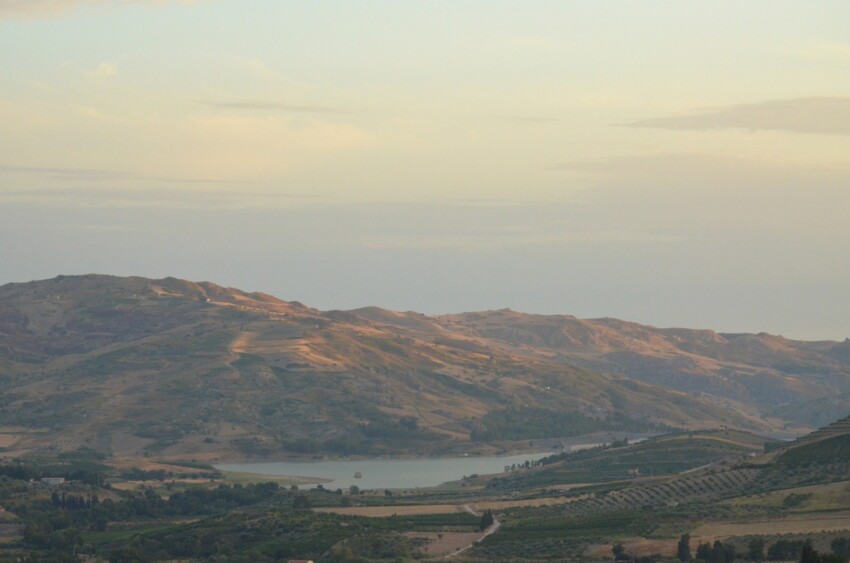
Bivona is the most populous municipality in the Agrigento Sicani area and the principal access point to the nature reserve from the south. Its historic centre preserves the Palazzo Marchionale Tagliavia-Aragona, a 16th-century noble residence with a Renaissance courtyard of considerable elegance, often overlooked by regional tourism circuits despite its architectural merit.
Bivona’s territory is historically renowned for the cultivation of late-season peaches, a local variety that ripens between September and October — when lowland peaches have finished — and has earned PGI recognition. Late summer local markets are the best opportunity to taste them directly from producers.
A few kilometres from the centre opens the Verdura Valley, traversed by the river of the same name that originates on the Monti Sicani and flows towards Sciacca and the sea. The valley is partly traversable on foot along informal paths that follow the watercourse through groves of poplars and reeds.
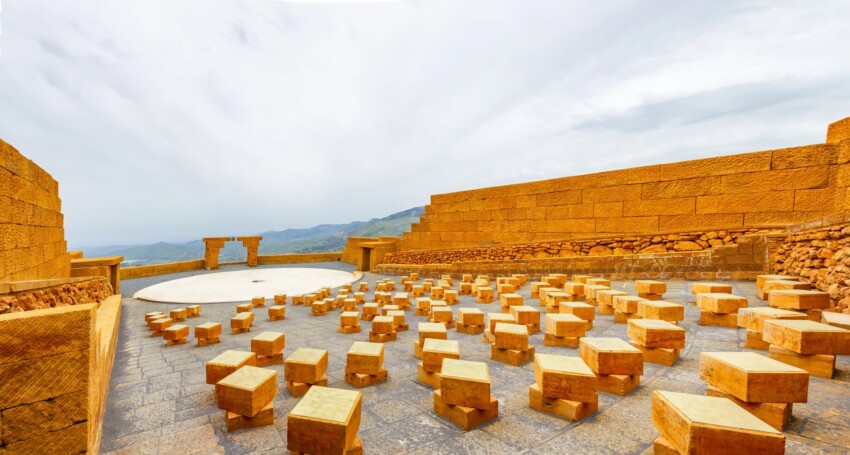
Santo Stefano Quisquina houses one of the most ancient places of worship in Sicilian devotion: the rock-hewn Sanctuary of Santa Rosalia on Monte Quisquina, dating according to tradition to the 12th century. Santa Rosalia withdrew to this hermitage before settling on Monte Pellegrino in Palermo, and the natural grotto transformed into a chapel attracts pilgrimages each year on 4 September, the feast day of the saint.
The sanctuary is reached by a scenic road that climbs through forests to roughly 1,050 metres. Access on foot from the town takes about two and a half hours and is mainly used by the faithful during processions. The view from the terrace before the grotto spans across central-western Sicily in spectacular fashion.
The town itself merits a stop for the Museum of Toys and Memory, a private collection open to the public housing thousands of period toys and everyday objects from 20th-century Sicily — one of the island’s most unusual archives of material memory.
Castronovo di Sicilia, on the Palermo-facing side of the Sicani, is one of the places where the presence of the ancient Sicani is documented with greatest continuity. Archaeological finds across the municipal territory attest to settlements from the Neolithic through the Bronze Age, with artefacts preserved in the small but well-curated Civic Archaeological Museum housed in the local 16th-century Palazzo dei Normanni.
A few kilometres from the town, on the Montagna dei Cavalli plateau, lie the remains of an indigenous settlement from the Greek and Punic periods where excavations have uncovered ceramics, votive terracottas and residential structures. The site is not yet equipped with designated visitor pathways, but is accessible and offers an atmosphere of great evocative power, with ruins overlooking the Platani valley.
Castronovo is also a convenient starting point for reaching Lake Fanaco, an artificial reservoir surrounded by wooded hills where sport fishing is possible and aquatic species such as the bittern and kingfisher can be observed.
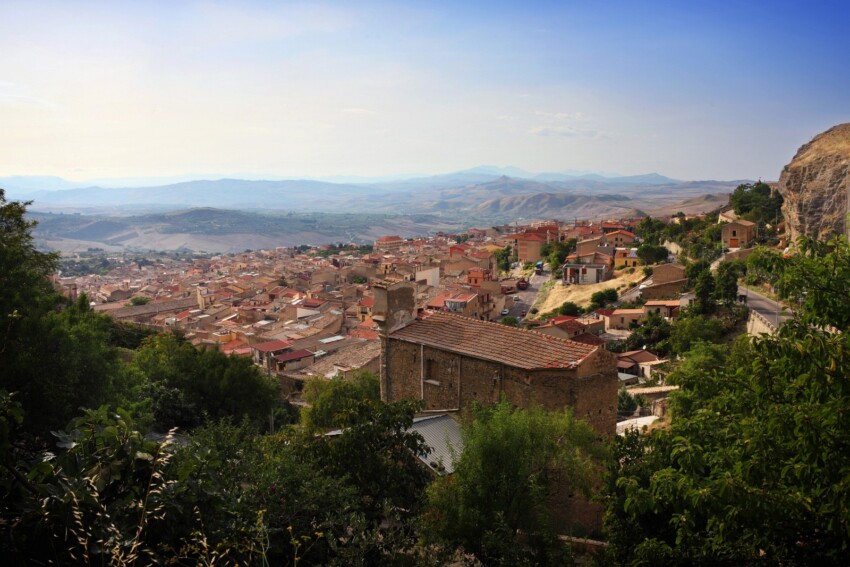
Corleone is the Sicani municipality best known worldwide, although its fame is tied almost exclusively to Mario Puzo’s novel and Coppola’s film saga. The real town is very different from the mafia-tinged imagination that built its reputation: an agricultural centre of some 10,000 inhabitants, with a rich medieval history and beautiful hillside landscape.
The CIDMA — International Documentation Centre on the Mafia and the Anti-mafia Movement is the most honest and necessary place to visit in Corleone: housed in the old Bourbon prison, it documents with rigorous precision the history of Sicilian organised crime and above all the resistance of victims and anti-mafia movements. It is an uncomfortable and important museum that restores complexity to a subject often reduced to cinematic myth.
The historic centre develops around Piazza Garibaldi and preserves Norman churches and noble palaces. Balatrano Castle, a few kilometres away, is a medieval ruin reached on foot with a short trek that offers panoramas across the entire Frattina valley.
Sicani cuisine is that of the inland mountains: hearty, seasonal, tied to pastoralism and cereal cultivation. Castelvetrano black bread — also made in Sicani municipalities with ancient timilia wheat — is perhaps the most representative baked product of the Sicilian interior: dense, fragrant, with a thick crust and moist crumb that keeps for days.
The Nebrodi black pork cured meats find comparably quality counterparts in the Sicani area too, particularly in Bivona and Palazzo Adriano where some families still produce dried sausages and capocollo using traditional methods. Legume soups — broad beans, chickpeas, chickling vetches — with toasted bread and local extra virgin olive oil are the everyday dish of the inland villages, simple and excellent.
The vineyards of the area produce mainly local varieties such as Nero d’Avola and Perricone: some wineries in Bivona and Cammarata have begun to showcase these varieties with increasingly quality-focused labels. Winery visits are organised by appointment and represent an excellent opportunity to meet local producers.
The Monti Sicani lie some 80 kilometres from Palermo and about 60 kilometres from Agrigento, reached by taking the SS121 east from Palermo or the SS189 north from Agrigento. There are no railway stations in the Sicani villages: the Palermo-Agrigento line crosses the area, but the most useful stops — Cammarata-San Giovanni Gemini — are nonetheless several kilometres from the inhabited centres and main natural sites.
The reference airport is Palermo Falcone Borsellino: from there, with car hire, the main Sicani villages are reachable in under two hours. Those arriving from the east can also use Catania airport, from which Corleone is about two hours’ drive away. The scenic road connecting Palazzo Adriano to Bivona through the Cammarata forests is an experience in itself: hairpin bends, valleys and oak forests that change colour with the seasons.
For those preferring to combine the Sicani with a broader itinerary, the inland villages pair naturally with a visit to Agrigento’s Valley of the Temples and the thermal baths of Sciacca to the south, or with the Madonie Park to the north.
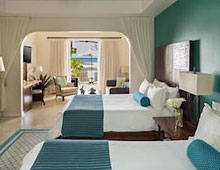 Hotel
Hotel 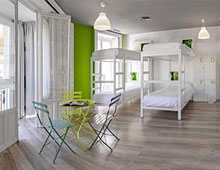 Budget accommodations
 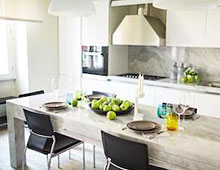 Apartments
 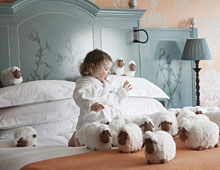 Family Hotel
  Luxury Hotel
  Resorts