Etna: Guided Summit Hiking Tour up to 3400m, Optional Pickup
5.822 reviews
Buy now
From 55,00€ per person
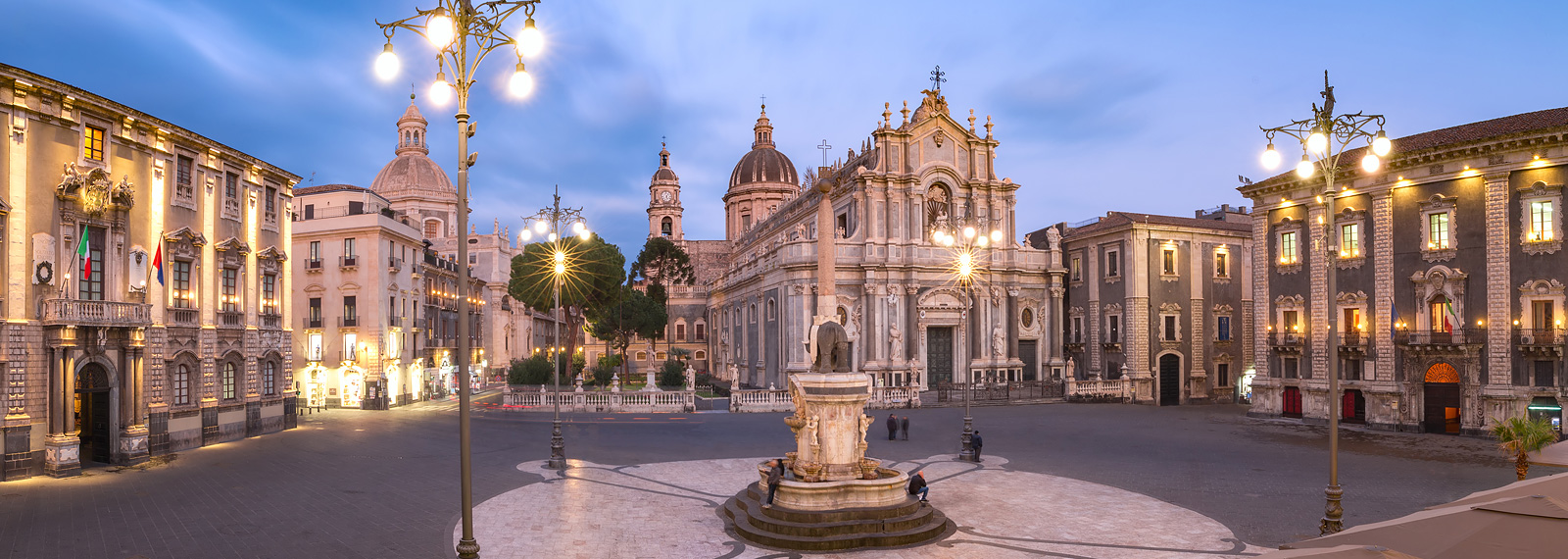
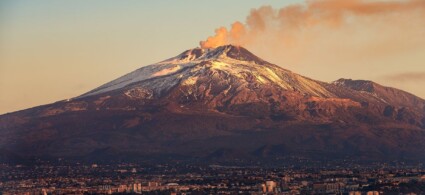
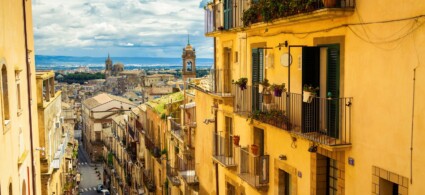
Dominated by the imposing Mount Etna volcano, Catania is a splendid Baroque city situated on the Ionian Sea, in a vast plain cultivated with citrus groves. Built from the dark volcanic stone of the volcano that has shaped the life of this Sicilian city over the centuries, Catania reveals an extraordinary, compact and harmonious historic core of Baroque architecture.
The extraordinary beauty of this Sicilian city stems from its millennia-long history, its monuments bearing Greco-Roman, Byzantine, Arab and Norman influences, through to the Sicilian Baroque style that characterises it following the 1693 earthquake.
Catania is a gem waiting to be discovered.
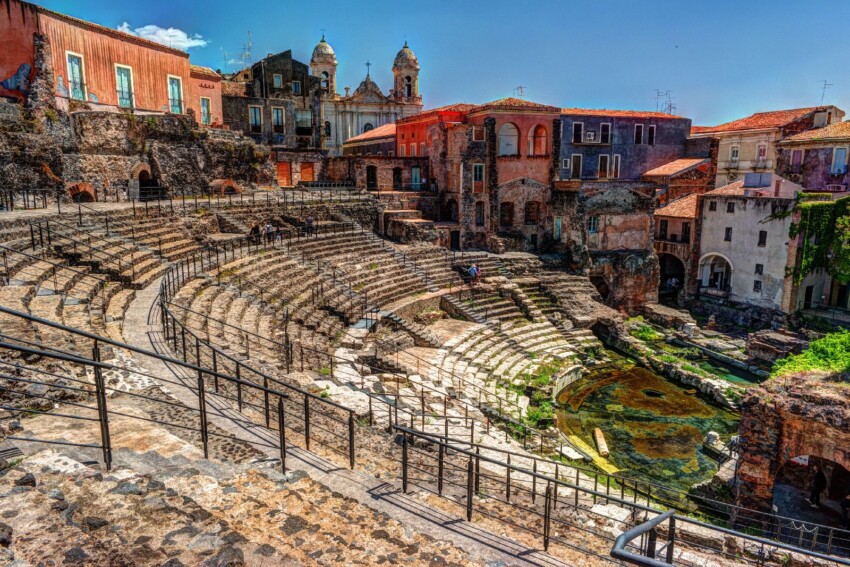
An undisputed example of Sicilian Baroque, Catania is a beautiful town with plenty to see that can easily be explored on foot, allowing you to visit the city markets scattered throughout the area, which tell the story of trade – one of Catania’s oldest activities.
You cannot visit Catania without passing through Piazza del Duomo, the heart of the city, whose current layout dates from the eighteenth century and is home to several Baroque buildings. On this square you can admire the Palazzo degli Elefanti (the Town Hall), the Cathedral, and the famous Elephant Fountain, built in lava stone and depicting the elephant “Liotru”, the city’s symbol, believed to protect Catania from volcanic eruptions. Don’t miss a visit to Catania’s Cathedral, the Cathedral of St Agatha, whose origins date back to 1070, though its current appearance is due to eighteenth-century renovation that gave it its stunning façade in white Carrara marble, designed by Vaccarini, who also created the Elephant Fountain.
Among the city’s oldest buildings stands the famous Ursino Castle, built by Frederick II in the first half of the thirteenth century and later serving as a residence for Aragonese sovereigns in the 1400s; today it houses the city’s civic museum. Another ancient site in the city is the Achillean Baths, dating back to around the fourth to fifth centuries, located beneath Piazza del Duomo. The other most famous attractions to visit in Catania date from the eighteenth century and were built or renovated after the devastating 1693 earthquake.
From Piazza Duomo, Via Etnea stretches out, Catania’s main street and one of the city’s most beloved places for both locals and tourists. Considered the city’s premier shopping destination, it features both important shops and elegant Baroque-style buildings. Finally, the Benedictine Monastery attached to the Church of San Nicolò is one of Europe’s largest monastic complexes and now houses the Department of Human Sciences at the University of Catania.
From Via Etnea to Piazza Duomo, through to Via Garibaldi, Via Vittorio Emanuele and Via Mario Rapisardi, the historic centre area is the city’s living room, full of shops and very busy. Noisy and bustling, these areas are ideal for staying if you don’t mind the crowds and are looking for entertainment. Hotels, apartments and bed & breakfasts at every price point abound, along with numerous bars, restaurants and shops. The main monuments are easily reachable on foot.
If the city centre isn’t for you, you could stay in the seafront area or around Corso Italia, two lively neighbourhoods that are convenient for getting around the city and its surroundings.
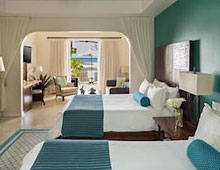
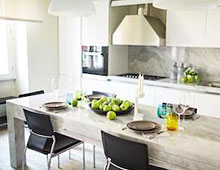
Whatever area of Catania you choose, you’ll find every type of accommodation, from luxury hotels to simple bed & breakfasts and guesthouses.
Catania is the liveliest Sicilian city in terms of entertainment and leisure activities aimed at a fairly young audience, thanks in part to the presence of the university.
One of the coolest areas in the evenings is certainly the historic centre, in the so-called “golden square”, between Piazza Duomo, Piazza Università and Piazza Teatro Massimo, with its countless bars always packed at all hours and a variety of venues, American bars and pubs where you can chat over a good cocktail. In summer, venues extend into outdoor spaces and transform into the famous “Concert Cafés“, with music, projections and multimedia events.
The entertainment offer is very extensive, thanks to theatres, nightclubs, wine bars and many other venues capable of satisfying all tastes. In many places you can also enjoy excellent live music and take part in a “jam session”.
Among the most popular pubs and bars are La Chiave, with its Thursday evening jam session, Il Fondo Bianco, Il Palomo. Other noteworthy venues include Waxy O’Connor’s, with outdoor seating and live music every evening. And then there’s the club La Chiave. For wine bars in upmarket Catania, head towards the seafront in the more exclusive Corso Italia area, between Piazza Europa and the intersection with Via Monfalcone.
Around one in the morning, but especially at weekends, nightclubs are packed with young people dancing and having fun until the early hours. During the winter season, the most popular nightclubs are those in the city centre, such as I Quattro Venti, Il Vola and Il Boh, or on the outskirts, like I Mercati Generali – a historic venue that hosts concerts and dancing within the walls of a renovated old wine press – and Strike.
During the summer season, young people head to the Playa seafront in Catania, which offers a wide choice of nightclubs (Cucaracha, Capannine, Piramidi) or to the small town of Aci Castello, on the city’s doorstep.
Among the most beloved nightclubs is Il Banacher, established in 1975, one of the most exclusive meeting places not only in Catania but in southern Italy.
Whatever you choose for your night out, the evening will undoubtedly end with the ritual of dawn breakfast. Between 4 and 6 in the morning, a warm croissant or granita can be enjoyed at Bar Aiello, and arancini at Etoile d’Or, both open 24 hours a day.
Catania’s most famous dish is probably Pasta alla Norma, named after the opera by the celebrated composer Bellini: prepared with spicy tomato sauce, fried aubergine and grated salted ricotta.
Also worth trying are the many seafood dishes and stuffed arancini. Food lovers must taste horse meat, a genuine passion of true Catanese people, from meatballs to sausages, following the motto “arrusti e mangia” (roast and eat).
On hot summer evenings, try the ice creams, granitas, cannoli and almond milk, all unmissable Catanese delicacies.


 Hotel
Hotel 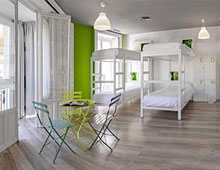 Budget accommodations
  Apartments
  Family Hotel
  Luxury Hotel
  Resorts