Good Morning Etna
Bronte - Via Giudice Falcone, 29
Book now
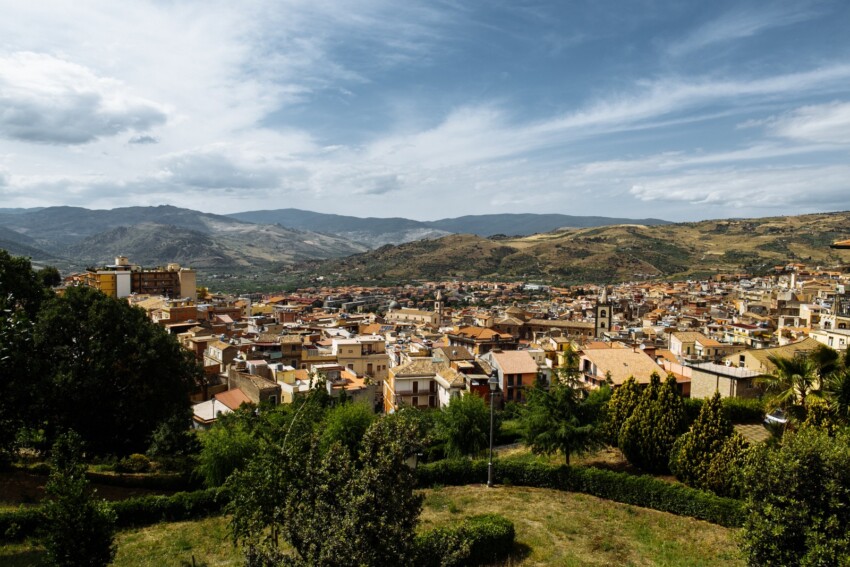
In the heart of Sicily, nestled among majestic hills and fragrant citrus groves, lies Bronte, a village steeped in history and tradition whose origins stretch back into the mists of time, possibly to prehistoric times. It is certain that this territory has seen successive civilisations come and go, from the Greeks to the Arabs, but it was towards the fifteenth century that Bronte developed into a proper urban centre. The city gained international prominence from 1799 onwards when Ferdinand I of the Two Sicilies granted the British admiral Horatio Nelson the title of Duke of Bronte and presented him with vast tracts of land and buildings, including the Castle and the Church of Santa Maria near Maniace.
Moreover, it appears that the surname of the Brontë sisters was also inspired by this Sicilian town, as their father, Patrick Prunty, decided to change his surname to Brontë in honour of Horatio Nelson, of whom he was a great admirer. This glorious past is evidenced by the remains of Nelson’s Castle, built in the eighteenth century on the site of what had previously been a Benedictine complex.
Today, Bronte is a charming town that enchants visitors with its fascinating history, breathtaking landscapes and culinary delights. Situated on the western slopes of Mount Etna, Bronte falls within the Nebrodi Park territory and is internationally renowned for its pistachio, which has been awarded Protected Designation of Origin (PDO) status. Considered one of the world’s finest pistachio varieties, it is now used to create a range of other products including pistachio pesto, various confectionery and ice cream.
The Arab rule that dominated Sicily for roughly two centuries, starting from 827 and ending with the fall of Noto in 1091, had a profound influence on the landscape of this territory and its artistic heritage. The oldest heart of Bronte is a labyrinth of winding streets, staircases and alleyways infused with Arab culture and traces of a truly unique past. Walking through its narrow lanes lined with tightly packed buildings, you can still admire grand residences, numerous churches and small shops selling local produce.
In the heart of the historic centre, in Piazza Spedalieri, stands the Real Collegio Capizzi, a building erected between 1774 and 1779 at the behest of Don Eustachio Ignazio Capizzi. Don Capizzi was a cleric who devoted himself to constructing a complex to house schoolrooms and a library designed primarily for young people. At the time, the town had no schools and illiteracy was rife, as only the nobility and clergy had access to education.
For many years, the college served as one of the island’s principal cultural centres and provided educational opportunities to countless young people. In addition to classrooms, the complex included a theatre (later destroyed), a church and the library, which continues to house numerous literary works and writings from the eighteenth and nineteenth centuries.
The Mother Church of San Bartolomeo, also known as the Church of the Most Holy Trinity, was built in Bronte in the sixteenth century by combining two other religious buildings. It is documented that the church resulted from the merger of the Church of Santa Maria and the Church of the Trinity, both dating back to the Norman period.
The combination of these two buildings created Bronte’s most impressive church, which boasts a striking Baroque façade; inside are works of considerable artistic merit, some commissioned by wealthy patrons and citizens.
Nelson’s Castle, built in the eighteenth century and named after the English admiral Horatio Nelson, dominates the skyline of Bronte and is a site that tells much about the town’s history. Originally, the Abbey of Santa Maria di Maniace was built here in the twelfth century in the area bordering the towns of Bronte and Maniace. It was commissioned by Margaret of Navarre, wife of William I of Sicily, and dedicated to the Byzantine commander George Maniace, who had defeated an Arab army of over 50,000 soldiers in the area.
In 1799, this territory was granted by King Ferdinand I of the Two Sicilies to the English admiral Horatio Nelson in recognition of support provided by the British navy in suppressing the Neapolitan uprisings. The abbey underwent significant transformations and was converted into a residence called the Dukedom of Nelson or Nelson’s Castle. Although only parts of the complex now remain, you can still admire the towers, defensive walls and the ducal family’s gardens. Within the structure, you can visit the residential apartments, the splendid Church of Santa Maria di Maniace, the guest quarters and the granary.
Bronte has long been known for the numerous churches that testify to the religiosity of the territory, as Christian worship became increasingly rooted even during Arab rule and the clergy grew in numbers. Historical records tell us that in 1174 there were thirty-two churches under the jurisdiction of the Abbey of Santa Maria di Maniace, built by Margaret of Navarre.
Due to numerous earthquakes and neglect, many churches have been destroyed, rendered unsafe or reduced to mere ruins. Among those that remain, worthy of attention are the Church of the Sacred Heart and the Sanctuary of the Annunciation, dating from the sixteenth century, and the Church of Saint Anthony of Padua from the seventeenth century.
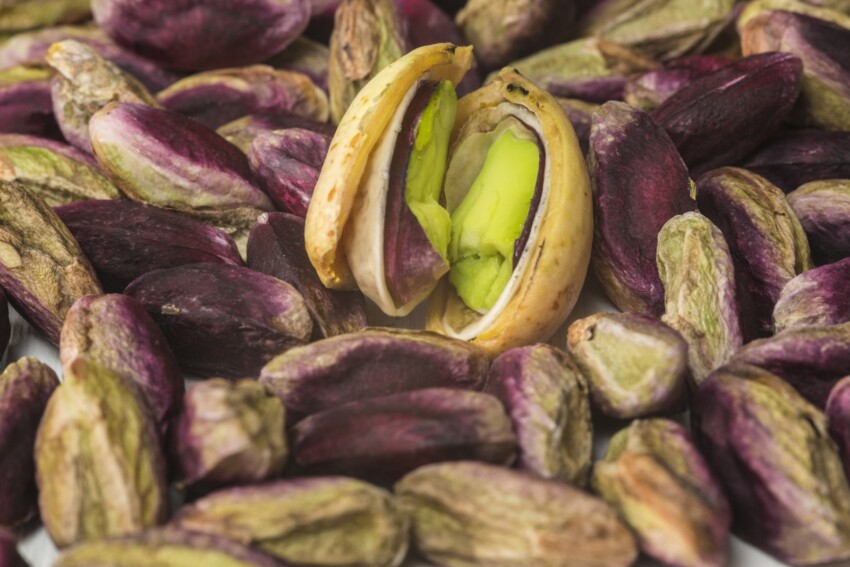
To promote and enhance the pistachio, considered a prized element of the territory, the town created the Pistachio Museum, dedicated to Bronte’s green pistachio, a product that has obtained PDO status and has become renowned beyond Italy’s borders. The museum offers an interactive journey through the history, cultivation and processing of this prized fruit. Pistachio production represents a significant economic resource for Bronte, so much so that it is often referred to as “Green Gold.”
Over the years, Bronte’s green pistachio has been used to create numerous other products, including pesto, nougat, pistachio spread, panettone and Easter doves. Every September, the town hosts the “Sagra del Pistacchio” (Pistachio Festival), an event celebrating the territory’s undisputed king through tastings and performances.
To fully experience the atmosphere of Bronte, it is recommended to choose accommodation located in the historic centre. Here you will find various hotels as well as B&Bs that offer not only hospitality and a warm welcome but also easy access to the main attractions.
For a more peaceful experience, there are several farmhouse accommodations nestled in the countryside where you can enjoy a comfortable stay surrounded by olive and citrus groves.
The best way to reach Bronte is undoubtedly by car, as the town has no railway station. From Catania, you can take the E245 motorway followed by the SS284 to reach Bronte in less than ninety minutes. From Palermo, you will need to travel along the A19 motorway until the Castelnuovo exit, then take the SS284 towards Bronte.
The nearest Fontanarossa Airport in Catania is approximately 56 km away. Those wishing to travel by bus can use the Interbus S.p.A. services, which connect Bronte to Catania’s city centre, the airport and other nearby locations.
What's the weather at Bronte? Below are the temperatures and the weather forecast at Bronte for the next few days.
 Hotel
Hotel  Budget accommodations
  Apartments
  Family Hotel
  Luxury Hotel
  Resorts