Bestseller
Catania: Mount Etna Morning/Sunset Tour (Pickup & Tasting)
From 59,00 €
Buy the ticket
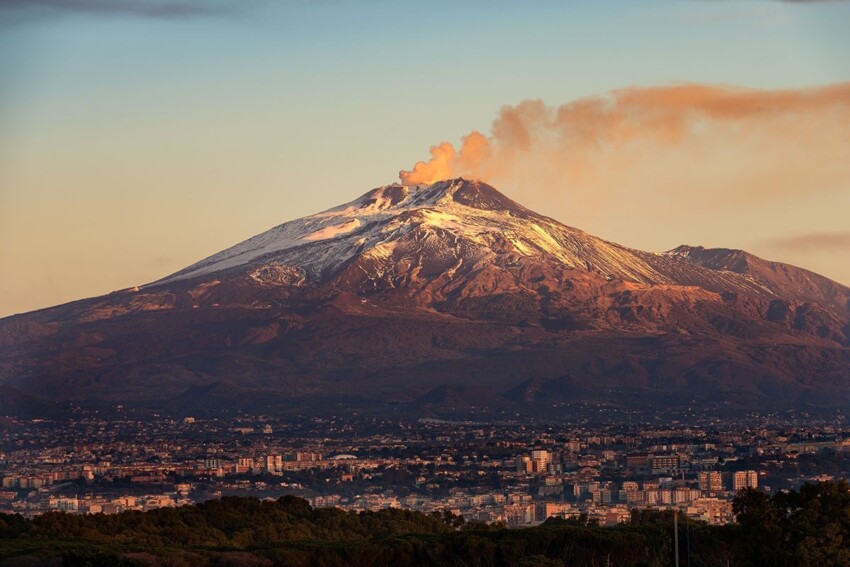
Etna, Mongibello, the world’s most active volcano, the kindly giant, or simply ‘A Muntagna as the locals of Catania call it: it goes by many names, and is one of the most fascinating tourist attractions in eastern Sicily, having become almost an emblem of the entire region.
In terms of height, it rivals the most majestic Alpine peaks and ranks among Europe’s highest mountains, yet the landscape of Etna is entirely different from that of other summits on the list. Forget glaciers and mountain pastures—what awaits you on the slopes of this volcano with a fiery heart are lunar atmospheres, dramatic contrasts between dark stone and incandescent lava, and hardy vegetation that carves out precious living spaces in a hostile environment.
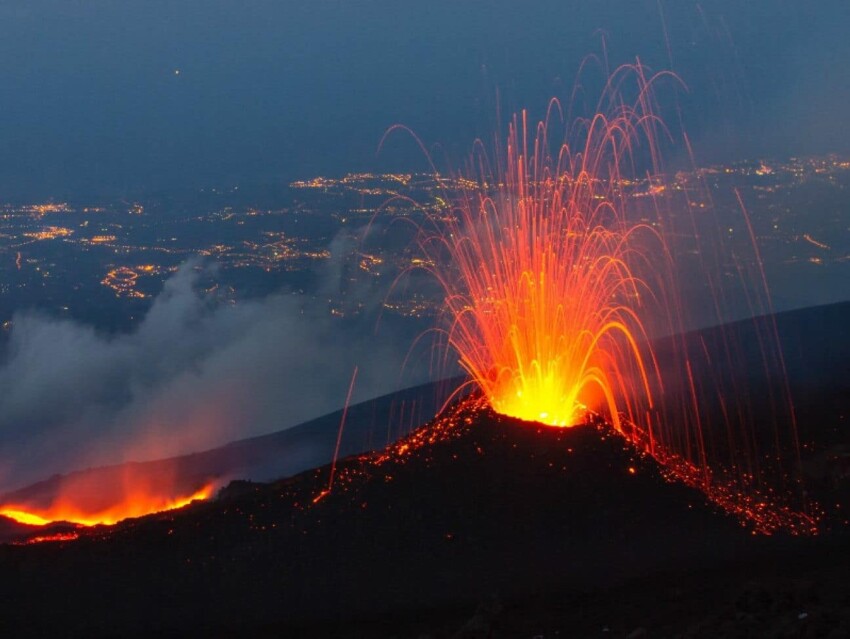
In a half-day excursion or a full day outing, you can take in countless unusual and evocative views: lava fields formed by recent or ancient eruptions, villages destroyed by eruptions, extinct craters, the impressive caldera of the Valle del Bove, volcanic caves. And then of course, the true stars of Etna: the still-active summit craters.
Over the decades, the kindly giant has inspired myths and legends and captivated writers, poets and filmmakers. Let it captivate you too: treat yourself to the unique spectacle of a trip to Mount Etna volcano.
Things to see on the mountain include both scenic beauty and historical and cultural attractions.
Although Etna offers an incredible variety of landscapes and experiences, almost everyone comes here to see essentially one thing: the craters. And after all, aren’t the craters the feature that immediately identifies a mountain as a volcano in everyone’s eyes?
The highlight is reaching the highest accessible point on Etna and admiring the summit craters at 3,300 metres above sea level. You’ll be practically at the volcano’s mouth, or rather the closest point from which you can safely admire it, and you’ll have an incredible view before you: just below you the crater, further towards the horizon the Ionian Sea.
The summit craters usually included in tours are three:
A typical tour to the summit craters begins with a cable-car ride from Rifugio Sapienza (at 1,900 metres) up to 2,500 metres, from there you continue in special 4×4 vehicles up to 2,900 metres and finally climb on foot for about 2 km (with an elevation gain of around 400 metres); you then descend on foot back to the cable car.
Some variations are possible with longer or shorter sections on foot, but in general this is a demanding excursion: remember that it’s still a high-altitude mountain trek!
It’s therefore not for everyone, and even for the most fit, reaching the summit craters is not always possible: first of all, you’ll need to be accompanied by an authorised guide (solo climbing is prohibited), and the volcano’s movements are constantly monitored, so any concern about the safety of excursions will result in their suspension.
Further down from the central crater, along the southern slope are the silvestre craters, formed during the 1892 eruption and now extinct: they are easily accessible by car and therefore the most visited. A visit to the silvestre craters does not necessarily require a guide and is suitable even for those with limited time.
Somewhere between the central crater and the silvestre craters are the lateral craters, still active at 2,900 metres. They can be reached with a short walk from the point where the 4×4 vehicles drop you off.
Some tours include a visit inside a lava tunnel cave: yes, you’ve understood correctly, you can go “inside the volcano” through an extinct lava cave.
You’ll be accompanied by a volcanological alpine guide who will explain in detail, in language comprehensible to everyone, the dynamics of one of nature’s most frightening and at the same time spectacular phenomena.
The most famous volcanic caves are the Grotta dei Lamponi4, the Grotta delle Palombe5, the Grotta del Gelo6 and the Grotta dei Tre Livelli7.
The Valle del Bove8 is a deep valley that extends for approximately 7 km and is bounded by walls up to 1,000 metres high. This large horseshoe-shaped caldera is located on the volcano’s eastern slope and is an area of great beauty.
For many, Etna is just the mountain, but to understand it fully, you also need to pay attention to the human side: visiting the villages perched on its slopes is a way to experience firsthand the life that has managed to develop despite the constant threat of eruptions.
You can discover villages and towns of varying sizes, historic palaces, characteristic churches, and local products such as wines and pistachios. Among the most famous Etna villages, you can certainly mention Zafferana Etnea9, Nicolosi10, Bronte11 and Trecastagni12.
The former Benedictine monastery San Nicolò La Rena in Nicolosi houses the headquarters of the Etna Park Authority13, which is open to visitors. On the ground floor is an interesting Volcanology Museum, an excellent starting point for learning about this distinctive mountain, the history of its formation and its geological features.
Right outside the headquarters begins the Sentiero del Germoplasma, an easy trail along which numerous aromatic and medicinal herbs, fruit trees and vines grow: perfect for a relaxing walk immersed in nature’s fragrances.
In the following map you can see the location of the main places of interest mentioned in this article.
More than an attraction to see, Etna is an experience to be lived. Adventurous, romantic, scientific, sporty, unhurried, melancholic, adrenaline-fuelled: choose the mood of your Etna holiday with a themed activity based on your tastes and interests.
The most popular activity on Mount Etna is trekking. Walking excursions allow you to immerse yourself completely in nature and experience a journey at a pace that perfectly suits contemplation of the landscape.
The trekking opportunities on Mount Etna are truly countless: ranging from easy one-hour walks or slightly more, suitable for children too, to demanding multi-day excursions that require physical strength and mountain experience.
Depending on your level and the experience you want to have, you can walk the Etna hiking trails on your own, with a private guide or by taking part in a group trekking tour.
The most famous among the trails suitable for everyone is called “Schiena dell’Asino” (Donkey’s Back): covering 5 km, it starts near Rifugio Sapienza and reaches a viewpoint from where you can admire the Valle del Bove.
Another option if you want to walk without a guide is a roughly 4 km trail on the north-east slope starting from Rifugio Citelli.
If you’re unsure which to choose, below we suggest the best-selling guided tour: play it safe!
There are several operators offering guided excursions on Etna: by choosing one of the following, you can be sure to take part in a splendid guided tour, they all have excellent ratings!
You don’t need to exert yourself to admire Etna: the jeep tour is the perfect solution for those who want to enjoy the best while walking as little as possible.
Feet, bikes and jeeps aren’t the only ways to explore the volcano: you can also enjoy splendid horseback rides, adventurous quad bike excursions or relaxing walks aboard donkeys. You can even see Etna from above by taking part in a helicopter tour!
If you’re passionate about photography, don’t miss the opportunity to join a photo tour: you’ll be guided to the most suitable spots to capture the power and spectacularity of an eruption in a photograph or small details that reveal the peculiar beauty of this place.
In recent years, interest in cycling excursions on Etna has grown enormously, also thanks to the spread of electric-assisted bikes.
Mountain bike enthusiasts will find plenty to choose from, including the possibility of climbing Etna. The landscapes to explore by bike are hugely varied, as are the terrains you’ll pedal over: pine forests, woods, tarmacked roads, off-road tracks, trails with volcanic sand and rock surfaces.
But Etna on two wheels is not an experience reserved for experts: many agencies organise guided or self-guided bike tours and offer electric bike rental services to make this magnificent experience accessible even to those who aren’t trained.
Can you ski on Etna? Certainly! There are two ski areas on Mount Etna: the largest is located on the southern slope at Nicolosi, the other is Piani di Provenzana-Linguaglossa on the northern slope.
Both facilities include slopes of varying levels, from beginners to experts.
You can admire Etna from below in an unusual and romantic way, namely by boarding the trains of the Circumetnea railway. This is a historic railway route that runs around the volcano, touching all the main villages in the area in approximately three hours; it departs from Catania Borgo station and arrives at Riposto.
The train stays at low altitude, so it’s not possible to see the craters during the journey, but it represents a fascinating way to admire Etna in its entirety. It is used by hikers to reach the villages from which hiking trails depart, but it’s also a valid alternative to walking excursions for those with mobility issues.
The Circumetnea is not a tourist train, so be prepared to tolerate some discomfort. It’s possible to get off along the route to visit the different villages; however, be aware that stops can vary depending on the timetable: it’s therefore best to plan your itinerary by checking the updated schedule.
Established in 1987, the Etna Park is Sicily’s first nature reserve. It was founded with the dual purpose of protecting the volcano’s delicate ecosystem and promoting the development of local communities with a view to ecological sustainability.
It covers an area of 59,000 hectares and is divided into four zones with different levels of protection ranging from zone A (maximum protection, minimal human intervention) to zone D (urbanised).
Mount Etna occupies the centre of the park. It is approximately 3,350 metres high, has a diameter of 40 kilometres and a base perimeter of over 140 km; it covers an area of 1,260 km².
Being an active volcano, Etna is in constant transformation, but what cannot change is the indissoluble bond of Sicilians who for centuries have coexisted with this wonder of nature that is at once threatening and astounding.
There are twenty municipalities that fall within the territory of Etna Park:
The total population is approximately 250,000 inhabitants.
As you’ve seen, there are many different ways to visit Etna. This can sometimes feel overwhelming and raise quite a few questions: let’s look at the most common ones together.
If we’re talking about Etna in general, yes: the mountain can be visited from January to December. However, this doesn’t mean you can do everything at any time of year.
Some excursions depend heavily on weather conditions, and trekking to the summit craters is generally not possible between November and May-June; during these months, skiing excursions reserved for experienced skiers are organised instead. Other examples of seasonal tours include horseback and donkey rides.
In recent years, the period from late September to October has been characterised by severe thunderstorms, so high-altitude excursions are not recommended during these months.
For classic tourist visits, trekking and cycling tours, spring is the ideal season, when warm but not oppressive temperatures allow you to enjoy the magnificent landscape to the fullest with fewer risks. During this period, nature is at its best with colourful plants and flowers in bloom, and villages around the volcano organise many local events.
Summer is the peak tourist season: it’s certainly a good time to visit Etna, especially if you want to do sunset excursions or spend the night at altitude to watch the sunrise over the volcano.
The downsides of a summer tour are crowding in the most popular areas and the risk of sunburn and dehydration. If you’re planning a trek, remember that walking in the scorching heat is more tiring: don’t overdo it and book one suited to your fitness level.
In winter the volcano is rarely visited: while it’s true that activities are limited to skiing and snowshoeing, you can equally enjoy the breathtaking sight of a snow-covered volcano without the large summer crowds.
One of the most common questions travellers keen to see Etna ask themselves is: can we go alone or do we have to book a tour?
As mentioned already, by law certain areas of Etna are only accessible if accompanied by an authorised guide: in this case, booking a tour is necessary.
In the “free” zones you can go alone, but always remember that the volcano environment is unique and, whilst not more dangerous than a “normal” mountain, it does present some small hazards not to be underestimated.
Joining a tour is the best choice both for safety and to make the most of your visit. Being guided by an expert local guide allows you to reach the most spectacular spots and enrich your day with valuable information that will help you appreciate this unique environment even more.
Etna tour prices vary enormously: you can find tours from €30 as well as €200 and upwards. The factors affecting the price are the credibility of the agency organising it (possession of legal requirements), the duration of the tour, the number of participants, the means of transport used, and the services offered.
In particular, if you book a tour that involves using the cable car, always check whether the ticket is included in the price: tours that are considerably cheaper than others generally don’t include it, which explains the significant price difference.
For solo travellers, it can be quite expensive to join a tour as agencies typically charge a minimum fee for 2 or 3 people. To get around this problem, you can choose an agency that offers the possibility of joining an already-formed small group.
Tour departures on Etna are always subject to a final decision by the guide.
If, after assessing the weather conditions, the guide determines that safety conditions are not adequate, the tour is cancelled; tours do go ahead in the presence of cloud or rain if visibility is considered good or decent.
Pay close attention to weather forecasts if you’re planning a self-guided trek and, if in doubt, always ask for advice from locals. The golden rule is: it’s better to give up than to take risks.
It depends on the type of tour. They range from tours that require no special fitness (you stay comfortably in a jeep) to others that require considerable physical effort.
Always choose a tour suited to your level; if you’re going as a group, select the level suited to the least fit member.
It depends on the agency you’ve chosen. Most tours depart from Catania: the price usually includes hotel pick-up, or alternatively your agency will tell you the meeting point.
There are tours departing from other locations, both small villages near the volcano and famous tourist resorts in southeastern Sicily such as Taormina, Giardini Naxos, Ragusa and Syracuse.
You’ll easily find places to eat and drink on Etna: restaurants and bars are present in all villages covered by organised tours; at the cable car departure point there are restaurants, bars and shops where you can buy sandwiches, drinks and snacks to take on your excursion.
At around 1,900-2,000 metres altitude you can dine at Rifugio Sapienza, which serves typical mountain cuisine, or at the self-service La Terrazza dell’Etna.
Recommended clothing for an Etna excursion is the same as for any normal mountain hike. Comfortable shoes are essential: trekking boots are always recommended, trainers or running shoes are suitable only on certain paths, while sandals and flip-flops should be avoided at all costs.
The advice is to dress in layers and be prepared for weather that can change rapidly. Even in summer, bring a fleece and jacket with you, preferably waterproof and windproof.
Ask the agency you’re booking with for more specific, detailed information about clothing appropriate for the tour you want to do and the season you’re visiting.
In this case it depends both on the agency you book with and on the tour you want to do. It’s forbidden to enter Zone A with pets, so if you intend to reach the central crater or another area included in this zone, you’ll have to do so without your furry friend.
In other areas, dogs are not prohibited by law, but don’t assume animals are allowed on all tours: some agencies don’t accept them, while others only accept them if you book a private tour.
Mount Etna is one of Sicily’s most visited tourist attractions, and as a result, numerous accommodation facilities have been built around the great mountain to host large numbers of tourists.
The choice of where to stay is therefore very wide, both in terms of quantity and quality: in the Etna park territory you can find hotels of every type, from budget-friendly to luxurious 4-star establishments, though most tourist accommodation on Etna is concentrated around Nicolosi, which has become something of a hub for those wanting to visit the mountain.
For a romantic experience you can book a bed&breakfast in any of the charming villages on Etna, whilst if you want to do multi-day trekking you can stay in one of the mountain huts on the mountain. Although equipped with all essential services, these refuges are not hotels and require a spirit of flexibility.
Be very careful about the location of the hotel or B&B you want to book, as some facilities have “Etna” in their name but are actually located outside the park territory, and in some cases quite far from the mountain itself.
Also consider that you can do a volcano excursion starting from Catania, Syracuse, Taormina and other places, so if you prefer to stay in a city you can base yourself in one of these: all three offer a wide variety of accommodation for all budgets. The closer you are to the volcano, the later you can sleep in.
If you want to reach Etna by public transport, you have only two options: visit it “from below” using the trains of the Circumetnea railway, or reach Rifugio Sapienza, the starting point of the railway, with a bus from the local AST company departing from Catania. There’s only one departure a day and the journey takes about an hour.
With a hire car things become much simpler. From Catania, just take the A18 Catania-Messina motorway heading south, exit at Gravina di Catania and follow signs for Nicolosi-Etna Sud. It’s also possible to go up the north-east slope (from the Zafferana Etnea side), in which case the recommended exit is Giarre.
Mount Etna is located in eastern Sicily, in the province of Catania, south-west of the Peloritani Mountains and south-east of the Nebrodi range in the Sicilian Apennines.
 Hotel
Hotel  Budget accommodations
  Apartments
  Family Hotel
  Luxury Hotel
  Resorts