Grand Hotel Excelsior
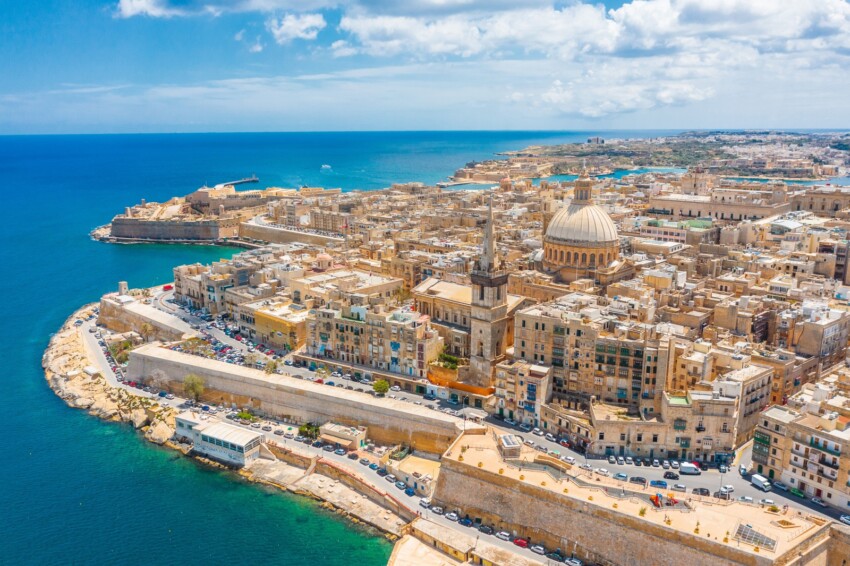
Just 93 kilometres from Sicily’s southern coast, Malta is one of the Mediterranean’s most captivating destinations and one of the most rewarding excursions you can make during a stay on the island. Small in size but extraordinary in historical density, the Maltese archipelago comprises three inhabited islands — Malta, Gozo and Comino — with a total area of just 316 km². Despite its modest dimensions, Malta is home to megalithic temples older than Stonehenge and the Egyptian pyramids, a baroque capital recognised as a UNESCO World Heritage Site, and a cultural tapestry that blends Arab, Norman, Spanish, crusading and British influences.
Proximity to Sicily makes Malta easily accessible by ferry from Pozzallo or by air from Catania, with crossings taking approximately 90 minutes and 45 minutes’ flight time respectively. This geographical closeness is reflected in cultural affinities too: Maltese, the official national language, is the only Semitic language written in the Latin alphabet and contains numerous loanwords from Italian and Sicilian, a legacy of centuries of commercial and human exchange across the Malta Channel.
Whether you choose a day trip or a long weekend, Malta offers a complete travel experience, with world-class archaeological sites, crystal-clear waters perfect for diving, a vibrant food scene and a historic centre — Valletta — that manages to be both an open-air museum and a living city, bustling with bars, galleries and restaurants.
Despite its size, Malta is an island of surprising tourist complexity. From prehistory to the modern age, every corner tells a different story. Below are the attractions you can’t miss, selected for their historical significance, uniqueness and visual impact.
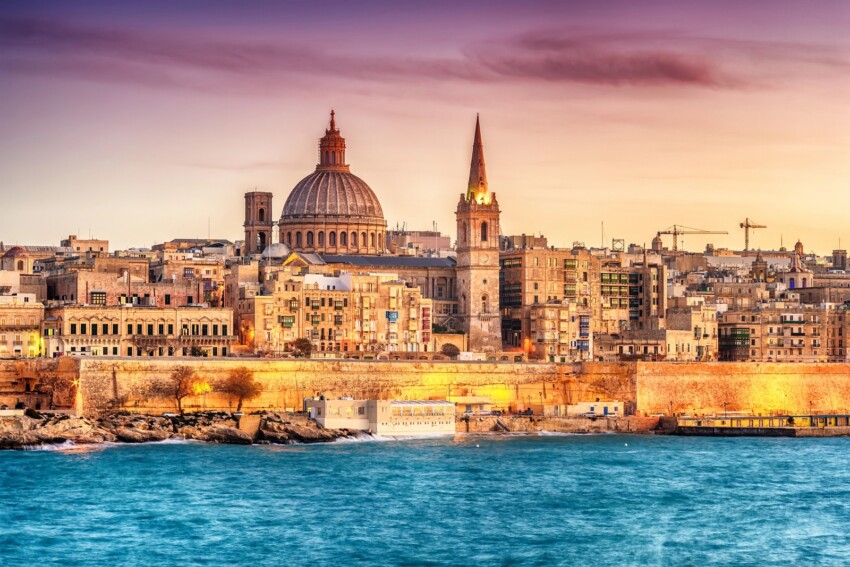
Valletta, founded by the Knights of St. John in 1566 and declared a UNESCO World Heritage Site in 1980, is the European Union’s smallest capital with just 6,000 residents, yet boasts an unparalleled density of monuments and museums. Built entirely on a hillside peninsula overlooking the Grand Harbour, the city features a perfect grid of steep baroque streets descending towards the sea.
The heart of the city is St. George’s Square, the main piazza hosting the Grand Master’s Palace, now the residence of the President of the Republic. Nearby stands the Co-Cathedral of St. John — one of Europe’s most opulent baroque interiors, with its floor completely covered in marble plaques bearing the epitaphs of the Knights and two monumental canvases by Caravaggio, including the celebrated Beheading of the Baptist — and the Upper Barrakka Gardens, whose viewpoint offers one of the Mediterranean’s most celebrated vistas over the waters of the Grand Harbour.
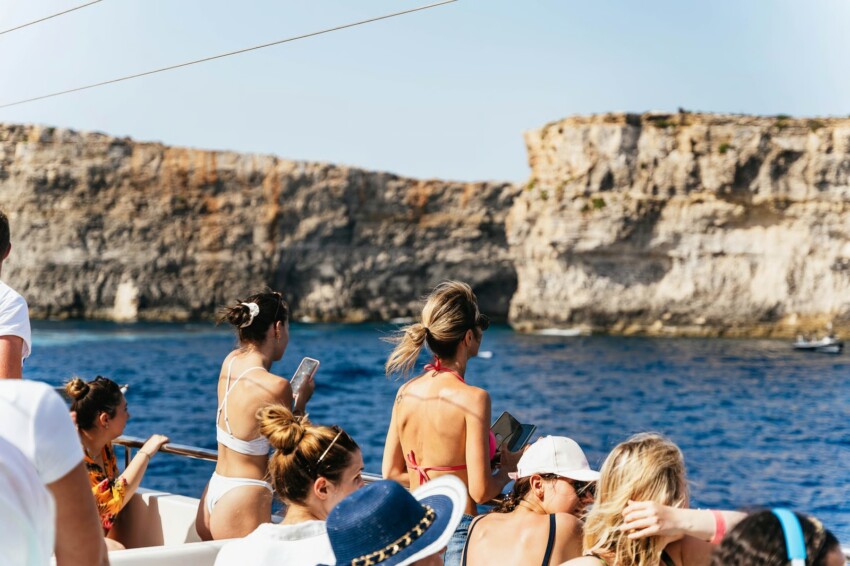
Exploring Malta from the sea is one of the most effective ways to appreciate its jagged coastline, sea caves and emerald-coloured waters that cannot be reached from land. Boat tours depart mainly from Sliema, Valletta and St. Paul’s Bay and cover destinations such as Comino’s Blue Lagoon, St. Paul’s Caves and the cliffs of the southern coast.
Shared boats for groups are readily available for solo travellers or couples, and private charters for those preferring a tailored itinerary. Most excursions include swimming and snorkelling stops.
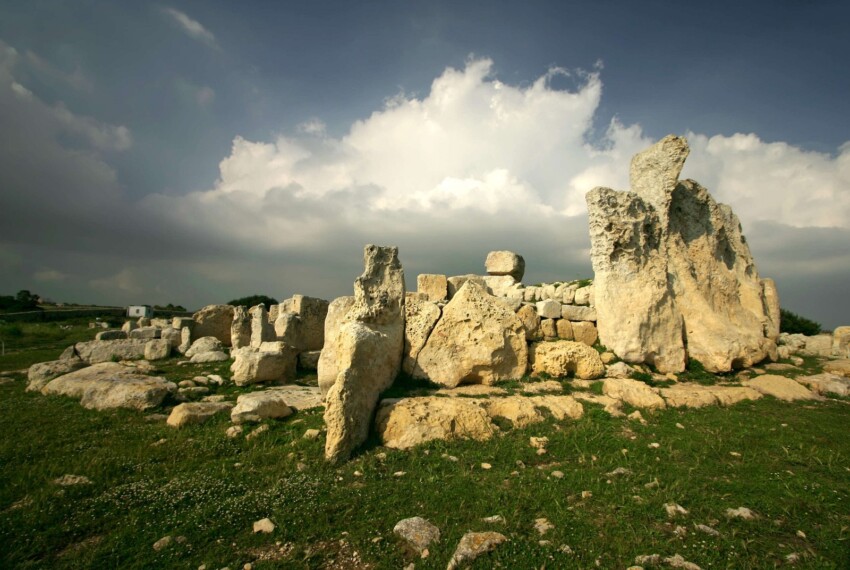
Built between 3600 and 2500 BC, the temples of Ħaġar Qim and Mnajdra are among the world’s oldest free-standing architectural structures, predating Stonehenge by more than a millennium. Listed as UNESCO World Heritage Sites, they stand on a cliff on Malta’s southern coast with a direct view of the islet of Filfla.
Ħaġar Qim, whose name in Maltese literally means “standing stones”, is the larger and more elaborate of the two complexes. Its megaliths in globigerina stone include the heaviest block yet discovered in Malta, estimated at around 20 tonnes. Mnajdra, just a few hundred metres away, is known for its precise astronomical characteristics: at the solstices and equinoxes, the sun’s rays enter specific passages of the temple exactly, illuminating particular architectural features. Both complexes are now protected by semi-transparent tent structures to preserve them from weathering.
The Hypogeum of Ħal Saflieni, at Paola, is one of the world’s most extraordinary prehistoric sites: an underground necropolis carved into limestone rock across three superimposed levels, dating to around 3000 BC. Discovered by chance in 1902 during building works, it yielded the remains of over 7,000 individuals and grave goods of exceptional importance, now housed in the National Archaeological Museum in Valletta.
A visit requires mandatory advance booking several weeks ahead, as access is limited to 80 people per day to preserve internal microclimatic conditions. Guided tours last approximately 45 minutes and allow descent to the third level, where the famous Oracle Chamber is located — a niche with exceptional acoustics capable of amplifying the male voice in ways that continue to astonish visitors.
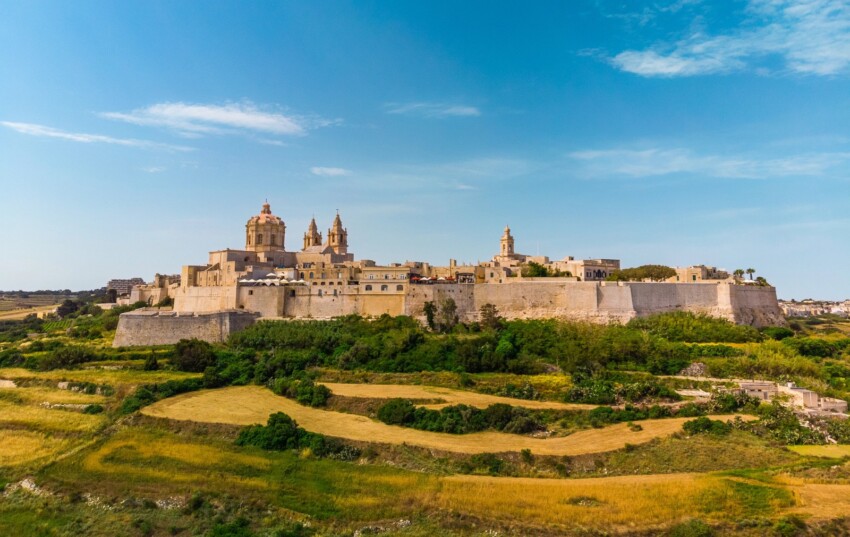
Mdina — the “city of silence”, as it’s commonly known — is Malta’s ancient medieval capital, built on a plateau in the island’s heart at 150 metres altitude. Enclosed by Norman and baroque walls, it’s home to just 300 permanent residents and bans car access, making it one of the best-preserved historic settlements in the Mediterranean.
Walking through its narrow streets at sunset, when organised tours have thinned out and golden light bathes the honey-coloured local stone buildings, is an unforgettable experience. Don’t miss the Cathedral of St. Paul, rebuilt in baroque style after the 1693 earthquake, and the northern bastions, from which on clear days you can glimpse Sicily’s coastline. Just beyond the walls lies Rabato, the medieval suburb with its underground churches and early Christian catacombs.
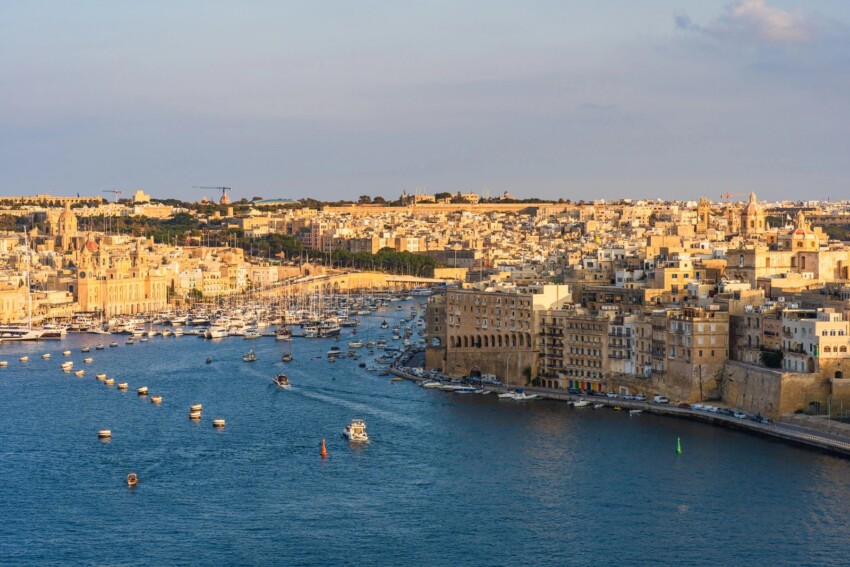
Malta’s Grand Harbour is considered one of the world’s most beautiful and strategically important natural ports. On its shores, facing Valletta, stand the Three Cities — Vittoriosa (Birgu), Senglea (Isla) and Cospicua (Bormla) — a cluster of alleyways, churches and bastions that predate the capital’s very construction and still houses the Sacred Convent of the Order of Malta.
The best way to enjoy the overall panorama is to board a dgħajsa, the traditional Maltese rowing boat in vivid colours, and cross the harbour from Valletta to Vittoriosa. At Birgu, Fort St. Angelo is well worth a visit, recently restored and opened to the public, which played a crucial role during the Great Siege of 1565, when the Knights of St. John repelled the Ottoman Empire’s assault.
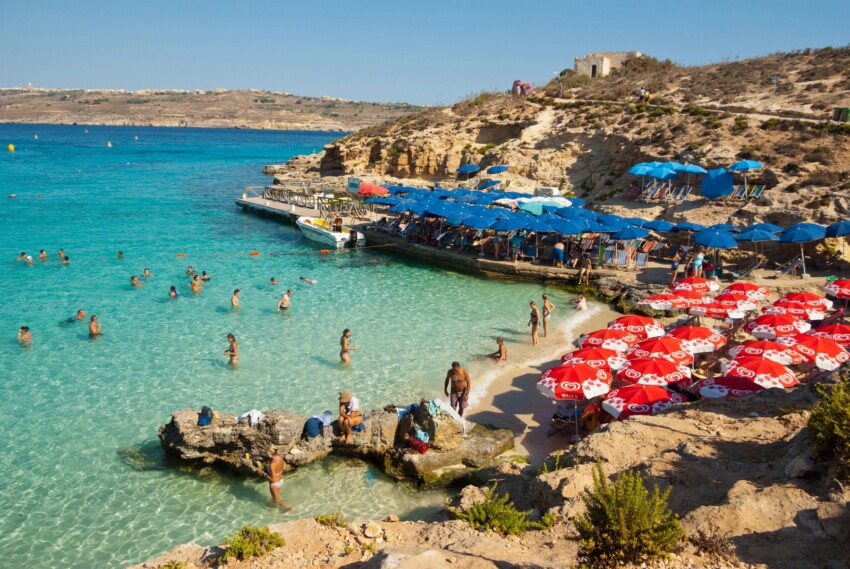
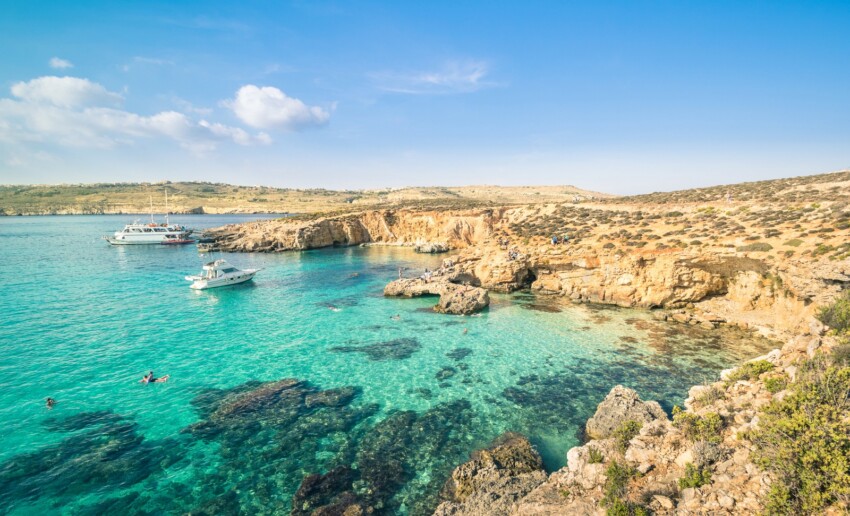
The islet of Comino, situated in the strait between Malta and Gozo with just 3 permanent residents, is home to the Blue Lagoon, a bay of crystal-clear turquoise waters that regularly features in rankings of the Mediterranean’s most beautiful beaches. The shallow, sheltered waters make it ideal for swimming and snorkelling over sandy seabeds reaching barely three metres in depth.
Access is exclusively by sea with numerous boats departing from Malta and Gozo each morning. It’s advisable to arrive by 9:00 am to find the bay still uncrowded: during midday hours, especially between June and September, the Blue Lagoon fills considerably. Minutes’ walk from the bay, Comino’s sea caves offer scenery to explore by kayak or paddleboard, available to hire directly on the beach.
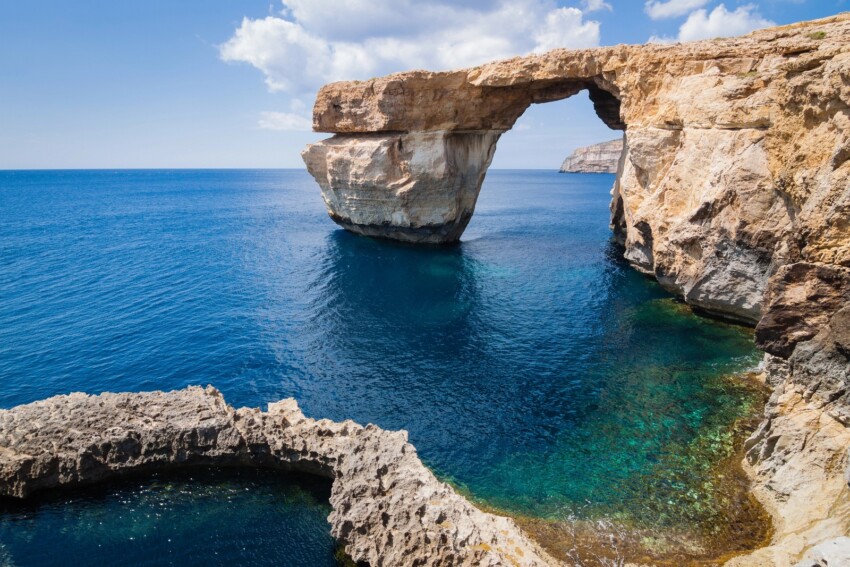
Gozo (Għawdex in Maltese) is the archipelago’s second island by size and first for serenity: greener, more rural and less visited than Malta, it offers a slower-paced alternative with terraced farmland, rocky coves and an authenticity that’s harder to find on Malta. The ferry from Ċirkewwa, on Malta’s northern tip, takes about 25 minutes.
Gozo is home to the temples of Ġgantija — the archipelago’s oldest, dating to 3600 BC — and the Citadel of Victoria, the medieval fortress dominating the entire island from above. Until 2017, Gozo’s northern coast was marked by the celebrated Azure Window, a natural limestone arch that collapsed into the sea during a storm; the site is now very popular with divers exploring the ruins of the submerged headland.
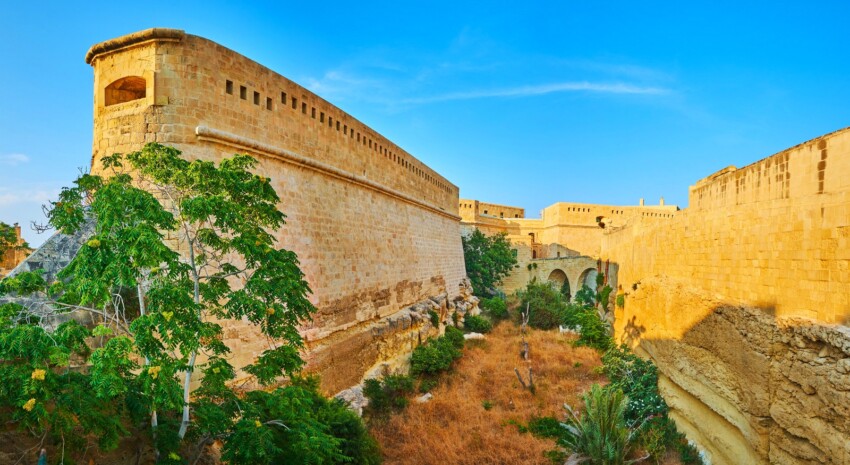
Fort St. Elmo, at the eastern tip of Valletta’s peninsula, is the point where the Knights of St. John held off the Ottoman assault for 31 days in 1565, in what is considered one of modern history’s most epic military sieges. Completely restored between 2015 and 2016, it now houses the National War Museum, which traces Malta’s military history from prehistory through the Second World War, with particular focus on the Malta Blitz (1940-1942), during which the island suffered more bombing raids than London across the entire conflict.
Inside the fort is preserved the Gloster Gladiator Faith, one of three aircraft with which Malta defended its skies during the early months of 1940, becoming a symbol of Maltese resistance. A visit to the fort pairs naturally with a stroll along the Lascaris bastion, with views over the Grand Harbour and the harbour entrance.
Malta isn’t the Mediterranean’s most obvious beach destination — the island is predominantly rocky and sandy beaches are few but of excellent quality. The finest concentrate on the north-western coast, whilst the eastern and southern coasts offer mainly rocky inlets with direct sea access, highly prized by divers and snorkelling enthusiasts.
The island’s most famous and frequented beach is Golden Bay, near Għajn Tuffieħa: a wide arc of golden sand framed by red-clay hills descending steeply to the sea. Its westerly orientation makes it one of the island’s best spots for sunset-watching. Minutes’ walk away are Għajn Tuffieħa Bay, accessible only by descending a long staircase and therefore less crowded, and the smaller Gnejna Bay, characterised by sandy seabeds and particularly calm waters, ideal for families with children.
On the northern side, Mellieħa Bay is Malta’s most extensive beach, with over 800 metres of low shoreline and gradually sloping seabeds: an ideal choice for those travelling with small children. Nearby, Paradise Bay is a small sheltered cove accessible only on foot or by sea, with intensely coloured waters and a secluded atmosphere. Those seeking something more remote can explore the rocky coves of the Delimara peninsula, in the island’s south-east, where crystal-clear waters and the absence of beach facilities guarantee a day by the sea away from crowds.
Malta offers a wide range of accommodation for every type of traveller, with the greatest concentration of properties in Sliema, St. Julian’s and Valletta. Those travelling from Sicily for a weekend can find convenient ferry plus hotel packages, especially in low season.
Valletta is the ideal choice for those wanting the most authentic experience and walking among historic monuments without needing public transport. In recent years the capital has seen numerous boutique hotels open in restored baroque palaces, with rooms mixing exposed stone and contemporary design. Prices are slightly higher than other areas of the island, but the convenience and atmosphere are unparalleled.
For those preferring the buzz of nightlife and proximity to urban beaches, Sliema and St. Julian’s offer the island’s greatest concentration of hotels, restaurants and bars. Sliema’s seafront is lined with shops and cafés, whilst St. Julian’s, with the Paceville district, is the heart of Malta’s nightlife scene. Both areas are connected to Valletta by an efficient public bus service.
A third option, quieter and better suited to families, is the St. Paul’s Bay and Bugibba area on the north coast, with extensive availability of apartments and hotels at reasonable rates. Many boat excursions to Comino and Gozo depart from here.
Sicily is the natural starting point for reaching Malta: the two destinations are separated by just 93 kilometres of sea and connected by regular services via both ferry and plane. If you’re already in Sicily for your holiday, adding Malta to your itinerary is simpler than you might think.
The most scenic — and often most economical — way to reach Malta is by ferry from Pozzallo, in the province of Ragusa. The Virtu Ferries company operates the route with high-speed catamarans that cover the journey in approximately 90 minutes. Departures are almost daily during the summer season, with reduced frequency in winter. The arrival port is Valletta, which means you can start exploring immediately without additional transfers.
To reach Pozzallo from eastern Sicily, Catania airport is about 100 kilometres away, reachable by car in less than an hour and a half via the A18 and A19 motorways. From Ragusa city, the distance to Pozzallo port is just 25 kilometres, roughly 30 minutes by car.
The quickest alternative is a direct flight from Catania Fontanarossa to Malta International Airport (IATA code: MLA), served by airlines including Ryanair and Air Malta with varying frequency depending on the season. The flight time is approximately 40–50 minutes, making this option particularly convenient for short stays. The Maltese airport is located in Luqa, just 8 kilometres from Valletta city centre, reachable by X4 bus line or taxi.
There’s also a convenient connection for those arriving in Sicily via Palermo airport: several budget airlines offer connecting flights that allow you to combine both destinations in a single trip, optimising time and costs.
Once on the island, the public bus system operated by Malta Public Transport covers the entire network with economical fares (around €1.50 per journey in summer). The main stops are at Valletta Bus Terminus, just outside the main city gate. For greater flexibility — essential for exploring prehistoric temples in the south or reaching more remote beaches — car hire is a widely available option at competitive prices. Bear in mind that Malta drives on the left, a legacy of the British colonial period.
With a day at your disposal, you can combine Malta with a visit to Gozo, reachable by ferry from Ċirkewwa in 25 minutes. Gozo offers a completely different landscape: ochre-coloured terraced hills, quiet villages, and Victoria’s Citadel dominating the island from above. Diving enthusiasts will find some of the Mediterranean’s best dive sites at Gozo, including the Blue Hole, a natural sinkhole in limestone that drops vertically for over 50 metres.
Half a day is sufficient to visit Comino with its Blue Lagoon, accessible from Malta and Gozo ports by shared boats that depart every morning. The small island, almost entirely uninhabited, has no paved roads or cars, and its only accommodation is a single hotel. Verdala Palace, the summer residence of the President of the Republic, and the San Anton Gardens, among the island’s finest botanical gardens, round out the range of nearby excursions available on the main island.
Those in Sicily around Marina di Ragusa or Marzamemi can easily arrange a day trip to Malta using the morning ferry from Pozzallo, returning in the evening.
What's the weather at Malta? Below are the temperatures and the weather forecast at Malta for the next few days.
 Hotel
Hotel  Budget accommodations
  Apartments
  Family Hotel
  Luxury Hotel
  Resorts