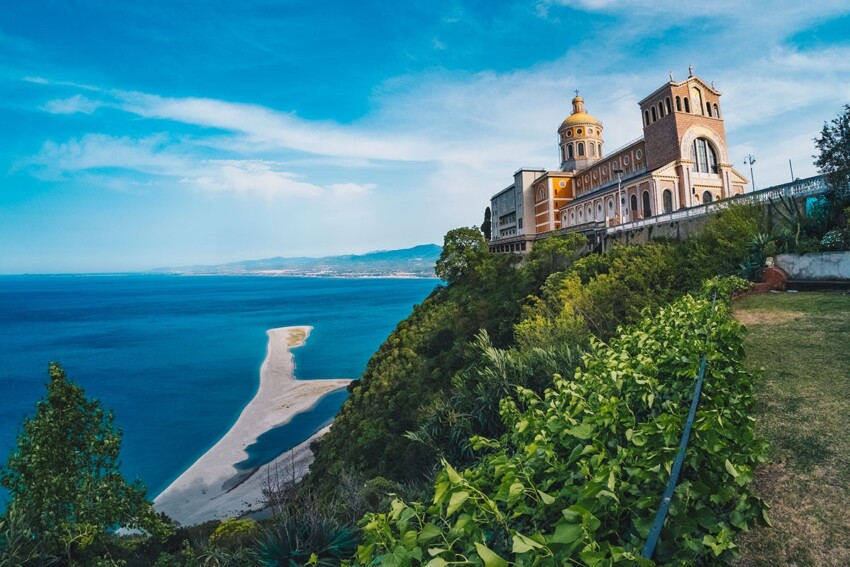
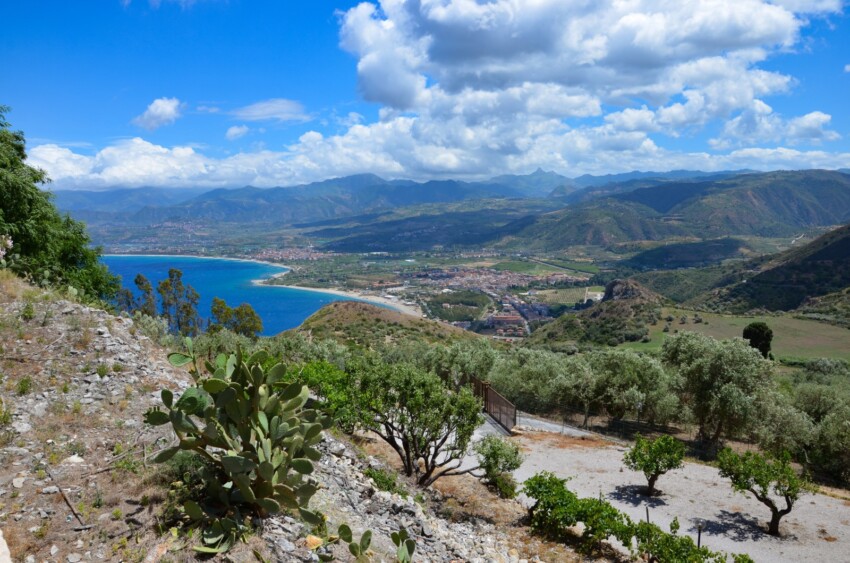
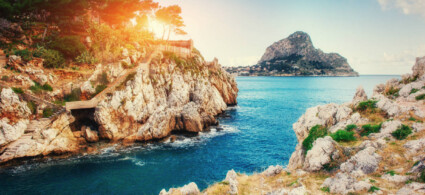
A hamlet of Patti municipality, Tindari is a tourist destination in the province of Messina renowned not only for its historical and architectural heritage, but also for its natural attractions. Situated on a promontory in the Nebrodi Mountains, Tindari occupies a strategic position nestled within the Gulf of Patti with the Aeolian Islands to the north, the Milazzo peninsula to the east and the entire Peloritani mountain range to the south. This location affords visitors truly breathtaking vistas.
The town boasts ancient origins, reportedly founded in 396 BC by Dionysius I of Syracuse and named after Tyndaris, King of Sparta. This place, where history, mythology, legend and archaeology intertwine, also inspired writer Andrea Camilleri, who set an episode of Inspector Montalbano here.
What to See in Tindari
Beyond visiting the Archaeological Area and the stunning Basilica Sanctuary of Maria Santissima, Tindari offers verdant locations waiting to be discovered. Visitors can spend time exploring the ancient town centre, hiking along the Coda di Volpe Trail or relaxing for a few hours at Marinello beach.
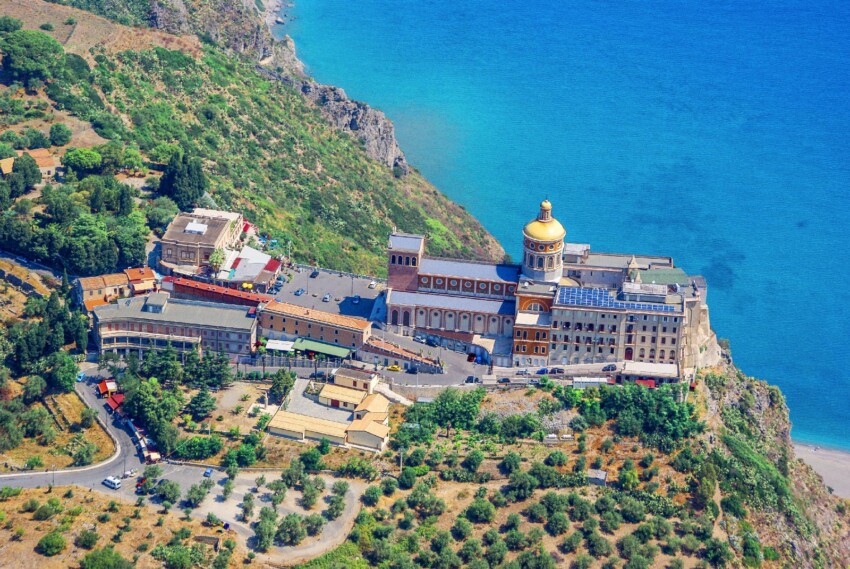
The Basilica Sanctuary of Maria Santissima stands as one of Sicily’s most important sacred sites, located at the easternmost point of the promontory where the acropolis once stood. The Sanctuary was built where a previous religious building had stood before its destruction during the Ottoman invasion, later rebuilt in the mid-sixteenth century. In 1953, the Sanctuary underwent necessary enlargement and restoration works, resulting in the current structure characterised by a Latin cross layout with three naves, a square transept and a semicircular apse.
The Sanctuary’s symbol is undoubtedly the Black Madonna, crafted from cedarwood with Oriental features and dated to between the eighth and ninth centuries. Legend has it that the ship carrying the statue took refuge in Tindari’s bay during a fierce storm, but once the weather cleared, it could not leave due to the heavy cargo. However, after unloading the Madonna statue, the vessel supposedly managed to resume its voyage. The statue was promptly placed in the small church at the town’s highest point and has since become a destination for countless pilgrimages. The Black Madonna of Tindari is depicted wearing a crown in the position of a “Queen Enthroned“, cradling the Christ Child.
The Archaeological Area sprawls between Tindari and Patti and holds considerable historical significance, with numerous artefacts discovered here now displayed in the Antiquarium museum. Excavations have revealed the Roman urban layout divided into cardines and decumani, various tabernae, important domus, villas and buildings including a gymnasium and theatre.
Studies of the Theatre particularly revealed it was originally constructed by the Greeks in the fourth century BC before being remodelled by the Romans to serve as an amphitheatre for gladiatorial games. Discoveries also include temple remains, such as those dedicated to Jupiter and Neptune.
The Cathedral of San Bartolomeo, commissioned by Roger of Altavilla in the eleventh century, was constructed on the site of a fortress that once served as a military stronghold. Several earthquakes have damaged the Cathedral, which underwent numerous alterations and renovations over time. The religious building now presents a blend of styles evident in its Arab-Norman style portal, baroque southern portico and various decorations executed in lava stone and white marble.
Marinello Lagoons Nature Reserve
4Riserva naturale laghetti marinello, 98066 Patti ME, Italy
The Marinello Lagoons area, better known as the Marinello Lagoons Oriented Nature Reserve, sits beneath the promontory hosting the Tindari Sanctuary. This zone, also called Mare Secco (Dry Sea), comprises sandy areas and small lagoons formed through artificial interventions along the Timeto stream valley. The nature and conformation of these splendid water bodies mean their number and shape vary according to tides and seasons.
The famous Coda di Volpe Trail begins from the Lagoons Reserve, a path once used to connect Tindari’s centre with the ancient colony’s port. This itinerary’s name derives from its distinctive shape, which resembles a fox’s tail.
This route, recently the pilgrimage path used to reach the Black Madonna Sanctuary, stretches approximately 1.2 km through Mediterranean scrubland terrain. Its particular appeal lies in the magnificent landscapes spanning from the Marinello Lagoons to the Gulf of Patti and occasionally offering views of the Aeolian Islands.
Beaches Near Tindari
Marinello beach
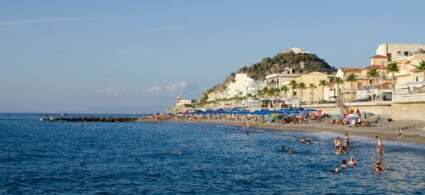
Nestled within a stunning natural setting at the foot of Tindari’s historic centre lies Marinello Beach6, situated within the Marinello Lagoons Reserve. This shore, famous for its distinctive character, nestles between Milazzo and Capo d’Orlando and extends for approximately 2 km along the coast.
Surrounded by unspoilt natural greenery, Marinello beach is washed by crystal-clear and limpid waters and features soft, fine sand. This stretch of coastline comprises both equipped beach areas and free beach zones. Near the beach stands a cave which, according to legend, was inhabited by a sorceress who would lure sailors with her song to devour them.
Approximately 5 km from Tindari lies the small village of Mongiove7, which boasts a truly beautiful sandy beach with crystalline sea waters harbouring caves and stacks not far from the shore. Other nearby beaches include Marina di Patti8, composed of sand and shingle, Galice and Gioiosa Marea.
Map
In the following map you can see the location of the main places of interest mentioned in this article.
Where to Stay in Tindari
Tindari has no hotel facilities, so the best option is to stay in nearby towns such as Patti, Mongiove or Oliveri. These towns offer various accommodation options ranging from hotels to bed and breakfasts, period residences to holiday homes.
We offer best rates If you find it cheaper we refund the price difference.
Free cancellation Most properties allow cancellation without penalty.
We're available 24 hours a day For any problem call Booking.com.
Apartments and vacation homes in Tindari
If you prefer space, privacy and the ability to prepare your own meals to a hotel holiday, book a holiday home at Tindari. We recommend a few below, but in this case we advise you to book early because houses and apartments for rent at Tindari are in high demand.
Tindari is easily accessible by car from Sicily’s main towns. From Messina, take the A20 to the Falcone exit, then the SS 113 followed by the SP107 to Tindari. From Palermo, take the A20 to the Patti exit, then the State Road 113. The town is equally accessible by car from Catania via the A20 or taking the SS116 and SP120.
Near Tindari you’ll find the railway station of Oliveri-Tindari and Patti station, both on the Palermo–Messina railway line. The nearest airports are Palermo’s Falcone-Borsellino Airport, approximately 200 km away, and Catania’s Fontanarossa Airport, about 130 km away.
Tindari Weather
What's the weather at Tindari? Below are the temperatures and the weather forecast at Tindari for the next few days.
Sunday 13
24°
29°
Monday 14
23°
30°
Tuesday 15
22°
25°
Wednesday 16
21°
27°
Thursday 17
22°
26°
Friday 18
22°
26°
Where is located Tindari
Located in northern Sicily, Tindari is a hamlet in the municipality of Patti, situated 25 km from Milazzo, 59 km from Messina and 107 km from Cefalù.
 Hotel
Hotel  Budget accommodations
  Apartments
  Family Hotel
  Luxury Hotel
  Resorts