Palermo: Cefalù & Monreale Day Trip with Boat Option
49 reviews
Palermo Cefalù & Monreale UNESCO tour: explore Monreale Duomo, then choose either free time in Cefalù or an optional boat trip with aperitivo.
Buy now
From 84,15€ per person
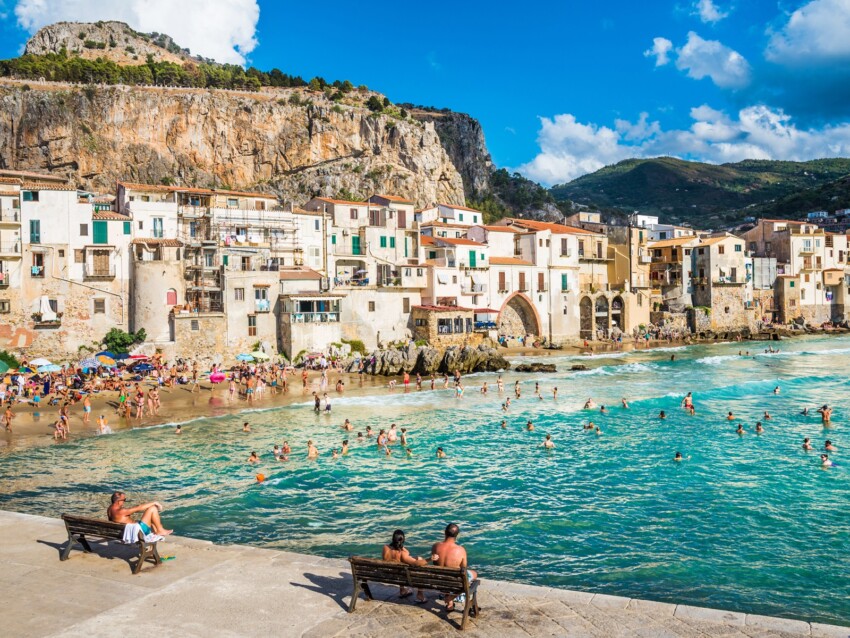
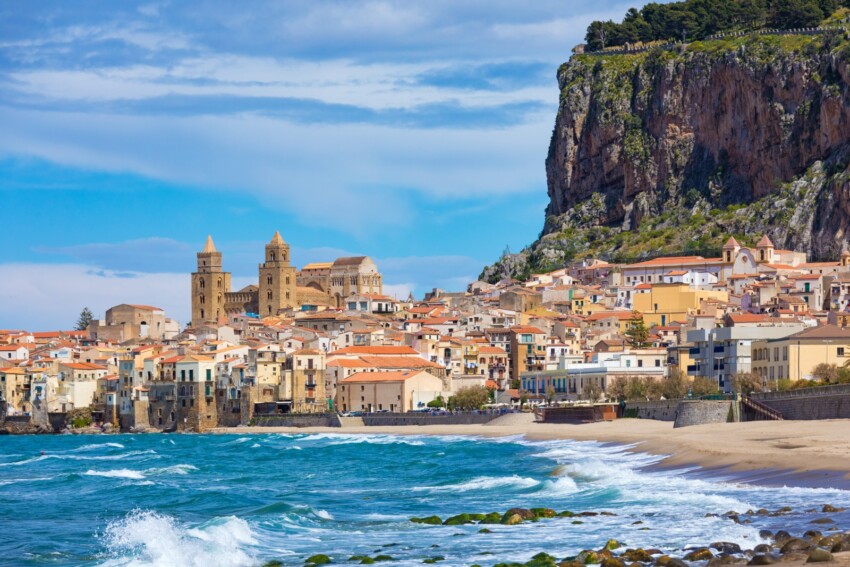
Cefalù is a delightful Norman town nestled on the shores of the most brilliant azure sea and dominated by a fortress so famous it’s known simply as… the Rocca.
Easily accessible by train, it’s the perfect destination for a day trip from Palermo, a short holiday or as a base to explore the nearby Aeolian Islands, but once you arrive in Cefalù, you won’t want to leave.
The charming fishing village is the ideal setting for romantic strolls, while the fascinating archaeological area will keep history and culture enthusiasts happily occupied.
The busy town beach empties towards evening and becomes the perfect spot to watch stunning sunsets. Bring your camera, wait for the right moment and take home the image of this wonderful village, illuminated by the soft pink glow of the setting sun, then treat yourself to a lovely dinner at one of Cefalù’s traditional restaurants.
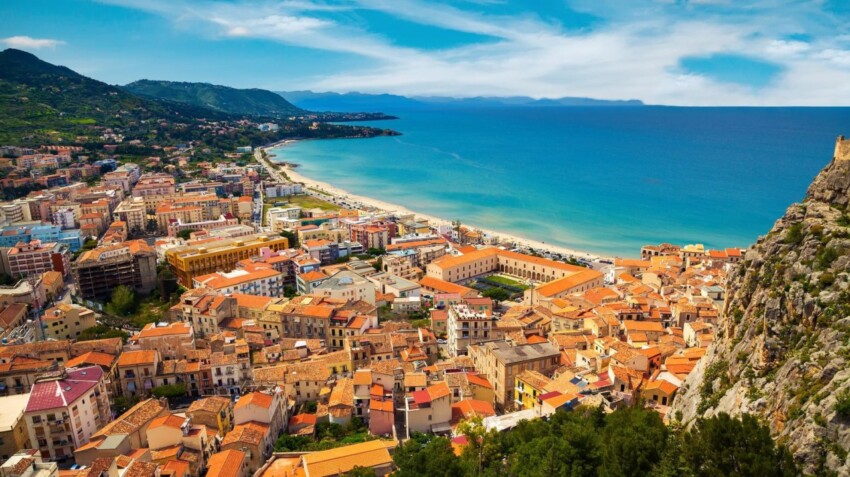
Cefalù’s image is inseparably linked to the imposing Rocca1, standing 270 metres above sea level and dominating the entire landscape. It’s stunning when viewed as a whole from below, and is also one of the best vantage points from which to observe the village and the sea.
An impressive staircase known as Salita Saraceni2 will take you almost to the summit in about half an hour of effort, which will be amply rewarded on arrival, where in addition to the beauty of the landscape you can also admire the remains of an ancient Temple of Diana.
The small Museo Mandralisca3 is worth a visit, a private collection that includes a picture gallery, Greek and Arab ceramics, coins, a malacological collection among Europe’s richest, and valuable objects once owned by the Mandralisca family. The jewel of the collection is the celebrated “Portrait of a Man” by Antonello da Messina.
Take a look at the Medieval Laundry4 on the Cefalino River, a watercourse created, according to legend, by the tears of a nymph who repented of having killed her lover who had betrayed her.
Other noteworthy buildings are the Sanctuary of Gibilmanna5 in the homonymous hamlet and the Bastion of Capo Marchiafava6, a polygonal-shaped bulwark with its point jutting towards the sea dating back to the seventeenth century that you can admire in the historic village.
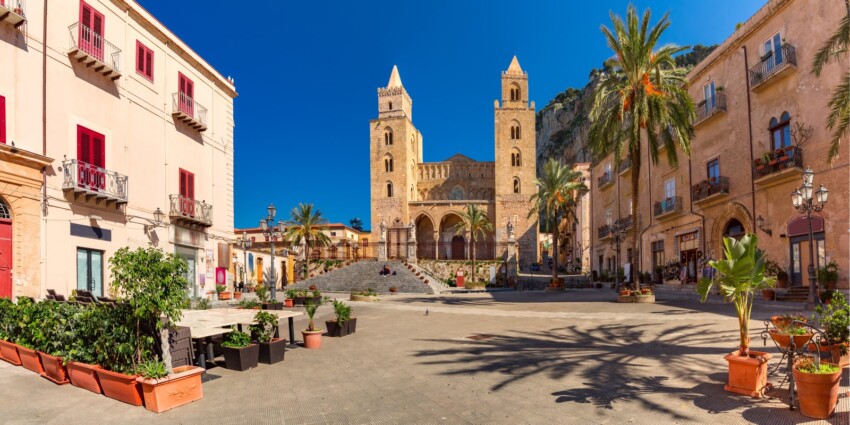
One of Cefalù’s main attractions is the Cathedral, also known as the Basilica Cattedrale della Trasfigurazione: it’s a true masterpiece of Arab-Norman architecture, holding its own against comparisons with other famous buildings such as the Palatine Chapel and the Monreale Cathedral.
It’s a basilica with a Latin cross floor plan and three naves, embellished with pink granite and Arab elements. On the outside, the two imposing twin towers rise majestically in Cefalù’s blue sky, while inside the figure of Christ Pantocrator is the highlight of an elaborate complex of Byzantine mosaics.
The cathedral square is one of the nerve centres of town life, crowded during summer months with tourists eager to photograph the cathedral from the best angle and others enjoying a coffee at one of the numerous bars in the square.
Cefalù Cathedral was founded at the behest of Roger II of Altavilla, King of Sicily, Apulia and Calabria, who during a storm at sea vowed to build a church at the point where he would reach land safely.
Construction works began in 1131 and dragged on for years. The king’s original design was rather complex and some of its parts were never completed: this explains the presence of anomalies and discontinuities both outside and inside the building.
Cefalù is one of the most important seaside resorts on the northern coast of Sicily and many tourists are drawn here by its enchanting beaches bathed by azure and crystalline waters.
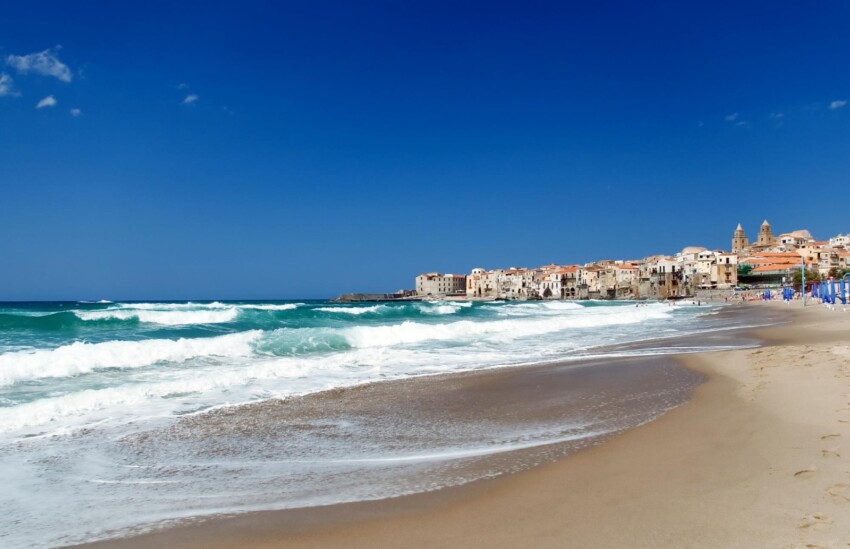
The most famous beach in Cefalù is the eponymous lido, very close to the historic centre. It’s a town beach of rare beauty, with clear sea and fine sand, lined with picturesque houses with a rocky hillside rising up behind.
The coastline stretches for 1.5km, long enough for a pleasant walk along the shore. Bring your camera to capture the charming postcard-like panorama that will unfold before your eyes.
The Cefalù lido alternates stretches of free beach with equipped areas featuring deckchairs and parasols. It’s a beach much frequented by tourists and residents of all ages: for young people it’s a popular meeting place, while families appreciate it for the sea with clear and gradually sloping bottom and the services available.
3 km from Cefalù lies Mazzaforno, where through a network of paths you can reach numerous small beaches nestled among the jagged rocks, some sandy, others pebbly.
The most well-known of these is precisely Mazzaforno Beach, a sandy stretch interrupted here and there by rocks. The sea here too is blue and transparent.
We might call Pollina Beach (or Torre Conca) the beach of “nightlife” because here during summer months parties and bonfires are often organised, but don’t expect chiringuitos and bars open late into the night as in Spain.
The longest stretch of coast in the Cefalù area, Salinelle Beach, certainly deserves to be seen, a sand and pebble beach that extends for 15 kilometres.
Exposed to the winds, it’s perfect for those who enjoy surfing and sailing; it’s not suitable for families with small children as the sea drops steeply a short distance from the shore. Equipped areas with deckchairs and parasols are available.
Those seeking tranquillity can find it at Sant’Ambrogio Beach, a mixed pebble and fine sand beach, less well-known, unequipped and therefore generally uncrowded. It’s just 6 km from Cefalù and is ideal for long walks along the shore or sunbathing in complete relaxation.
In the following map you can see the location of the main places of interest mentioned in this article.
Cefalù is a destination not only for those dreaming of lazy days of relaxation on the beach and those passionate about history and art, but also for people who prefer active holidays.
There are numerous sports activities available in the surrounding area, in particular diving and horse riding. You can also hire a bicycle and explore the territory.
Cefalù is one of the most popular destinations on Sicily’s northern coast, so hotel accommodation is very wide and varied; you’ll find everything from luxury hotels to bed & breakfasts and family-run guesthouses and, of course, a wide choice of holiday apartments.
We offer a selection of hotels at Cefalù to suit all categories of travellers. The most booked by tourists are the sea-facing hotels, often right on the beach. If you want to play it safe, choose one of the following: they are among the most booked hotels in Cefalù, sorted by number of reviews.
If you prefer space, privacy and the ability to prepare your own meals to a hotel holiday, book a holiday home at Cefalù. We recommend a few below, but in this case we advise you to book early because houses and apartments for rent at Cefalù are in high demand.
What's the weather at Cefalù? Below are the temperatures and the weather forecast at Cefalù for the next few days.
The simplest way to reach Cefalù from Palermo is to take a direct train: they run fairly frequently and the journey takes just an hour.
If you have a rental car you can reach Cefalù by taking the Palermo – Messina motorway.
Cefalu sits on the northern coast, roughly halfway along the island; Palermo is just under 70 km away.
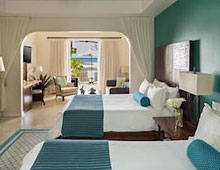 Hotel
Hotel 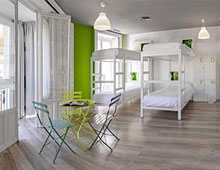 Budget accommodations
 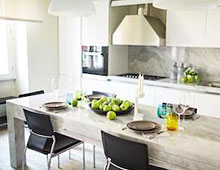 Apartments
  Family Hotel
  Luxury Hotel
  Resorts