Sicily is a wonderland for food lovers: the regional Sicilian cuisine is rightly considered one of the finest in Italy, and Palermo, with its mix of cultures and peoples, is the ideal city to taste the signature dishes of tradition.
Before deciding what to eat in Palermo, immerse yourself in the aromas and flavours as you stroll through the city’s streets. Fried foods and seafood pasta dishes are the undisputed stars of Palermo’s culinary scene, but you can also indulge in the sweet pleasures of gastronomy or satisfy your hunger with a fresh Mediterranean snack based on vegetables and olive oil.
Be curious and venture into unexplored gastronomic territories; if you come across a dish or snack you don’t recognise, don’t be afraid to ask, especially at the market: chatting and haggling are part of the experience.
Sicilian cuisine is so famous that food has become the reason many tourists visit Palermo, more so than the beaches or magnificent historic palaces.
To deepen your knowledge of this hugely important element of Palermo’s culture, you can take part in a food and wine tour or a cooking class. For more information, visit our page on Tours and activities in Palermo.
Palermo is recognised as the capital of Italian street food: a legacy of the various dominions the Sicilian capital has undergone over the centuries, street food is a tradition with deep roots that is more alive than ever today.
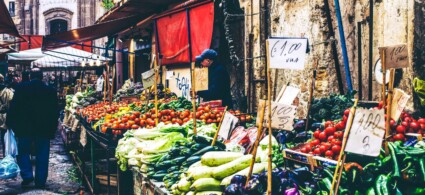
The best places to taste the delectable “take-away” delicacies of Sicilian tradition are the historic markets, such as Ballarò, Vucciria or Il Capo, but you’ll find street food stalls all over the city.
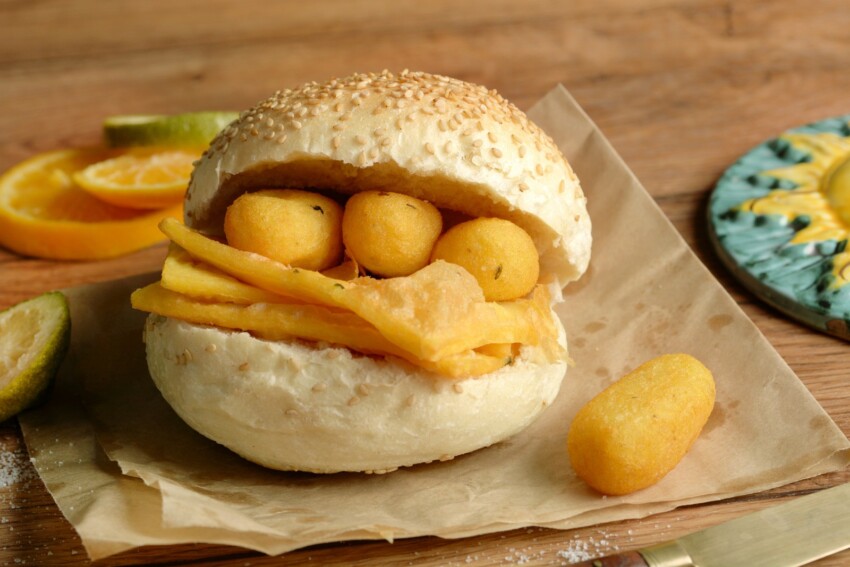
The most popular snack in Palermo is definitely pane and panelle, a sandwich filled with a chickpea flour fritter. The “panellari”, street vendors selling panelle and fried food, are considered akin to street artists, and each has their own devoted following of loyal customers who would never let them down!
Panelle are generally accompanied by cazzilli or crocchè, fried potato and parsley croquettes. The pairing of panelle and cazzilli is almost a sacred union, so much so that they’re often eaten together in a single sandwich.
The arancino, or arancina, is another great star of Palermo’s street food scene. Probably the most famous, you can now find it everywhere, but if you’re in Palermo you must try the “original” version, with perfect breadcrumbs and a rich ragù filling. Bite into it with devotion: you’re experiencing a true gastronomic work of art!
If you’re not worried about calories, try pane con la milza, a hearty (to put it mildly!) sesame seed roll stuffed with spleen and lung, boiled and then fried, topped with a sprinkle of caciocavallo cheese.
Also worth trying is sfincione, a type of soft, high-based pizza topped with tomato, onions and anchovies, available from all the bakeries and ovens in the city.
Street food, modest in price but not in flavour, is the undisputed king of Palermo’s culinary experience. You can’t leave Palermo without having tasted pane and panelle, crocché or pane con la milza from one of the historic markets like Vucciria, Ballarò or Il Capo.
Among the best street vendors and takeaway shops in Palermo where you can buy street food, we recommend:
Friggitoria-Gastronomia da Arianna1, a true institution in the Il Capo market;
La Romanella Rosticceria2, with excellent value for money, it’s very popular with students;
Antica Focacceria San Francesco3, offers gourmet sandwiches and classics of Palermo street food such as pane con la milza;
'Nni Franco U'Vastiddaru4, a small kiosk that rivals the Antica Focacceria for the title of best pane con la milza in the city;
Typical Sicilian dishes
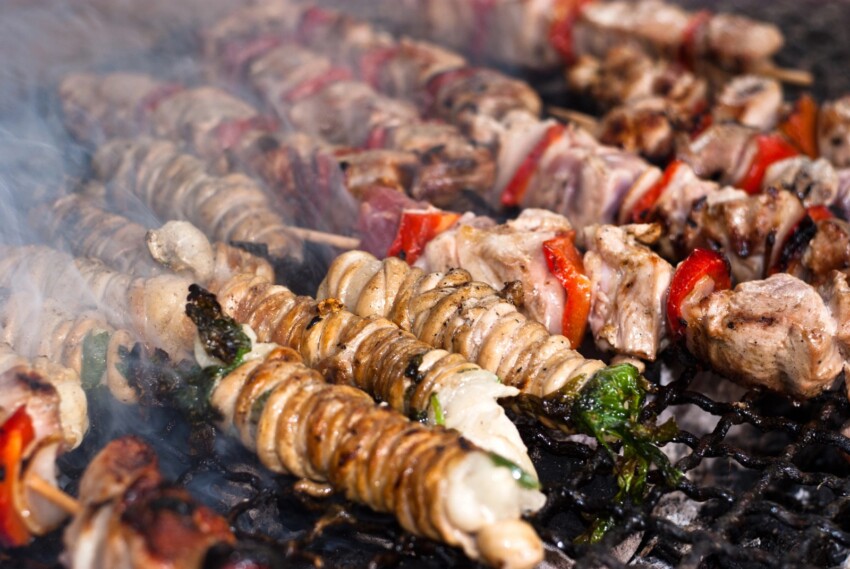
Stigghiole
After exploring the colourful world of Palermo’s street food, treat yourself to dinner at a small restaurant in the historic centre to sample the signature dishes of Sicilian culinary tradition.
The undisputed stars of the Sicilian table are pasta with sea urchin and pasta with sardines, two exquisite seafood pasta dishes; sarde a beccafico, a main course of sardines, pine nuts, sultana raisins, onion, parsley and anchovies; caponata, an appetiser of fried aubergines dressed in a sweet and sour sauce.
Aubergine parmigiana is another dish to sample during a holiday in Sicily, although it’s the subject of a gastronomic dispute that will probably never be resolved: its origins are claimed by both Palermo and Naples.
For those who love strong emotions or extreme experiences, we recommend a dish typical of popular Palermo tradition: stigghiola, made with lamb offal, which you can eat from street vendors; another dish from poor man’s cuisine that’s harder to find is a hot broth of offal called quarume.
Did you know?
The name “sarde a beccafico” comes from the shape the sardines are given before serving, which resembles that of beccafichi, little birds that aristocrats once ate roasted.
Desserts
Sicilian gastronomy is among the most renowned in Italy and Europe (and probably the world): even if it’s usually savoury flavours that whet your appetite, during your holiday in Palermo you must taste typical Sicilian desserts.
Start your day like Sicilians do, with breakfast of a superb granita, preferably almond or pistachio flavoured, accompanied by the inseparable brioche.
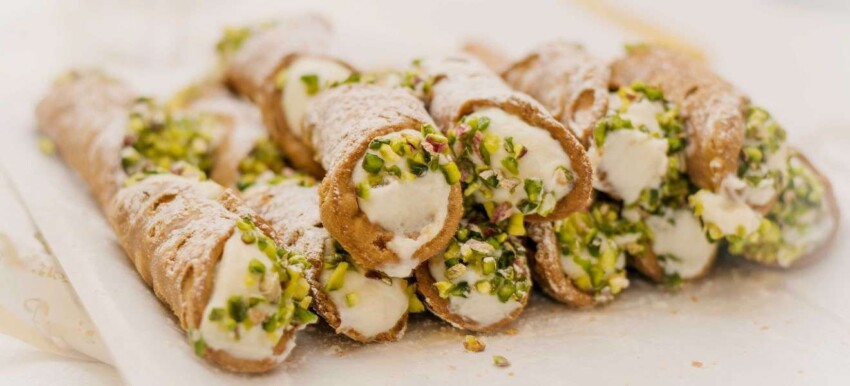
At the end of an important dinner or as a mid-morning snack, treat yourself to a cannolo with sheep’s ricotta (but be careful to choose the traditional one, WITHOUT chocolate cream!) or a Sicilian cassata, the queen of Sicilian sweet specialities.
You can’t miss from the list of sweets to try almond paste sweets, typical Sunday treats, though nothing stops you from tasting them on any other day of the week!
Sicilian wines
A Sicilian culinary experience cannot be considered complete without including a good glass of wine. The windy, dry climate, with mild temperatures, combined with the fertility of the land, make Sicily an ideal territory for vine cultivation.
Precisely between Palermo and Trapani lies the most extensive cultivation area and here some of the internationally renowned Sicilian wines are produced, among which we cannot fail to mention Marsala, a fortified wine typical of the city of the same name on Sicily’s western coast, perfect as a dessert wine or meditation wine, or Bianco d’Alcamo, which with its moderate alcohol content is suitable for accompanying the entire meal.
An excellent accompaniment to the most famous products of Sicilian pastry-making such as cannoli, almond sweets and cassatas are the sweet wines typical of Sicily, such as Malvasia, Moscato di Noto, Passito di Pantelleria and Zibibbo.
For a special dinner, ask them to open a bottle of Cerasuolo di Vittoria, a highly prized red wine aged in oak barrels.
Where to eat in Palermo, the best addresses
Palermo is a paradise for food lovers and those with a sweet tooth, with a variety of places to eat quality food prepared with fresh local ingredients.
Follow our advice on where to eat in Palermo to experience an unforgettable multisensory journey, made up not only of aromas, flavours and scents but also colours and sounds, like the bustle of street vendors or the clink of forks on plates.
Forget about your diet. We’ve selected for you the best restaurants and trattorias in Palermo, with a good balance between informal venues where you can enjoy tasty home cooking without spending much and more refined establishments where attention to design goes hand in hand with care for every detail of the recipes on offer.
It’s not always easy to find the best places for street food, because they’re often small kiosks and stalls run by vendors who don’t bother with promotion and marketing: we’ve tracked them down for you.
For a sweet break, choose one of the historic Palermo pastry shops and ice-cream parlours we recommend. Did we mention a diet? No way!
Typical restaurants and trattorias
Informal trattorias and typical little restaurants are the best places to taste the great classics of Palermo’s culinary tradition: the food is excellent, prices are low and you can mingle with the locals.
Strictly homemade Sicilian cuisine is the offering of Sebastiano Salanitro, a man of another era and owner of a trattoria with an informal atmosphere and a menu in Sicilian.
Be sure to try the liqueurs, also made in-house, such as bay leaf and wild fennel limoncello.
Biondo is the surname of the owner, an energetic Palermitan whose parents were restaurateurs, passionate about his land and its cuisine.
In this lively and colourful trattoria, with walls decorated with vases, photographs, plates and ceramics and panoramic windows with sea views, you can enjoy signature dishes of Palermo tradition such as pasta with sardines or swordfish rolls, but the highlight of the place is the explosive warmth and charm of its owner!
Antica Focacceria del Massimo Da Basile
7Via Bara All'Olivella, 76, 90133 Palermo PA, Italy
For an authentic Palermo experience, stop for a snack at Trattoria Basile, a very popular self-service spot for lunch breaks in the historic centre where, spending little, you can enjoy first courses, main courses and appetisers from Sicilian tradition, prepared with fresh ingredients.
If you don’t like crowds, avoid the rush hour between one and two in the afternoon.
Rustic in atmosphere and sometimes in service too, this trattoria is always busy, a sign that despite the queues, Palermitans love to come here to enjoy the delicious home-cooked dishes prepared according to a family tradition.
The house specialities all draw from popular tradition: boiled veal, caldume in broth, meat or sardine meatballs, beans with celery, broad beans with vegetables.
Luxury restaurants and creative cuisine
For a special occasion, to treat yourself or to try new flavours, step into one of Palermo’s modern restaurants, which, while drawing on the rich Sicilian gastronomic tradition, have proven their creativity and innovation.
Restaurant and wine bar designed for a chic clientele, it’s a venue with meticulous attention to detail, where you can enjoy creative Mediterranean cuisine, with a menu that changes according to the seasons based on available fresh ingredients.
Trendy and successful is the aperitif featuring quality drinks and sophisticated nibbles; also worth trying is the delightful house dessert, the warm-and-cold cup.
Cucina Papoff
10V. Isidoro La Lumia, 32, 90139 Palermo PA, Italy
On the ground floor of a noble palazzo in the historic centre, just steps from the Teatro Politeama, you’ll find this elegant seafood restaurant, with stone walls, an impressive coffered ceiling and warm lighting.
The cuisine is a modern reinvention of Sicilian tradition classics; try the citrus and prawns risotto, sesame-crusted sea bass fillets or pappardelle with red prawns.
Osteria dei Vespri
11Piazza Croce dei Vespri, 6, 90133 Palermo PA, Italy
Whether it’s because of its warm and welcoming atmosphere or the chance to order a convenient lunch menu or one of the budget-friendly seasonal menus, this elegant Michelin-starred restaurant has never intimidated anyone.
Chef Alberto Rizzo’s cuisine aims at showcasing local produce, but it doesn’t shy away from ethnic flavours and innovative research. The wine list is also carefully curated, with a selection of over 600 labels.
Pizzerias
Whilst not a typical Sicilian speciality, pizza is always an excellent choice for a tasty and affordable meal, and Palermo has some outstanding pizzerias to offer.
Since 2016, it has proudly held the title of Sicily’s best pizzeria according to the prestigious Gambero Rosso magazine, though it was already highly regarded by locals for the variety and quality of its ingredients.
The doughs are also meticulously crafted, following the slow fermentation process that is, sadly, increasingly rare today. This makes the pizza far easier to digest, not to mention more flavourful. You can choose from seven different doughs: soft wheat, six-grain, STG or “Neapolitan flour”, soya flour, spelt, tri-nacria and kamut.
Just a stone’s throw from the bustling Biondo trattoria sits the pizzeria run by the same owners, where some claim you’ll find Palermo’s finest pizza. Judging by the long queues for a table, they may well be right!
Oil deserves its moment in the spotlight: that’s clearly the thinking behind this minimalist pizzeria, whose owners have made extra virgin olive oil the signature ingredient of their pizzas.
A particularly special extra virgin olive oil made from Biancolilla and Nocellara olives is incorporated into the dough and drizzled over the finished pizza just before serving.
Patisseries
Sicilian pastry-making is in a class of its own—who could argue otherwise? Visiting at least one of the city’s historic patisseries is practically a moral obligation!
Antico Caffè Spinnato
15Via Principe di Belmonte, 107, 90139 Palermo PA, Italy
This elegant historic café, situated on a busy pedestrian boulevard, has been synonymous with excellence since 1860. With its refined atmosphere, it’s the ideal spot to sample authentic Sicilian sweets such as cannoli, cassata, almond paste and marzipan, whilst enjoying a coffee or cocktail.
Featured in all the most prestigious guides in the field, Pasticceria Cappello is another historic name associated with “sweet” Palermo. In its charming shop, you can sample cakes, pastries, tortes, semifreddi, mousses and chocolates, all crafted with artisanal skill.
Whilst locals attribute the invention of the Setteveli cake to this patisserie, the creation actually came from the pastry chef duo Biasetto and Mannori. Nonetheless, it is universally recognised as an outstanding example of Sicilian pastry-making.
This renowned Palermo patisserie is truly a family affair: opened in 1969 by Vincenzo Di Gaetano, it has grown considerably over the years and now employs more than twenty staff, including Vincenzo’s three children—Giuseppe, Monica and Sergio—and his wife Carmela.
You’ll treasure it for its intimate and welcoming atmosphere, as well as for the quality of its sweets, both traditional and creative.
Gelateries
Sicilian gelato is among the finest in the world, and on a summer’s day a cone or cup of artisanal ice cream is a refreshing and delicious alternative to a meal… or an indulgent addition to one!
Antica Gelateria Ilardo
18Foro Italico Umberto I, 11/12, 90133 Palermo PA, Italy
Palermo’s oldest gelateria, a true civic institution, sits along the seafront. Operating since 1860, it transports you back to the belle époque, when elegantly dressed ladies and gentlemen would sit here for hours watching the world go by, entertained by a small orchestra.
Today it remains the finest place to enjoy quality gelato, cooled by the gentle sea breeze. House specialities include watermelon gelato, chocolate and cream froths, strawberry and lemon spongati, delicate jasmine gelato, and scorzonera and cinnamon flavours.
Its most devoted fans insist the gelato here is made with superpowers—a testament to how beloved Peppe Cuti’s gelatone is, particularly the classic flavours such as pistachio, cannolo and bacio.
It’s also a favourite with journalists from D, La Repubblica delle donne, who included it in their list of the world’s 20 best gelateries. It also offers several gluten-free flavours.
Map
In the following map you can see the location of the main places of interest mentioned in this article.
 Hotel
Hotel  Budget accommodations
  Apartments
  Family Hotel
  Luxury Hotel
  Resorts