Must-see attractions in Palermo. From the Palazzo dei Normanni to the celebrated markets, from the Quattro Canti to Monreale Cathedral, Palermo is brimming with things to do and see.
Perhaps not as iconic as Venice, Rome or Florence, but Palermo is no less captivating and certainly doesn’t lack unmissable attractions.
The historic centre is an open-air museum: wandering through the streets of the ancient quarters, you’ll admire extraordinary churches, a strikingly elegant theatre, fortresses and royal courts, curious piazzas and pedestrian streets that sit alongside vibrant popular markets where the tradition of street trading is almost a sacred ritual.
We’ve selected Palermo’s most famous attractions for you: thanks to this handy list of things to see, you’ll undoubtedly fall in love with this city!
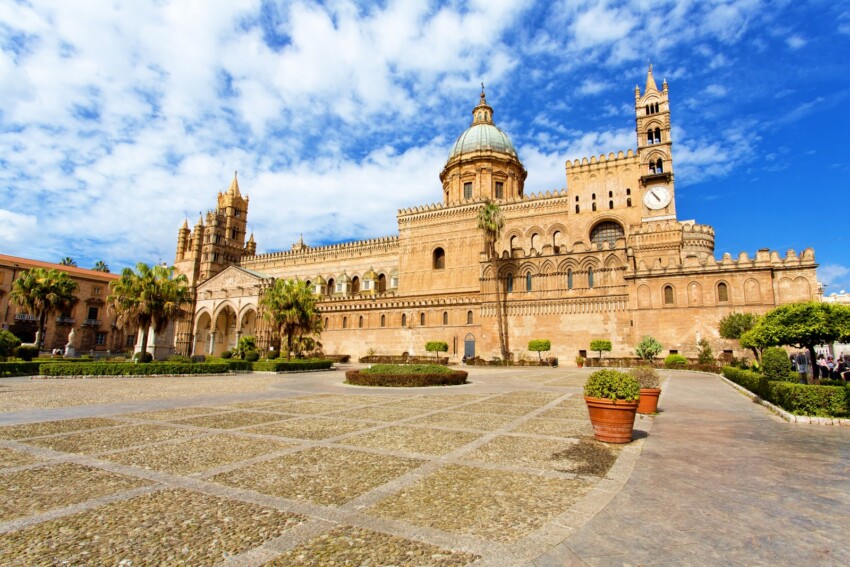
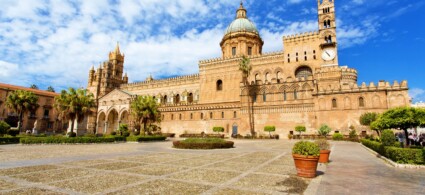
Walking through central Palermo, you cannot help but be enchanted when the magnificent Cathedral appears before your eyes, an architectural masterpiece that blends elements of Greek, Roman, Arab, Norman, Catalan and Gothic art.
Before stepping inside, take time to admire its exterior, particularly the decorated portico, which is a true masterpiece of Sicilian art.
Inside the Cathedral are the tombs of Sicilian monarchs, including the famous Emperor Frederick II; it also houses the remains of Saint Rosalia, to whom Palermitans remain deeply devoted to this day.
Historic Markets
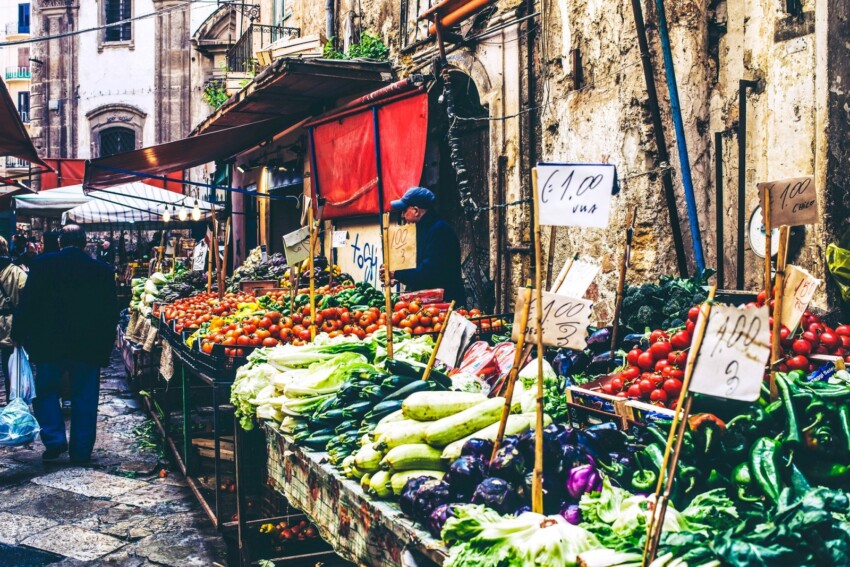
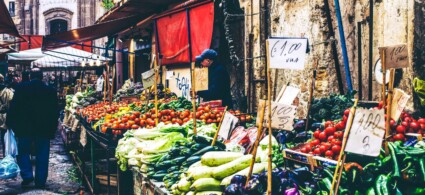
Palermo’s historic markets are the place where you can grasp the true soul of this fascinating, multicultural city, strongly tied to tradition, sunny and pleasantly bustling.
They are also temples of Palermitan street food: devoutly taste bread and panelle, crocchè, bread with spleen, arancini and the other delicacies that have made Palermitan street food famous throughout the world.
Ballarò2 is considered the quintessential popular market, where shopping is a true ritual passed down from father to son. The Capo Market3 is a colourful maze of very narrow alleys, while La Vucciria4 is quiet during the day but comes alive in the evening, when it becomes a popular gathering place for the city’s young people.
5Piazza del Parlamento, 1, 90129 Palermo PA, Italy
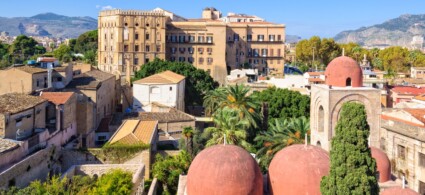
Another valuable testament to the cultural blending that characterises Palermo is the Palazzo dei Normanni, a building constructed for defensive purposes but later adapted into an elegant royal court.
The palace’s present appearance is the result of construction, demolition, reconstruction and expansion by Phoenicians, Arabs, Normans, Spanish, French and Italians.
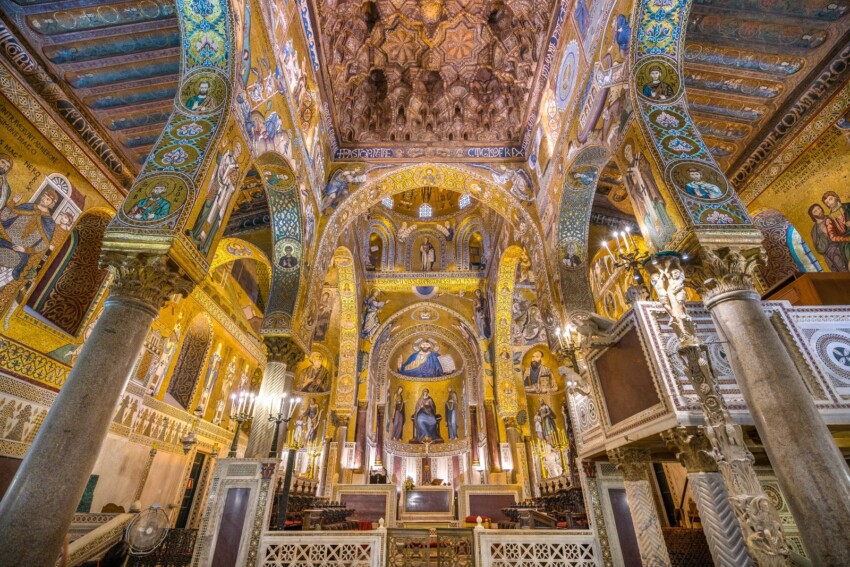
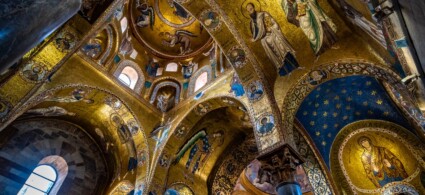
The palace’s main attraction is the magnificent Cappella Palatina, a riot of Byzantine mosaics of the highest artistic value.
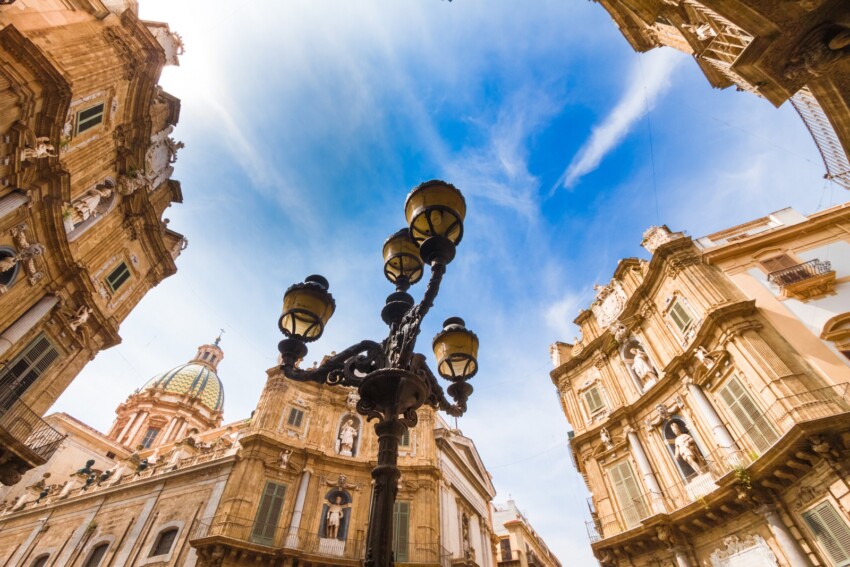
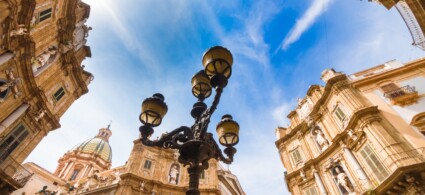
Where two streets meet in Palermo, it becomes an open-air work of art. Quattro Canti is the name Palermitans give to Piazza Vigliena, a square with an unusual octagonal shape formed by the intersection of Via Maqueda and Via Vittorio Emanuele.
At the corners of this piazza stand four magnificent Baroque buildings whose convex façades, sumptuously decorated with statues and fountains, are among Palermo’s most photographed subjects.
Palermo is a city with an important theatrical tradition. The performances with pupi, traditional Sicilian puppets, are typical, but the nobility and intellectuals frequented the more refined theatres of opera, ballet and classical theatre.
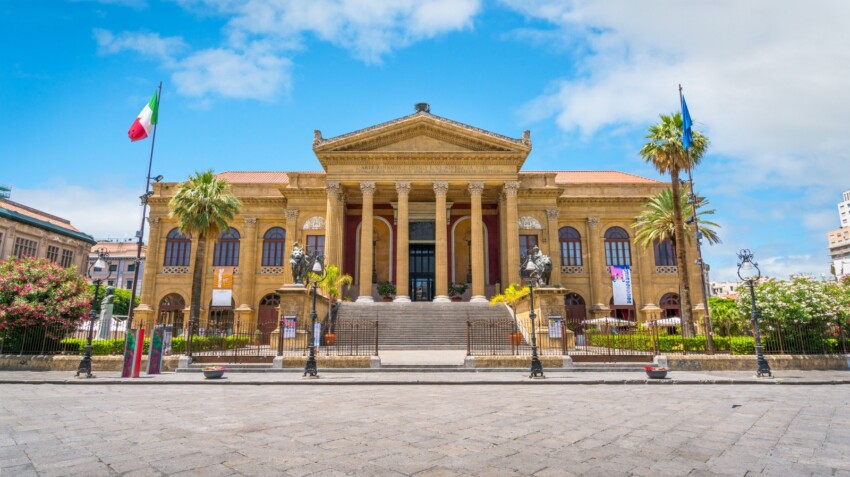
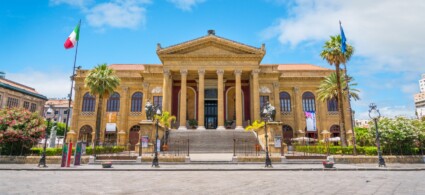
The temple of theatrical culture in Palermo is the splendid Teatro Massimo, one of Europe’s largest theatres and certainly one of the most beautiful.
Join a guided tour of the theatre to visit rooms normally inaccessible to the public, tread the boards like an opera diva or prima ballerina and climb onto the theatre’s terrace, where you can enjoy an invaluable view of the city from the heights of one of its most important monuments.
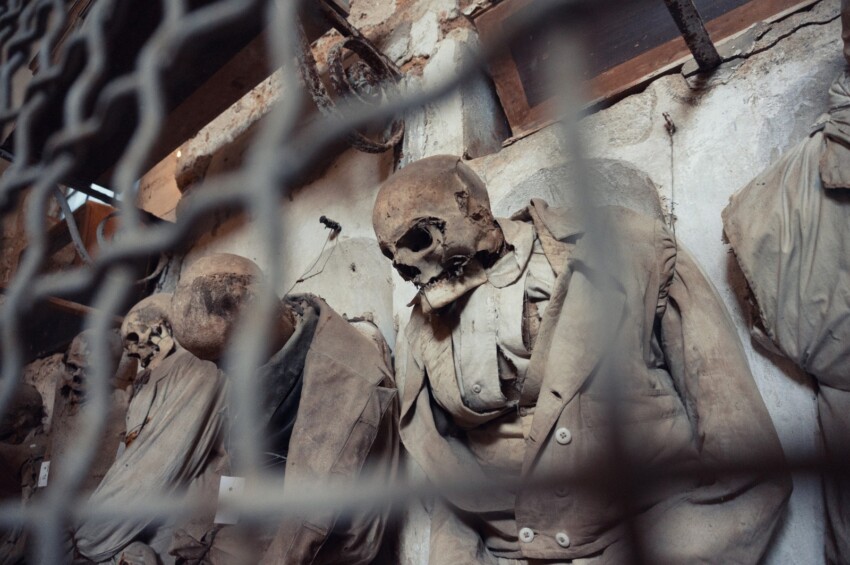
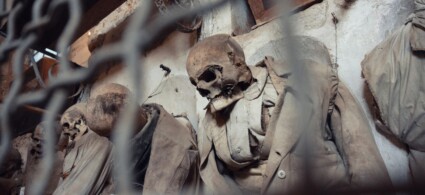
A macabre yet fascinating spectacle is presented by the Catacombs of the Capuchin Convent, which houses the world’s largest and most extraordinary collection of mummies.
Over 2,000 people were mummified and their bodies preserved by the convent’s monks over the centuries; they are divided into sections based on gender, social class and profession.
The collection’s most famous mummy is that of little Rosalia Lombardo, who died at the age of two: the embalming process has rendered eternal the beauty of this child, who appears immersed in a peaceful, restorative sleep.
Despite their eerie charm, the Capuchin Catacombs are one of Palermo’s most visited attractions.
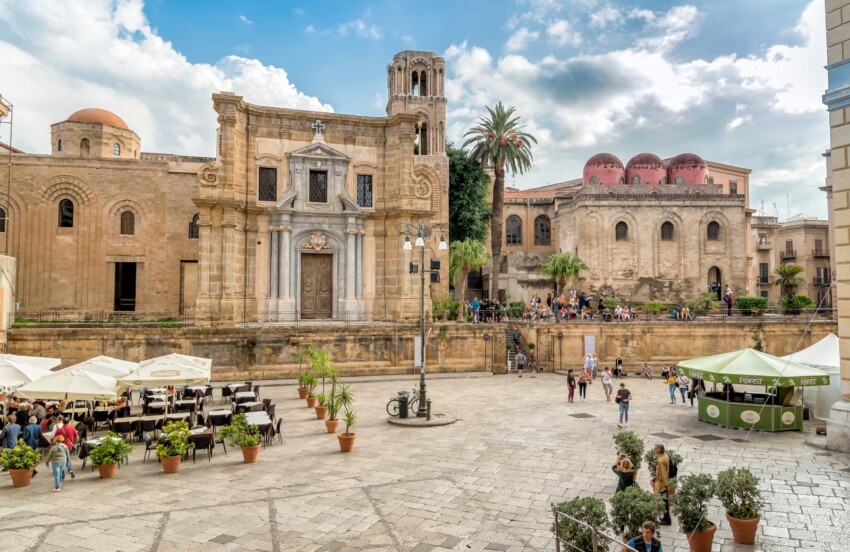
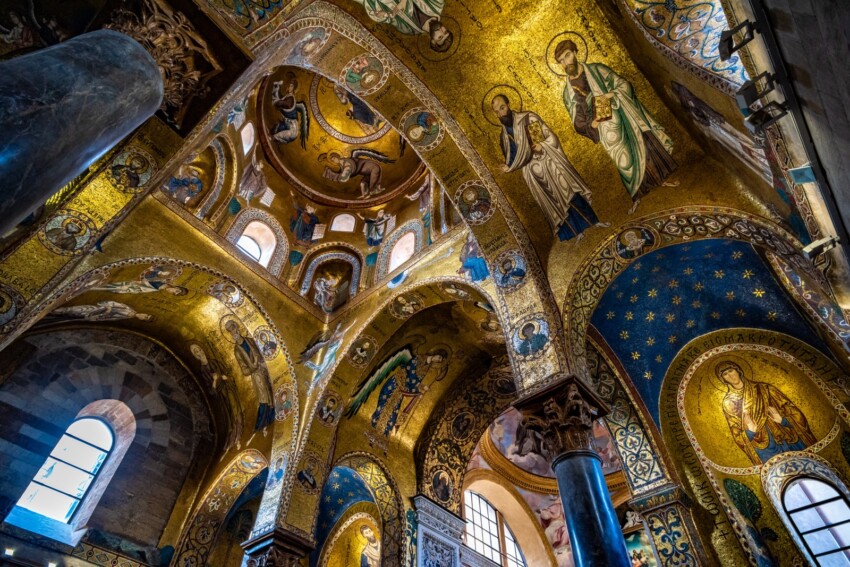
An essential stop on any Arab-Norman itinerary in Palermo is the Church of the Martorana, considered one of the wonders of Sicily’s capital.
Simple and linear on the outside, but inside this church hides a Byzantine treasure: it is the oldest cycle of mosaics in all of Sicily, a triumph of gold and technical perfection.
The church’s name recalls Eloisa Martorana, founder of a convent of Benedictine nuns who inherited the church in 1453. Known as the “Martorana sisters,” Palermitans remember them as the inventors of frutta martorana, the typical marzipan sweet that Sicilians consume on All Souls’ Day.
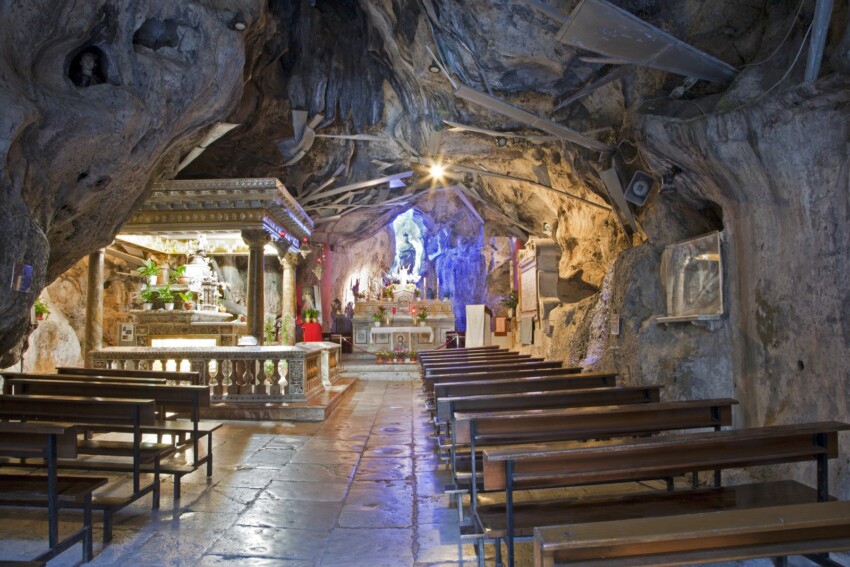
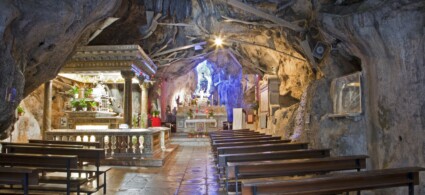
The church dedicated to “Santuzza,” the beloved patron saint of Palermo, is a stunning example of the union between human ingenuity and spirituality.
Built adjacent to the grotto where the remains of Santa Rosalia were discovered, it is a church set in a natural setting of rare beauty. Inside, a system of small metal channels collects the water that flows from the grotto’s walls, considered sacred.
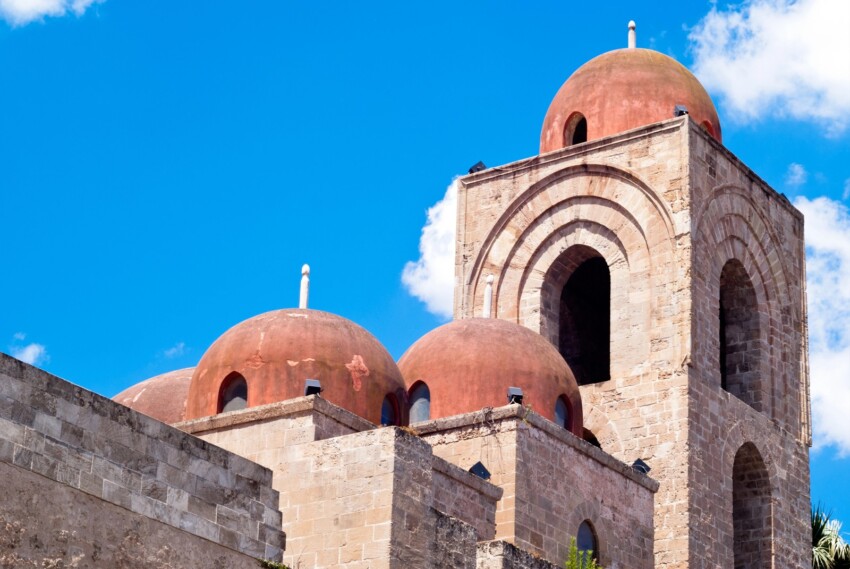
Church of San Giovanni degli Eremiti
11Via dei Benedettini, 16, 90134 Palermo PA, Italy
The Church of San Giovanni degli Eremiti is one of Palermo’s most recognisable symbols: its five red domes of Arab-Norman style, built by order of Roger II around 1136, rise among the gardens of the historic centre with immediate visual impact. The interior is bare and silent, almost devoid of decoration, which makes the architectural structure’s purity even more evident. The adjoining Norman cloister, with its interlaced arches and garden of orange and palm trees, is one of the city’s most intimate and photogenic corners.
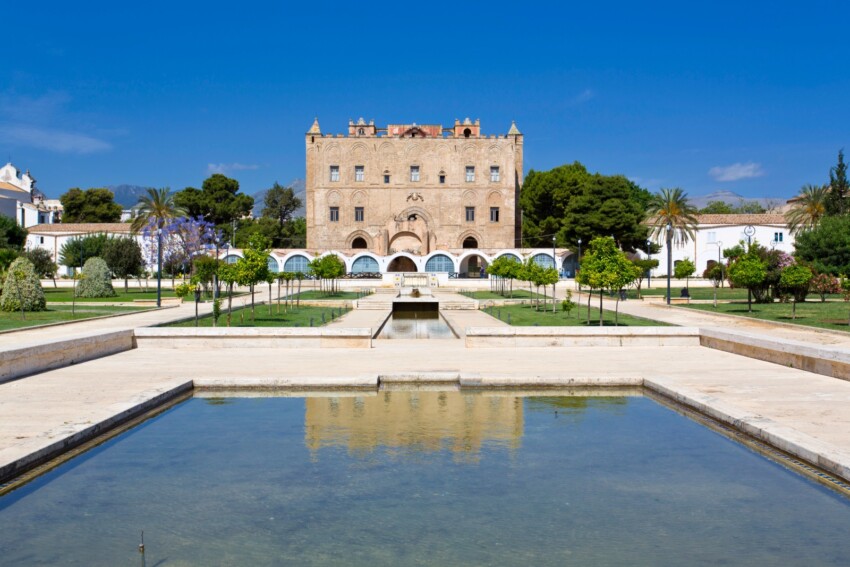
Built between 1165 and 1167 by Norman kings as a summer pleasure residence, La Zisa — from the Arabic term al-ʿazīza, “the magnificent” — is the most important surviving example of Arab-Norman civil architecture in Sicily. Inside, the Fountain Room preserves a sophisticated natural cooling system: water flowed along walls decorated with mosaics, lowering the temperature of the interior rooms. Today La Zisa houses the Museum of Islamic Art, with a collection that helps contextualise the extraordinary cultural syncretism of medieval Palermo.
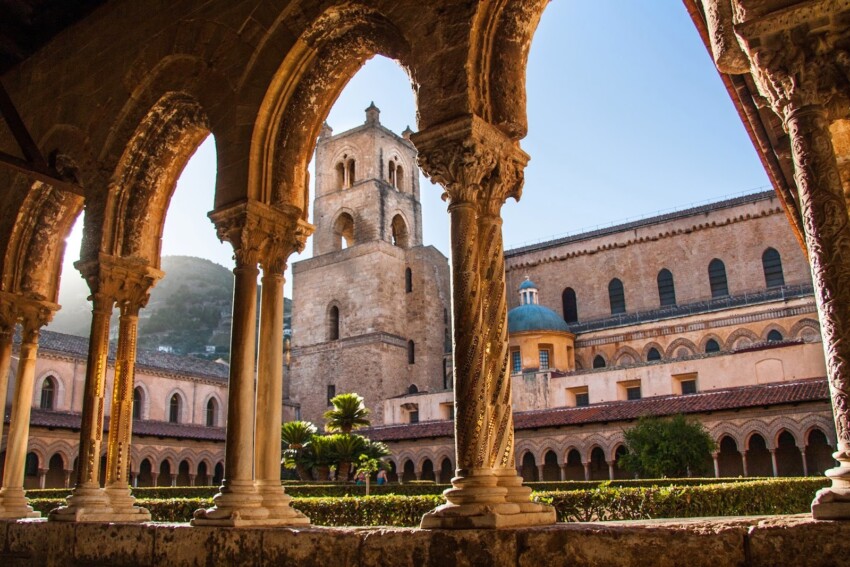
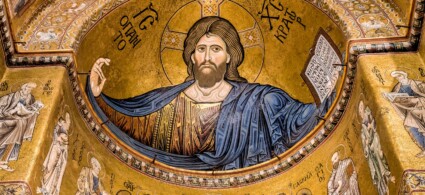
Just 10 km from Palermo lies another church that absolutely deserves to be visited: the Monreale Cathedral is so famous it attracts visitors from around the world.
According to legend, this church was built in competition with Palermo’s Cathedral, as a kind of prestige challenge between two rival nobles. Deciding which of the two churches is more beautiful is truly difficult: it’s best to visit them both!
Discover Palermo through the eyes of expert guides who will take you on a tour of the city's hidden treasures. Participating in a guided visit or a free tour will allow you to capture the true essence of Palermo.
The free tours are a viable alternative to traditional guided tours. They work like this: participation is free and at the end of the visit you can leave a tip at your discretion. Below you will find our favourite free tour, otherwise you can see the full list by visiting this page.
 Hotel
Hotel  Budget accommodations
  Apartments
  Family Hotel
  Luxury Hotel
  Resorts