Tenuta Zannafondo
Donnafugata - C.da Zannafondo
Book now
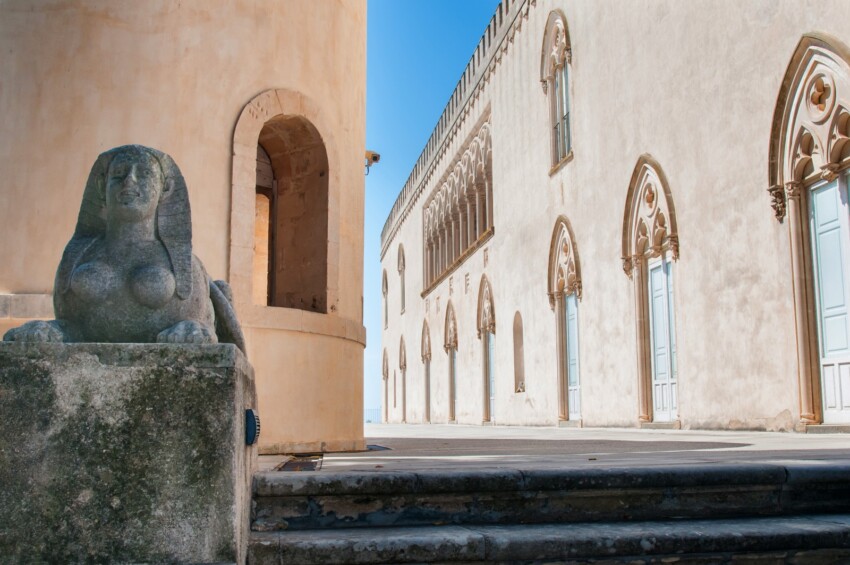
The Donnafugata Castle was originally a rural property, known as Torrevecchia or Torre di Bianca, built to protect a vast estate. Located approximately 15 km from Ragusa, Donnafugata Castle owes its current appearance and dimensions to work carried out between the nineteenth and twentieth centuries by the Arezzo family and the de Lestrade family. Initially conceived as a farmhouse, this complex later became an estate where the owners could spend their summer days in a truly marvellous corner of the Ragusa countryside dotted with olive groves, carob trees, fields and livestock.
Beyond the main building, the site also comprises a historic garden spanning approximately 8 hectares with three distinct areas: an English garden, a French garden and an orchard-vegetable garden that once served for the cultivation of aromatic plants and beekeeping. The site now also hosts the Costume Museum, a place where you can explore and learn about the evolution of clothing, customs and traditions of the families who frequented the property over the centuries.
The Castle has been selected multiple times as a filming location for scenes from various films including I Viceré (2007) by Roberto Faenza, scenes from the TV series Inspector Montalbano, Kaos (1984) by the Taviani brothers, Tale of Tales (2015) by Matteo Garrone and Andiamo a quel paese, a film by Ficarra and Picone. Elegant and luxurious, Donnafugata Castle is certainly a must-see stop during a journey exploring Eastern Sicily.
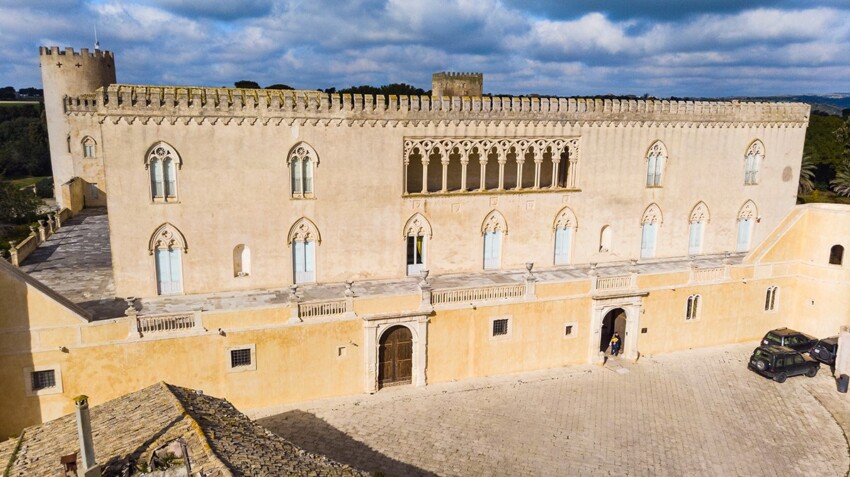
The Donnafugata Castle covers an area of approximately 2,500 square metres and boasts 122 rooms. Following the layout of ancient farmhouses, the ground floor contained areas dedicated to storage and servants’ quarters, whilst the upper floors housed the family’s rooms, including the state rooms. It is possible to visit both the interior rooms and the extensive external area.
Access to the property is through a grand portal that was designed to allow carriages to enter, whilst access to the noble floor is via a large pece stone staircase. The external green area that extends along three sides of the castle is characterised not only by exotic plants and well-maintained flowers but also by allegorical statues, esoteric symbols and initiatory motifs.
The ground floor was the servants’ quarters and the castle’s guest wing, but during the nineteenth century part of this area was transformed to accommodate the rooms of Baron Corrado, the Princess and Duchess Ignazia (the Baron’s sister). From the ground floor, a grand staircase leads to the noble floor where various rooms were added over time against the Torre Vecchia, the original nucleus of the building. The first room you encounter is known as the Lucernario (a windowless room lit by a lantern) followed by a room dedicated to the ladies and a larger one for the gentlemen. Next come the Music Room, named after the numerous musical instruments it houses, and Bianca’s Room, a bedroom with en-suite facilities.
Later developments led to the construction of a southern wing that housed the guest quarters and the Castle Picture Gallery, a room where neoclassical paintings with mythological or religious subjects were displayed. Beyond this lie the Billiard Room, the Bishop’s Room and the Hall of Mirrors.
What was once known as the “old quarter” underwent major renovation in the early twentieth century by the castle’s last descendants, who spent long periods in France and brought French influences and style to Donnafugata. This wing features the Art Nouveau style typical of the twentieth century and houses the Countess’s apartment, the study of Count Vincenzo Testasecca, the library and the Hall of Coats of Arms.
Considered one of Sicily’s historic gardens, the Donnafugata Park extends over 8 hectares and its current composition is the result of work carried out in different periods. Initially there was only an English garden, and in the nineteenth century Baron Corrado Arezzo used his passion for botany and exotic plants to redesign the property’s garden. Today you can admire 1,500 plant species and several monumental trees. A particularly amusing feature is a trick fountain bench, a seat that played a prank on those who decided to sit down in privacy: hidden pipes would spray unsuspecting guests with water jets.
The park also features a Coffee House, a pavilion typical of English gardens where visitors can rest during their walks on hot summer days. The main avenue connects the east entrance of the park to the castle’s main courtyard and culminates in a small hill topped by a neoclassical circular temple. Completing this area of the garden are a maze (considered one of the most typical esoteric symbols), a small chapel and a cenotaph area.
In the early 1900s, Gaetano Combes de Lestrade (1859-1918), husband of Clementina Paternò Arezzo, decided to create the French garden and the parterre planted with rosemary and lavender that form elegant geometric patterns. Finally, a section of the park is laid out as a Sicilian garden, which was once an orchard where aromatic plants were grown.
Among the other attractions within the Donnafugata estate is a maze built with dry stone walls of white Ragusa stone. At the maze entrance stands a stone soldier, while inside, the walls were adorned with rose hedges that not only blocked the view but also made it difficult to climb over. The maze has a trapezoidal shape and is inspired by the English maze at Hampton Court near London, which Baron Arezzo probably visited during one of his trips to England.
The Costume Museum is a splendid display of clothing, garments, fashion accessories and objects that tell the story of Sicilian costume between the eighteenth and twentieth centuries.
Most of these items belonged to Gabriele Arezzo di Trifiletti and his family. In 2014, the Municipality of Ragusa acquired this magnificent collection of objects, which also includes sewing tools, a travel bathtub and a childbirth chair.
The Donnafugata Castle is open to the public every day except Mondays, 25 December and 1 January.
Several ticket types are available to visit Donnafugata Castle:
Reduced tickets are available for children and young people aged 6-18, over 65s, students aged 18-26 with a university ID, and visitors who have arrived by train and have a valid travel ticket. Children aged 0-6, visitors with disabilities plus one companion, tour guides and tour operators can visit the site free of charge.
Donnafugata Castle is easily accessible by car and train. The Donnafugata railway station is located approximately 400 metres from the Castle and is reachable from Ragusa by train in about 20 minutes, from Modica in approximately fifty minutes and from Comiso in fifteen minutes.
By car, the site is less than half an hour from Ragusa and thirty minutes from Modica. The nearest airport is Comiso, which is about twenty minutes away but is not connected to the Castle by public transport.
Visiting Donnafugata Castle and the beautiful village that surrounds it is an experience that can take a full day, and in the evening it can be particularly charming to stay in this picturesque inland location in Sicily. Indeed, Donnafugata has several accommodation options ready to welcome visitors.
Alternatively, you can stay in one of the nearby towns such as Ragusa, Comiso or Modica, which make it easy to reach this location.
The earliest accounts of a complex in this area date back to the fourteenth century when the Chiaramonte family (counts of Modica) is said to have built a villa on the foundations of a pre-existing structure. The origins of Donnafugata Castle see it as a farmhouse built near an already established settlement not far from the city of Ragusa.
In the fifteenth century, Donnafugata appears to have been owned by Bernardo Cabrera, Grand Justiciary of the Kingdom of Sicily. A legend tells that the name Donnafugata originated with Bernardo Cabrera, who imprisoned the widowed queen Bianca of Navarra, widow of King Martin I of Aragon and regent of the Kingdom of Sicily, at this residence because he wanted to marry her and become king. However, it seems that Bianca managed to escape and continued her flight through Sicily from castle to castle.
According to the more widely accepted theory, the name “Donnafugata” derives from a free interpretation and transcription of the Arabic term “Ayn al-Ṣiḥḥat”, meaning Spring of Health, referring to a spring that flowed near the Castle.
Around the middle of the seventeenth century, the Arezzo family acquired the property from the Cabrera family, and Vincenzo Arezzo I, Baron of Donnafugata, established an agricultural business here. Over time, Donnafugata gradually transformed from a farmhouse into a holiday villa where neoclassical elegance predominated.
The main restoration work took place in the nineteenth century thanks to Baron Corrado Arezzo, who not only enlarged the residence, giving it the appearance of a Castle, but also commissioned the construction of a railway station and postal and telegraph offices.
In the early twentieth century, Clementina Paternò Arezzo, a descendant of Corrado Arezzo, married Gaetano Combes de Lestrade in a romantic elopement. It was this couple who primarily modified the layout and style of the castle, also modernising the so-called “old quarter”. In 1982, after years of neglect, the Municipality of Ragusa decided to purchase the property and undertake various restoration works to make the estate accessible to the public.
The Castello di Donnafugata is a site of historical interest located in eastern Sicily, approximately 15 km from the city of Ragusa.
 Hotel
Hotel 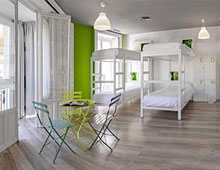 Budget accommodations
 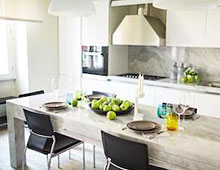 Apartments
 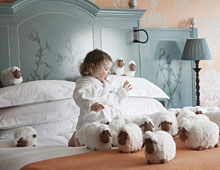 Family Hotel
 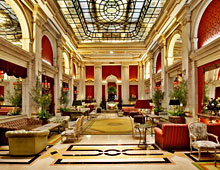 Luxury Hotel
  Resorts