Etna: Guided Summit Hiking Tour up to 3400m, Optional Pickup
5.822 reviews
Buy now
From 55,00€ per person
It’s quite a challenge to advise on what to eat in Sicily: this wonderful island boasts the most varied of Italy’s regional cuisines and by many people is considered the finest as well.
The silver lining to this rather Hamlet-like situation is that during your Sicilian holiday you can order virtually any dish and you’re guaranteed to enjoy it! From a simple starter of raw anchovies to a grand finale of desserts, a dinner in Sicily is a true celebration of flavour.
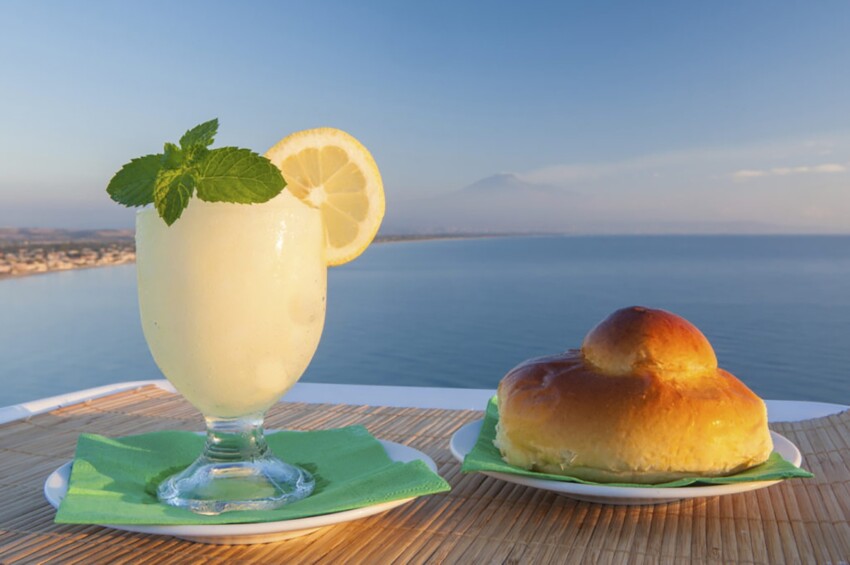
It’s not just dinner: your palate’s pleasures begin in the morning with breakfast featuring granita and brioscia, then mid-morning you can grab a bite from a street food stall.
And for lunch, how about a plate of spaghetti with sea urchin? Don’t worry, you needn’t wait until dinner to indulge in the delights of Sicilian food and wine tradition: a pistachio gelato provides relief from the heat and those hunger pangs.
Every meal, naturally, can be accompanied by excellent wines from local producers. Ready for a culinary journey?
What are the Sicilian specialities worth trying during your holiday or taking home? Here’s an essential list of Sicilian products to taste, featuring both jewels of Italian food and wine tradition famous worldwide and humble staples of a peasant diet.
Fishing is one of the economic activities that shaped Sicily’s identity. For centuries, before the arrival of tourism, many coastal villages found wealth – or mere survival – in the fertile waters surrounding them.
Typical products that tell of Sicily’s inseparable bond with the sea are tuna, anchovies, sardines and bottarga: four ingredients often found in traditional dishes.
Historic Sicilian cheeses are characterised by the use of raw milk and natural rennet, wooden and copper equipment, ageing and maturing in natural cellars with a cool, airy climate.
Their presence is most evident in cities and villages inland, where pastoral and agricultural traditions survive, but cheese is also a basic ingredient in some of Sicily’s most famous recipes.
Three Sicilian cheeses definitely worth trying are:
A cheese you’ll almost certainly taste, mainly as an ingredient in delectable desserts, is ricotta.
The vine has been cultivated in Sicily since antiquity: over 2000 years of tradition, Sicilian production has diversified considerably, in both reds and whites, producing wines of the highest quality alongside others with less ambitious aspirations but perfect for accompanying and enhancing the flavourful regional cuisine.
The region’s pride is Marsala, a fortified wine historically produced in the eponymous town in Trapani province. Don’t confuse it with Malvasia, a sweet wine originating from the island of Lipari (Messina province). Another “island” wine to try if you love Marsala and Malvasia is Zibibbo from Pantelleria: rare and distinctive, it seems to capture all the perfumes of the Mediterranean in a bottle.
The most famous of Sicilian reds is Nero d’Avola, a 100% Sicilian grape variety with high alcohol content and full body.
Perhaps it doesn’t immediately make you think of Sicily but salt is certainly the most typical (and most widespread!) product from this region: a very high percentage of edible salt sold in Italy comes from here.
The salt pans are a distinctive feature of the Sicilian landscape and have profoundly marked the territory’s history and economy. In Trapani, Marsala, Syracuse and other parts of Sicily you can find yourself facing brilliant white peaks made not of snow but of salt.
Even though you can find it in shops across Italy, Sicilian salt is a typical souvenir that will certainly be appreciated by whoever receives it.
Among the many Sicilian specialities, there are two that have greatly contributed to the tourist fortune of the places where they are produced.
The first is Modica chocolate, an excellence of Italian pastry-making to which the city of origin has dedicated a festival and museum: it is a prized chocolate obtained through a particular processing method called “cold” working. Historically it was consumed only by noble families on special occasions or important celebrations; only recently has it become accessible to all.
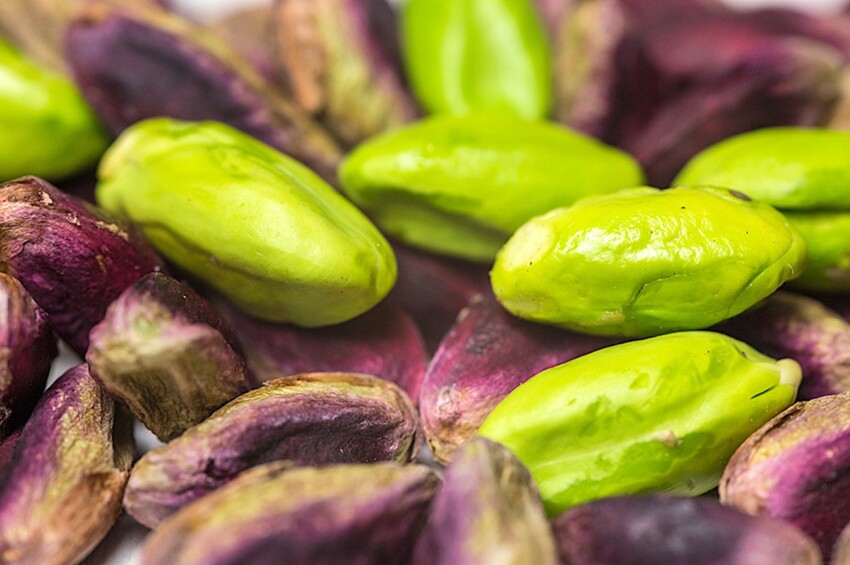
The other is the green pistachio of Bronte, also known as the green gold of the Etna region. Recognised as a unique product and exported worldwide, it is a refined addition to exquisite pastry and gelato recipes.
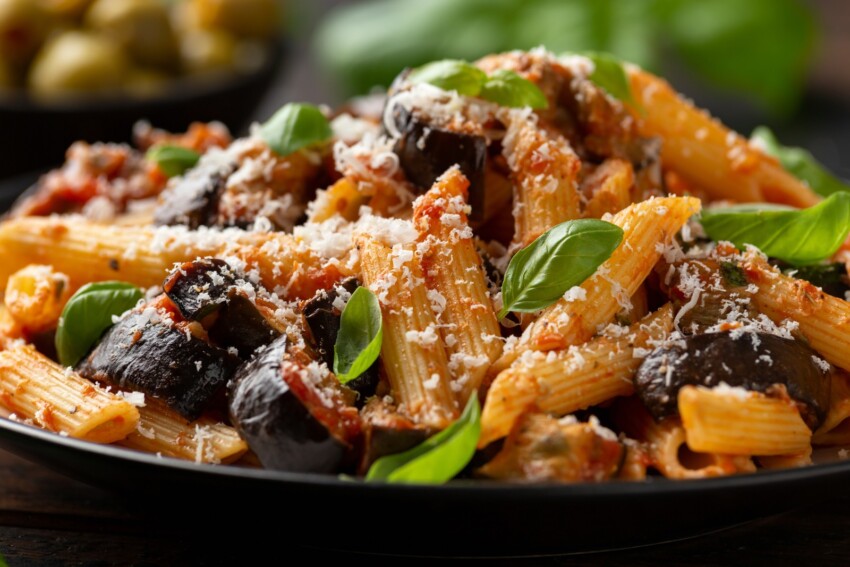
A classic of Sicilian cuisine, perfect for diving headlong into Mediterranean flavours from the very first course, is Pasta alla Norma: pasta (usually macaroni) dressed with a sauce made from tomato sauce, fried aubergine, salted ricotta and fresh basil. The name is said to reference the famous opera by Vincenzo Bellini, the composer born in Catania, the same city from which the original recipe comes.
Another pasta recipe originating from Sicily is pasta ‘ncasciata, the favourite dish of Inspector Montalbano in the famous television series. Trust a renowned food connoisseur and try this delicious baked pasta with aubergines and caciocavallo: it’s a simple but appetising recipe, ideal also as a main course.
If you’re travelling in western Sicily, particularly around Trapani, don’t miss the chance to taste fish couscous. The idea behind this recipe is quite similar to North African tradition couscous, but in this case the main ingredient is not meat but scampi, clams and mixed fish for soup.
The town of San Vito lo Capo dedicates an important gastronomic festival to this typical recipe held every year in late September.
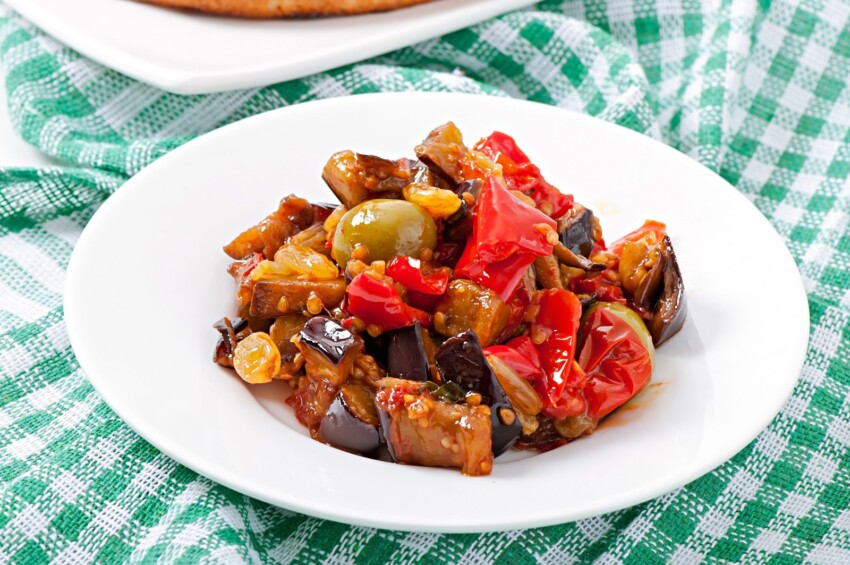
Technically speaking it’s a side dish, but caponata is so delicious that not a few tourists decide to stuff themselves on it and make it the main course of their meal.
The basic ingredients are the same as other typical Sicilian recipes, including the aforementioned pasta alla norma: aubergine, tomatoes and basil, three staples of a poor tradition used here to create a medley of fried vegetables sautéed in a pan that take on a sweet and sour flavour.
A fish-based main course you’ll easily find in restaurants across various parts of Sicily is sarde a beccafico, a traditional recipe based on sardines, pine nuts, sultanas and bay leaf. There are stewed versions (typical of Messina) and fried ones (more common in Catania).
Another classic among fish main courses is swordfish Messina-style, cooked with pachino tomatoes, olives, capers and Tropea onion: a triumph of Mediterranean flavours bringing together 3 PGI products and a Slow Food presidium.
For those who prefer meat we recommend trying falsomagro, a hearty recipe consisting of beef slices filled with minced beef, mortadella or bacon, lard, eggs and caciocavallo which are then pan-fried.
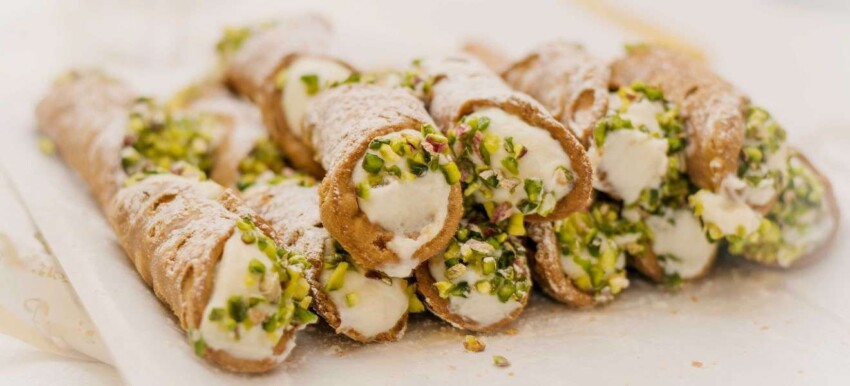
Sicily is a paradise for those with a sweet tooth: no other Italian region can boast pastry-making as renowned as Sicily’s. Here the dessert is not relegated to an afterthought to be eaten at the end of a meal or a treat to give well-behaved children: it’s a true art form, a regional source of pride, an essential part of everyday life.
You’ll soon adapt to local customs too and cassata, granita, cannoli and sweets made with almond paste will feature every day of your holiday.
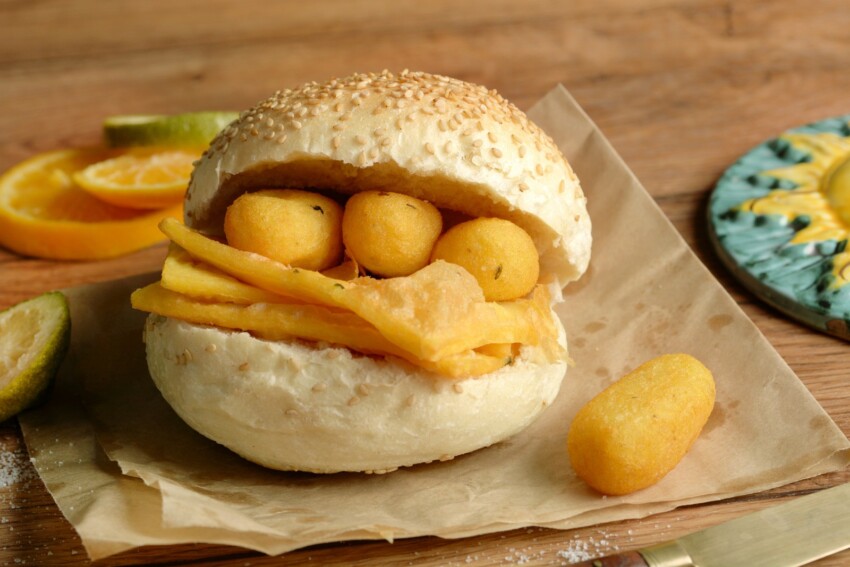
Unique in Italy, Sicily has made street food a point of pride. In particular it is Palermo street food that has become so famous as to be considered a tourist attraction worthy of interest on a par with magnificent baroque palaces, beaches bathed in crystal waters and other wonders of Sicilian landscape and history.
Markets, fried-food shops, corner kiosks and tiny bars are mentioned in all tourist guides alongside starred restaurants: you can search for them yourselves or take part in a street food tour.
The specialities of Palermo street food worth trying are:
To finish, two important clarifications. First: sfincione is not pizza! Second: don’t ask for “gli arancini” in Palermo. The typical crispy rice balls with filling are rigorously called in the feminine form in the Sicilian capital.
Long live arancine and all the goodness of street food in Sicily!
 Hotel
Hotel  Budget accommodations
  Apartments
  Family Hotel
  Luxury Hotel
  Resorts