14 Days in Sicily: The Ultimate Itinerary for an Unforgettable Island Journey
The whole of Sicily in two weeks: a road trip itinerary around the island's perimeter, visiting the most beautiful cities, villages and beaches.

Sicily is a tourist destination that captivates every visitor thanks to its historical, archaeological and gastronomic heritage. Few other locations allow you to organise a stay of one or more weeks that can combine relaxation on paradisiacal beaches, visits to archaeological sites, tours of ancient cities, excursions on a volcano and natural parks. Sicily is a destination that caters to all types of visitors and is a region that attracts visitors from all over the world every year.
To explore the island to the best of your ability, many people plan a multi-stage tour that allows you to discover different areas of the region and can be done using either public transport or a hire car; however, having your own car is a recommended solution because it not only allows you to organise your trip at your own pace but also lets you visit some spots that are not reachable by bus or train. Here, then, is a guide with all the information you’ll need to organise a tour of Sicily: the best times to visit, how to get around, must-see stops, practical information and many other useful tips.

The centres of cities like Palermo, Syracuse and Catania can be easily explored on foot or using public transport, while to travel between different locations it’s best to have a car. Unless your stay in Sicily is limited to a long weekend in just one city, we recommend travelling by car so you can be independent with your movements.
Sicily is quite a large island and the best way to discover it is to explore it independently by hiring a car which will allow you to visit beaches and coves not served by public transport and to be able to organise visits to less touristy locations where you can experience authentic local life.
You can only reach the most famous locations by bus or train, and rail connections don’t always make it easy to get to all the major cities. Having a car, therefore, allows you to optimise your time and journeys but also gives you maximum freedom in planning your itinerary, without depending on public transport schedules and routes.
Sicily enjoys a mild Mediterranean climate, a characteristic that makes it a perfect destination throughout the year. July and August are the months with highest tourist numbers, particularly for visitors interested in a beach holiday, whilst the winter season should be avoided if you want to discover Sicily’s magnificent coastlines but is ideal for a more cultural trip. Visiting archaeological sites such as the Temples of Agrigento or cities with thousands of years of history like Syracuse is certainly easier when temperatures are less oppressive.
Summers in Sicily are usually longer than in northern Italy, which makes the shoulder seasons ideal for visiting the island as temperatures are still pleasant but there is less tourist traffic. If you have the opportunity, we recommend organising your stay during May to June and from mid-September to mid-October. At these times you could find more competitive prices, paradisiacal beaches that aren’t too crowded and sea temperatures that still allow for swimming.
Sicily is a wonderful region with numerous sites of great interest, so it’s difficult to explore it all in one week. Thanks to the many low-cost flights and shipping connections available, it’s also possible to organise a short break of 4-5 days based in a major city like Palermo with a few day trips around the area. If you have limited time available, we suggest limiting your itinerary to just one area since each part of the region has so much to see, and doing so will minimise time spent travelling.
The ideal length of a Sicily holiday, however, can vary greatly depending on the type of trip you want to make, but we can say that a 7-day holiday is enough to see 2 or 3 cities and the surrounding attractions; however, if you have more time available you can do a complete tour, visit more locations or dedicate yourself to more activities such as hiking, diving or food and wine tours.
One way to make the most of your available time is to create a linear itinerary that allows you to arrive at one airport (for example Palermo) and depart from another (for example Catania or Trapani). This time-saving solution could have drawbacks in terms of cost, as returning a hire car at a different location often involves paying a surcharge. However, the cost of one-way car hire will be more than offset by the extra time you have available to visit the area.
If you have more time available, it’s possible to organise a two-week itinerary in Sicily that allows you to visit the most well-known cities and villages, swim in the most beautiful beaches and visit the most interesting archaeological sites, while also setting aside time to discover some of the islands.
The recommended cities to start a tour of Sicily are Palermo, which has not only air connections but also maritime connections with many Italian cities, and Catania or Trapani, which offer many low-cost flights. Flights are also available to Comiso airport, but connections are less frequent, offers are often less competitive and the airport is not well served by public transport links.
Sicily is not an extremely expensive destination and it’s possible to spend little by paying attention to a few things. Prices depend greatly on the time of year of your stay and the type of holiday you want to have. In major cities and during high season, prices are naturally higher, whilst in less touristy locations prices can be lower and you can experience authentic local life. When calculating your holiday budget, you need to consider not only the museums and archaeological sites you want to visit but also the activities you plan to undertake.
In addition to the cost of accommodation, food and attractions, you should set aside part of your budget for transport costs as well. Sicily has several motorways that are managed by CAS (Consorzio per le autostrade Siciliane) or ANAS (Azienda Nazionale Autonoma delle Strade), but not all of them charge tolls. Here are the main motorways:
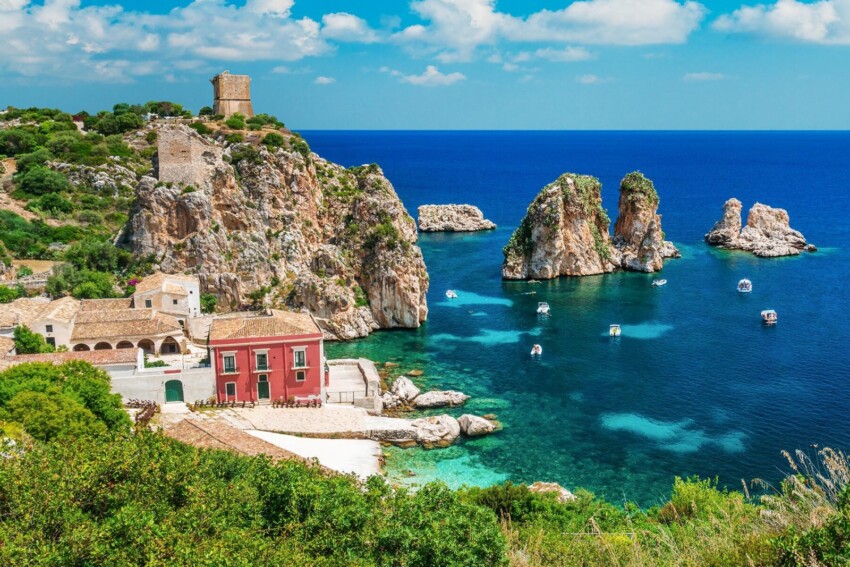
The list of things to see and do in Sicily is really extensive and it’s possible to create personalised itineraries tailored to your interests. From a cultural trip to one focused on the sea and beaches, from food and wine tourism to a stay characterised by nature and trekking, Sicily caters to every visitor’s needs!
To help you with your planning, here is a (non-exhaustive) list of the main attractions to visit in Sicily:
If you’re not sure where to start to plan your trip to discover Sicily, here are 5 tour proposals you can do to discover some of the island’s most beautiful locations.
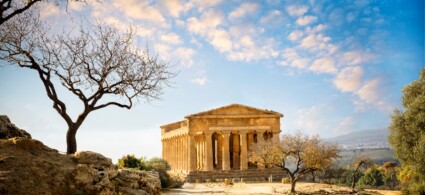
If you want to admire the magnificent Greco-Roman archaeological sites that Sicily has to offer, here’s an itinerary that’s perfect for you. The tour starts at Segesta (province of Trapani), with its beautiful archaeological park that houses the famous Doric temple and the Hellenistic amphitheatre. From here you can then head to one of Europe’s largest archaeological sites, Selinunte, which extends over several hills and houses the Acropolis, many temples and the necropolis. Finally, a visit to the magnificent Valley of the Temples in Agrigento is a must, which is also open in the evening. If you still have days available, the itinerary can continue to Syracuse where you’ll find the Neapolis Archaeological Park.
If you want to treat yourself to a trip focused on the sea, relaxation and tranquillity, you can organise a tour to discover the beautiful Aeolian archipelago which is located off the north coast of Sicily. Also known as the Lipari Islands, the seven islands that make up the archipelago are: Lipari, Panarea, Vulcano, Stromboli, Salina, Alicudi and Filicudi. These still unspoilt and partly wild territories allow you not only to relax on splendid beaches but also to visit two volcanoes, Stromboli and Vulcano.
A tour designed to visit the beauties of eastern Sicily where there are not only archaeological parks but also splendid beaches and ancient villages.
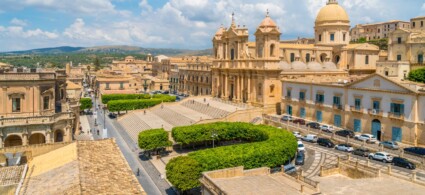
The itinerary is planned starting from Catania where it’s possible to hire a car or travel using public transport, although with this latter option travel times can be significantly longer. The tour lasts seven days and covers a route of approximately 650 km that touches the cities of: Catania, Syracuse, Noto, Vendicari, Marzamemi, Modica, Ragusa, Agrigento and Taormina.
Here’s an itinerary that allows you to visit the westernmost part of Sicily starting from Palermo and having a week available. This itinerary allows you to discover some of the region’s most important locations and experience its cultural heritage, as well as its natural side, while relaxing on splendid beaches.
Starting from Palermo, which you can reach thanks to numerous low-cost flights, you can continue your journey towards Monreale and then to the Zingaro Reserve, where nature lovers can organise beautiful hikes. The route then includes the following stops: Trapani, Favignana Island, Marsala and Selinunte.
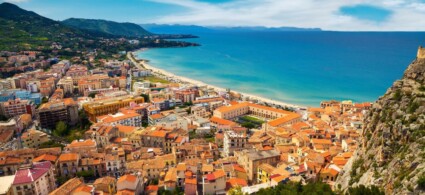
If you want to add a touch of romance to your trip, we recommend adding the beautiful town of Cefalù to your tour, which is just an hour’s drive from Palermo.
If you have more time available, you can organise a beautiful two-week itinerary to discover the island. The tour starts and ends in the city of Palermo (but since it’s a loop you can start wherever you like), whose historic centre is like an open-air museum.
In fourteen days of travel you will not only have the opportunity to discover famous cities, small villages, paradisiacal beaches and archaeological sites but also to undertake excursions on Etna and explore natural oases.
The main stops on this trip are: Palermo, Cefalù, Aeolian Islands, Taormina, Catania, Syracuse, Agrigento, Marsala, Favignana Island, Zingaro Reserve, Segesta and Monreale.
Here are some practical information and tips that should help you plan your Sicilian tour to best effect.
In Sicily, most museums and archaeological sites are open daily from 9:30–10:00 in the morning until 6:30–7:00 in the evening. Some sites, such as the Valley of the Temples in Agrigento, also offer evening opening hours. Restaurants typically serve lunch from 12:00 to 3:00 pm and dinner from 7:00 to 10:00 pm, though during summer, when daylight lasts longer, dinner often extends well into the evening. Many establishments, particularly in larger cities, stay open longer as a result. In smaller towns and villages, restaurants, bars, pubs and various shops may operate different hours. Post offices, banks and government offices are generally open from 8:30 until 4:30 pm or 6:30 pm and are closed at weekends.
When planning a trip to Sicily, one thing to bear in mind is fuel refuelling. It’s important to know that, particularly in inland areas, you may encounter long stretches of road without petrol stations, which is why we recommend never letting your fuel gauge dip to empty.
Driving in Sicily is generally straightforward, and the island’s main cities are well connected by motorways. The situation is different when it comes to small inland villages, which can often only be reached via winding secondary roads, though these reward you with stunning scenery and the chance to discover little-visited spots.
In major cities, we recommend getting around on foot or by public transport, as parking spaces are limited and traffic can be heavy. Similarly, in small villages, it’s best to explore on foot rather than by car, so you can fully appreciate the beauty of the place. When hiring a car, it’s always wise to choose comprehensive insurance that covers all damage in the event of an accident.

 Hotel
Hotel  Budget accommodations
  Apartments
  Family Hotel
  Luxury Hotel
  Resorts