Bestseller
Entrance to Selinunte Archeological Park + Roundtrip Shuttle Service
From 29,00 €
Buy the ticket
To give your Sicilian holiday an epic flavour, treat yourself to a day trip to Selinunte, one of the most impressive and evocative archaeological sites in the entire Mediterranean.
The best season to visit Selinunte is spring, when flowers paint the hillside where the ruins stand in shades of yellow and violet. The best time of day is undoubtedly sunset, so you can admire the incredible colours of the sky and take photographs that would make National Geographic jealous.
But at any time of day or year, Selinunte will captivate you, with its temples rising skywards for thousands of years, proud and majestic in their classical beauty, built on proportion and harmony.
A stroll along the beach, a breathtaking sunset and an excellent dinner featuring authentic local dishes will complete what you’ll surely remember as one of the most beautiful days of your Sicilian holiday.
The Greek colony of Selinunte was founded between 650 and 628 BCE and grew rapidly, soon establishing commercial and political relations with Greeks and Carthaginians.
In the 5th century BCE, the history of Selinunte and that of nearby Segesta became intertwined, giving rise to a long-standing rivalry that would lead to Selinunte’s defeat.
It was subsequently rebuilt by the Carthaginians, but during the First Punic War they shifted their resources to Lilybaeum, leaving Selinunte to the mercy of the Romans. This episode marked the end of the centuries-long history of Selinunte, one of the most glorious Greek colonies in Sicily.
The city was rediscovered by historian Tommaso Fazello in the second half of the 16th century, whilst the first important archaeological excavations, carried out by the English, didn’t begin until 1823.
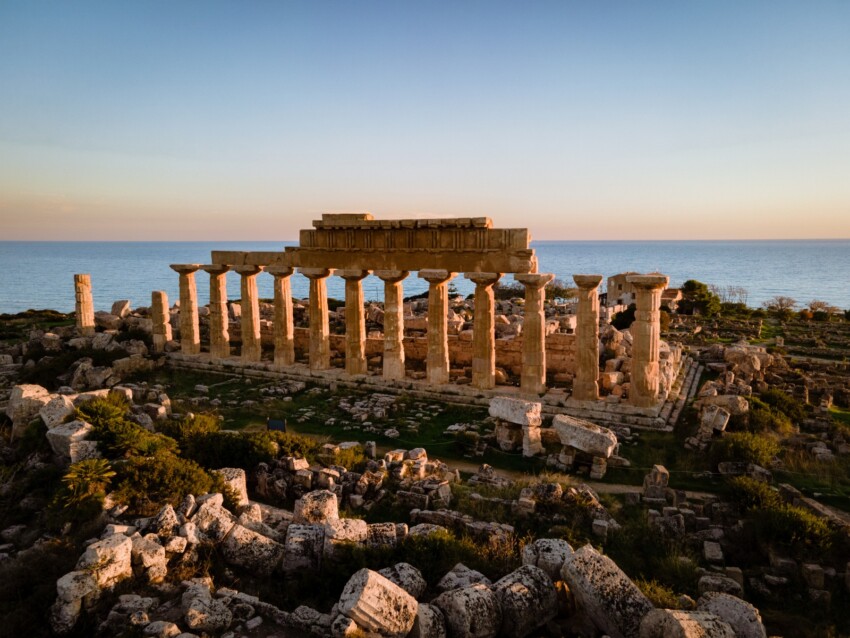
The Selinunte archaeological park, established in 1993, is the city’s major attraction. Little remains when you consider that for over two centuries Selinunte was one of the richest and most powerful cities in the ancient world. “Little” is a relative term, though… the Selinunte archaeological zone is in fact one of the largest in Europe.
It comprises the acropolis, the eastern hill, the Contrada Manuzza plateau, the Malophoros sanctuary and two necropolises (Manicalunga and Galera Bagliazzo).
The temples in the Selinunte archaeological park are certainly the most impressive examples of Doric-style temples, the oldest Greek style characterised by simplicity and essentiality, that we can admire in Sicily. The materials used to build the temples were quarried from the Cusa Quarries.
The remaining temples don’t have a “name” and are instead indicated by a letter of the alphabet: this pragmatic nomenclature doesn’t do justice to the evocative charm of these ancient ruins, but it does add to their mystery.
On the acropolis, positioned towards the coast, stand Temple D, Temple C, Temple A and Temple O, whilst on a hill situated east of the ancient city, further inland than the acropolis, stand Temple G, Temple F and Temple E.
From the temples of Selinunte, some metopes of the highest artistic value have been taken and are now on display at the Palermo Archaeological Museum.
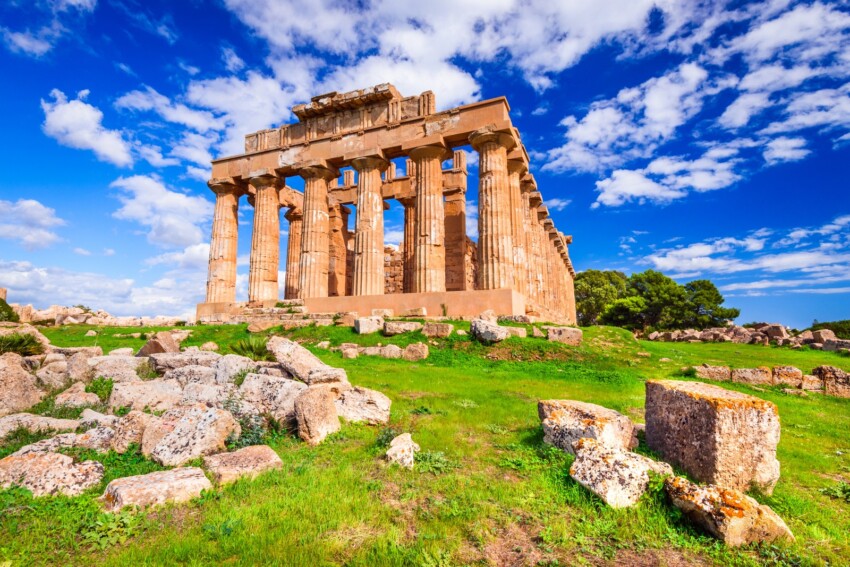
The most impressive of Selinunte’s temples is undoubtedly Temple E, which was partially destroyed by an earthquake and reconstructed in 1958.
It was built between 465 and 450 BCE and is therefore one of the more recent temples in the Selinunte archaeological complex, showcasing the artistic maturity of the Doric style, with its graceful proportions and attention to symmetrical precision.
Its dimensions are vast – so much so that only three other temples in the Greek homeland can boast comparable size: the Parthenon, the Temple of Zeus at Olympia and a temple in Corinth.
Temple C, dedicated to the god Apollo, is the largest on the acropolis, positioned at the highest point, from where it dominates Selinunte’s coastline.
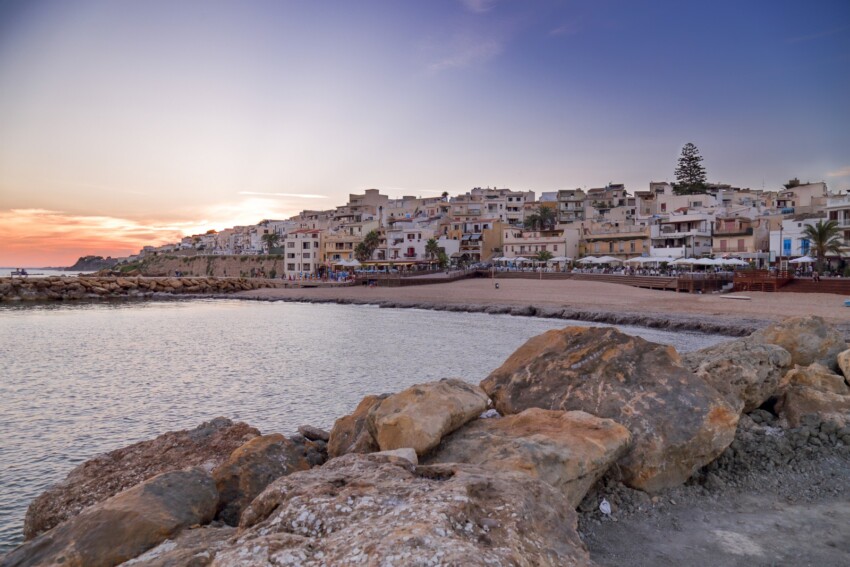
If you’d like to stay near Selinunte, the most convenient and closest places to spend the night are Triscina, Marinella and Porto Palo, though Mazara del Vallo and Castelvetrano are also excellent bases.
To reach Selinunte from Palermo, take the A29 motorway towards Mazara del Vallo, exit at Castelvetrano and follow the road signs.
 Hotel
Hotel  Budget accommodations
  Apartments
  Family Hotel
  Luxury Hotel
  Resorts